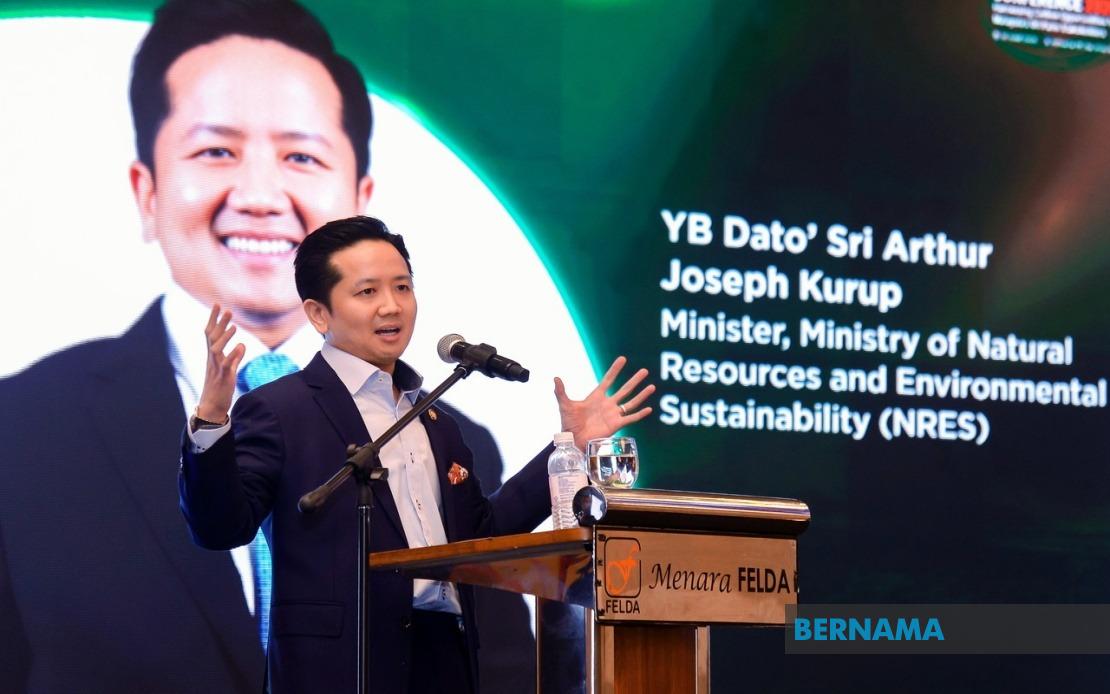
The Malaysian government is carefully calibrating the rollout of its planned carbon tax, with officials still working through technical and policy details before finalising a launch date. Natural Resources and Environmental Sustainability Minister Datuk Seri Arthur Joseph Kurup made the clarification on June 16 while speaking at the Malaysia Palm Carbon Conference (MPC) 2026 in Kuala Lumpur, addressing ongoing questions about the tax's status following earlier hints of potential delays.
The minister's comments underscore how the government is balancing multiple considerations as it prepares this significant environmental and economic policy instrument. Authorities are examining industry preparedness across targeted sectors and simultaneously developing the regulatory framework that will govern the tax's operation. Rather than rushing implementation, officials have signalled they will announce timing once these foundational elements are solidified, a measured approach reflecting the complexity of introducing carbon pricing in a developing economy.
Critically, the government has framed the carbon tax not as a punitive mechanism designed to penalise polluters, but as an incentive structure intended to accelerate adoption of cleaner technologies and drive measurable reductions in carbon emissions. This messaging is significant for Malaysian manufacturers and energy-intensive industries that have expressed concerns about competitive disadvantages. By positioning the tool as incentive-based rather than punitive, policymakers appear to be attempting to secure business cooperation, though sceptics note that any tax on emissions inevitably carries a compliance burden regardless of stated intent.
Authorities are also grappling with how to deploy revenue generated from the carbon tax, recognising that the mechanism's credibility depends partly on demonstrating that collected funds serve environmental and climate goals. Proposals under examination would direct revenue towards climate adaptation initiatives, forest conservation programmes, and sustainable land management practices. This approach potentially creates a virtuous cycle where carbon pricing generates resources to fund the very climate resilience measures that mitigate the risks Malaysia faces from increasingly severe weather events and environmental degradation.
The strategic redeployment of carbon tax revenue reflects official understanding that climate action requires sustained investment. Malaysia's forests and coastal zones face mounting pressures from both global climate shifts and domestic land-use pressures, making dedicated funding streams essential. By explicitly linking carbon tax revenue to these purposes, the government can present the mechanism as financing climate solutions rather than merely extracting money from business.
Dating back to April, Datuk Seri Arthur indicated that implementation timelines might extend beyond the originally targeted 2024 launch, citing the confluence of global energy supply disruptions and geopolitical instability. Industries targeted in the initial phase—including steel, cement, and construction—are already navigating elevated input costs and supply chain uncertainties. Deferring implementation acknowledged these headwinds and signalled the government's reluctance to layer additional regulatory costs on sectors already under significant pressure. This pragmatism suggests officials recognised that poorly timed policy can trigger unintended economic consequences that ultimately undermine climate objectives.
Separately, the government expects to present the National Climate Change Bill to the Dewan Rakyat during the current legislative year, framing this legislation as essential infrastructure for strengthening Malaysia's climate governance architecture. The bill would establish clearer legal and institutional frameworks for addressing climate risks, complementing the carbon tax by creating broader policy coherence. Together, these mechanisms—tax and legislation—represent an attempt to embed climate considerations into Malaysia's economic and regulatory systems more permanently.
For Malaysian businesses and investors, these developments signal that carbon pricing is moving from theoretical discussion toward practical implementation, even if the exact timing remains unsettled. Companies in emissions-intensive sectors should begin scenario planning around carbon costs, particularly if they operate across Southeast Asia where other nations may implement similar frameworks. The staggered global adoption of carbon pricing creates both risks and opportunities for Malaysian firms, depending on their competitive positions and technological readiness.
Regionally, Malaysia's carbon tax plans carry implications for ASEAN's collective climate commitments and investment flows. If Malaysia implements a credible carbon pricing mechanism while neighbouring economies delay, it could affect site selection decisions by multinational manufacturers and shift competitive dynamics within the region's energy-intensive sectors. Conversely, a well-designed system could position Malaysia as a regional leader in climate-conscious economic management, potentially attracting environmental and socially conscious investment capital.
The government's deliberate pace on implementation reflects genuine policy complexity, but it also creates a window for stakeholder engagement and technical preparation. Businesses, environmental groups, and labour representatives can meaningfully contribute to refining implementation details before rules finalise. This consultative period, though extending uncertainty, may ultimately yield more effective and widely accepted climate policy than rushing through poorly coordinated launch mechanisms.
As officials continue refining the carbon tax architecture, they face persistent pressure to demonstrate that Malaysia takes climate commitments seriously while simultaneously supporting economic competitiveness. The balance they strike will influence not only environmental outcomes but also investor confidence, manufacturing location decisions, and Malaysia's standing in global climate negotiations. The coming months will be crucial for settling implementation details and building stakeholder confidence in the mechanism's design and fairness.