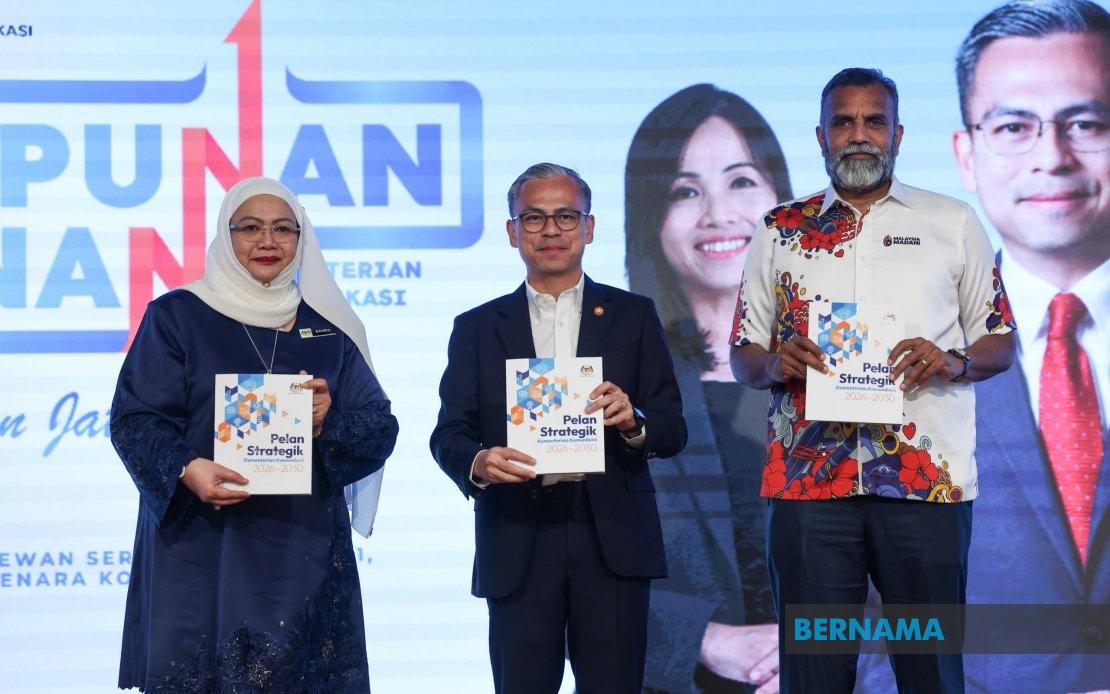
Communications Minister Datuk Seri Fahmi Fadzil has unveiled an ambitious five-year strategic blueprint designed to reshape Malaysia's digital landscape and creative sector. The Communications Ministry Strategic Plan (PSKK) 2026-2030, launched in Putrajaya on July 20, represents a comprehensive roadmap that aligns national communication infrastructure development with the broader objectives of the 13th Malaysia Plan (13MP) and the Malaysia MADANI agenda. This strategic initiative encompasses 94 distinct programmes and will guide the ministry's agencies and departments through to 2030, addressing persistent challenges that stakeholders have repeatedly raised regarding connectivity, content quality, and information integrity.
The strategic plan distils the ministry's priorities into three fundamental pillars: delivering superior internet connectivity, fostering the creation of high-quality local content, and ensuring citizens receive accurate and trustworthy information. These three priorities reflect acknowledgement of the digital divide that continues to affect rural communities, the growth potential of Malaysia's creative industries, and the critical importance of combating misinformation in an increasingly complex media environment. Minister Fahmi indicated that current ministry programmes already operate within this framework, suggesting a continuity of effort rather than a radical departure from existing initiatives.
Underpinning these three core priorities is an overarching vision: creating a "Connected, Informed and Creative Malaysia." This aspirational statement encapsulates the government's recognition that national competitiveness in the 21st century depends on three interconnected elements—the physical infrastructure enabling digital participation, the intellectual and cultural capital embodied in creative industries, and the institutional capacity to distribute reliable information through trustworthy channels. The vision acknowledges that connectivity without creative capacity or information integrity will yield incomplete development.
The strategic plan identifies four strategic thrusts that operationalise this vision. The first focuses on strengthening Malaysia's national communications ecosystem to ensure universal access to high-quality, secure connectivity. This thrust directly addresses the persistent disparity between urban and rural broadband availability, a challenge that has gained urgency as economic opportunities increasingly depend on reliable internet access. The second thrust emphasises enhancing the competitiveness of Malaysia's film and music industries on regional and global stages, recognising that creative industries represent both economic opportunity and soft power. The third thrust involves transforming how government and institutions deliver integrated information services, moving beyond siloed departmental communications toward cohesive, citizen-centric information architecture. The fourth thrust commits to reforming how government agencies deliver services, embedding responsiveness to policy objectives and customer needs throughout the communications ecosystem.
For Malaysian readers and regional observers, this strategic plan carries several implications. Domestically, the emphasis on inclusive connectivity suggests potential acceleration of broadband expansion programmes to underserved areas, though implementation capacity and budget allocation remain critical variables. The focus on creative industries aligns with regional trends, as countries throughout Southeast Asia increasingly view cultural exports as drivers of economic growth and national brand enhancement. The commitment to information integrity takes on heightened significance given regional challenges with misinformation and the tensions between open digital spaces and content governance.
The strategic plan's emphasis on information authenticity warrants particular attention. Globally, democracies grapple with distinguishing legitimate content regulation from censorship, and Malaysia's approach to ensuring information accuracy while respecting freedom of expression will influence regional norms. The plan's commitment to "authentic and inclusive information" dissemination suggests efforts to democratise access to reliable news and data while establishing standards for verification and source credibility. This dimension has profound implications for Malaysia's digital governance model and its positioning within regional and international digital policy frameworks.
The scope of the strategic plan—encompassing 94 specific programmes—indicates that the ministry has conducted substantial stakeholder consultation and internal analysis. However, the true measure of this plan's success will depend on resource allocation, institutional coordination, and sustained political commitment across multiple election cycles. The 13th Malaysia Plan and Malaysia MADANI agenda provide political legitimacy and budgetary anchoring, but translating strategic intention into measurable improvements in connectivity speeds, content quality, and information literacy requires sustained execution.
Regional competitiveness dimensions emerge clearly when examining the creative industry focus. Southeast Asian nations including Thailand, Vietnam, and Indonesia have made strategic investments in film, music, and digital content sectors, recognising these industries' capacity to generate employment, retain talent, and build global cultural influence. Malaysia's strategic elevation of creative industries suggests recognition that manufacturing and traditional services alone cannot sustain middle-income growth trajectories. The plan positions Malaysia to participate more fully in the region's emerging creative economy, potentially attracting both foreign investment and regional talent.
Connectivity remains foundational to all three priorities. Universal, affordable broadband enables participation in creative industries and facilitates access to information. Malaysia's existing digital infrastructure—including 5G rollout, fibre deployment, and satellite initiatives—provides a foundation, but the strategic plan suggests ambitions extending beyond current capabilities. The cost of achieving universal connectivity across archipelagic and geographically challenging terrain requires innovative funding mechanisms, public-private partnerships, and potentially regional cooperation frameworks.
The information authenticity component reflects broader global anxieties about digital misinformation and platform-driven information ecosystems. Malaysia's approach to fostering "authentic and inclusive information" dissemination will likely involve multi-stakeholder coordination among traditional media outlets, digital platforms, academic institutions, and government agencies. This dimension touches on fundamental questions about who determines authenticity and through what mechanisms information is certified as reliable—questions that democratic societies continue debating globally.
Minister Fahmi's assertion that the strategic plan addresses frequently raised concerns suggests the ministry conducted meaningful consultation with constituents, civil society, industry stakeholders, and other government agencies. However, the conversion of strategic aspirations into tangible improvements requires transparent progress metrics, regular public reporting, and mechanisms for course correction based on implementation experience. The five-year timeframe provides adequate opportunity for substantial progress, but quarterly and annual milestone reviews will be essential for maintaining momentum and accountability.
Looking forward, the PSKK 2026-2030 establishes a framework through which Malaysia can address digital inequality, nurture creative entrepreneurship, and strengthen institutional mechanisms for reliable information distribution. Success will require coordinated effort across multiple government agencies, sustained private sector engagement, and genuine consumer participation in shaping how communications infrastructure and services evolve. The plan's ambition is evident; whether execution matches aspiration will determine whether Malaysian citizens genuinely experience the connected, informed, and creative future this strategic document envisions.

