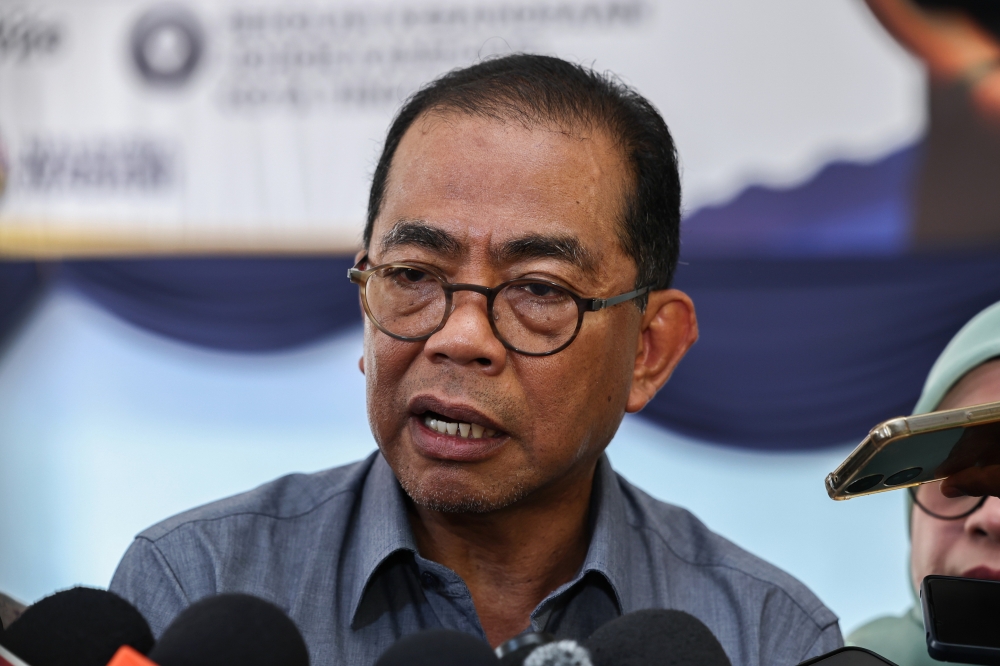
Defence Minister Datuk Seri Khaled Nordin has clarified Parliament that the Malaysian Armed Forces possess the constitutional authority to conduct military exercises across states without requiring formal royal consent, marking an important clarification on the balance between federal military operations and state-level oversight. The statement, delivered during parliamentary proceedings on July 16, addresses long-standing questions about the extent of military operational independence and the jurisdictional boundaries between federal defence authority and state-level sultanates that characterise Malaysia's federal structure.
The minister's position reflects the federal government's interpretation of constitutional provisions governing military powers and the hierarchy of state institutions. Malaysia's constitutional framework divides powers between federal and state authorities, with defence matters traditionally falling under federal jurisdiction. However, the presence of state rulers with ceremonial and constitutional roles has periodically created ambiguity about whether certain military activities require explicit royal approval at the state level. Khaled's parliamentary statement seeks to remove this ambiguity by affirming that routine military exercises fall within federal purview and do not necessitate individual state-level permissions.
This clarification carries practical implications for military readiness and operational planning across the peninsula and Sabah and Sarawak. Armed forces conducting regular exercises require flexibility in timing and location to maintain combat effectiveness and ensure troops remain prepared for various security scenarios. Requiring separate royal approval for each exercise across different states would create administrative complexities and potential delays that could compromise the military's ability to respond promptly to emerging security challenges. The defence ministry's position streamlines operational procedures while maintaining professional military standards.
The ruling also reflects broader questions about institutional relationships in Malaysia's constitutional monarchy system. While state rulers hold important ceremonial and symbolic positions, and in several states retain significant constitutional responsibilities, the federal structure necessarily concentrates certain powers—particularly military command and national defence—at the centre. The defence minister's clarification essentially confirms that military exercises represent federal operations that do not require prior consultation with state sovereigns, distinguishing them from matters where state authority remains paramount.
For Malaysia's strategic posture, this clarity proves significant. The country faces complex security environments requiring coordinated military responses across its peninsula and East Malaysian territories. Naval operations, air force movements, and ground force deployments must coordinate seamlessly across state boundaries. An interpretation requiring state-by-state approval for exercises would fragment operational coherence and introduce decision-making bottlenecks inconsistent with modern military requirements. The defence ministry's position enables the armed forces to conduct integrated, nationwide training that reflects real-world operational scenarios.
The parliamentary clarification also addresses potential disputes that might otherwise arise between federal military commanders and state authorities. By establishing clear authority, the statement prevents misunderstandings that could lead to constitutional confrontations or operational interference. State rulers remain important institutional figures whose views on security matters carry weight, but routine military exercises represent federal functions distinct from areas where state consultation may be customary or constitutionally required. This distinction preserves both state dignity and federal operational effectiveness.
Regionally, Malaysia's military posture forms part of broader Southeast Asian security arrangements and international commitments. Bilateral and multilateral exercises with allied nations, including the United States, Singapore, Thailand, and others, require the flexibility to conduct operations across Malaysian territory without administrative delays. International military cooperation depends on the host nation demonstrating swift decision-making capabilities and clear authority structures. Khaled's statement demonstrates Malaysia possesses the necessary institutional clarity for such engagements.
The ruling may also relate to concerns about operational transparency and civil-military relations. Some observers have questioned whether military exercises should involve greater public notification or state-level dialogue, particularly in populous areas where exercises might affect civilian populations. The defence ministry's position on constitutional authority does not preclude greater communication with state governments on an administrative or courtesy basis, even when constitutional approval is not required. Professional militaries increasingly balance operational independence with stakeholder engagement, and Malaysia's armed forces can conduct necessary exercises while maintaining good working relationships with state authorities.
This clarification becomes particularly relevant given Malaysia's ongoing modernisation of defence capabilities and participation in regional security initiatives. As the military acquires new equipment and develops contemporary operational concepts, exercises testing these systems across varied geographical terrain become essential. The constitutional authority to conduct such exercises without obtaining multiple state-level approvals streamlines this development process. It also prevents potential political sensitivities in particular states from impeding national security requirements.
Looking forward, Khaled's parliamentary statement establishes a clear framework that defence planners can rely upon when scheduling and executing military operations. While the clarification settles the constitutional question, the defence ministry may still choose to maintain cordial communication with state authorities about upcoming exercises, respecting the traditional role of rulers in Malaysian governance even where constitutional approval is not legally required. This approach preserves institutional harmony while confirming that military operational needs take precedence in national defence matters.
The broader implications of this ruling extend to questions about Malaysia's administrative efficiency and institutional coordination. As a federal state with numerous stakeholders, Malaysia benefits from clear delineations of authority that prevent jurisdictional disputes from undermining national security. Khaled's statement contributes to this clarity, establishing that the federal military operates as a cohesive national institution capable of conducting exercises anywhere within Malaysian territory according to strategic requirements rather than subject to fragmented state-level approval processes. This institutional clarity strengthens Malaysia's overall security architecture and demonstrates that federal and state authorities can coexist within a framework that respects both national sovereignty and constitutional federalism.

