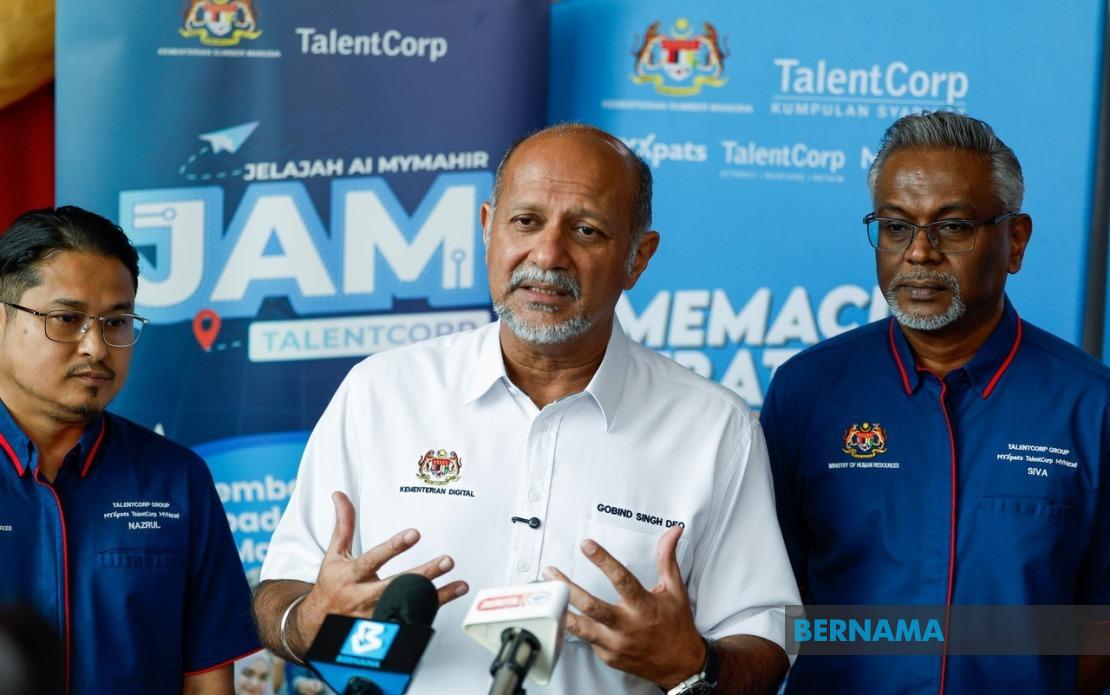
Malaysia's digital creative sector has achieved a significant economic milestone, generating more than RM92.5 billion in revenue whilst simultaneously attracting RM85.7 billion in investments, according to Digital Minister Gobind Singh Deo. The industry's expansion has yielded over 11,000 high-value employment opportunities and RM12.1 billion in export earnings, metrics that underscore the transformative potential of animation, games and digital content production across the economy. These figures were announced during the Borneo Animation and Games Festival in Kuching, positioning the sector as a cornerstone of Malaysia's emerging digital economy.
The minister emphasised that the industry's trajectory reflects recognition beyond the creative realm, extending into substantive commercial and economic territories. Malaysia has cultivated homegrown intellectual properties that now command international audiences and revenue streams. Properties such as Upin & Ipin, Ejen Ali and Mechamato have transcended domestic markets, demonstrating that locally-developed creative content possesses competitive advantages in global entertainment ecosystems. This export success illustrates how cultural authenticity and storytelling excellence can be monetised and scaled across regional and international platforms.
Gobind articulated a strategic vision positioning digital creativity as an economic driver rather than a cultural sideshow. Strong Malaysian intellectual properties generate pathways for commercial expansion, facilitate business scaling and cultivate demand for highly skilled technical and creative workforces. The government's approach integrates creative industries within broader economic planning frameworks, recognising that animation studios, game developers and content creators represent essential components of Malaysia's future industrial architecture. This perspective reflects a maturation in policy thinking, shifting from treating creative sectors as peripheral cultural activities toward recognising them as legitimate engines of competitive advantage and employment.
National economic projections reinforce this optimistic trajectory. Malaysia aims to position the digital economy as a contributor of 30 per cent to the nation's Gross Domestic Product by 2030, a target requiring sustained growth across multiple digital subsectors including creative industries. Complementing this broader goal, the government forecasts generation of 500,000 high-value digital jobs throughout the coming four years. These employment opportunities extend beyond traditional creative roles, encompassing technical specialists, infrastructure developers, platform operators and business professionals who support the ecosystem's functioning and expansion.
Sarawak emerges as a critical geographical focus in Malaysia's creative industry strategy. The state possesses distinctive advantages: an established creative community, culturally rich narratives distinct from peninsular Malaysia, and an evolving digital infrastructure. The Sarawak government and federal administration have identified the state's potential as a regional animation and games hub, positioning it to capture production opportunities and talent from Southeast Asian markets. This geographical decentralisation of creative production aligns with broader strategies to develop economic clusters beyond the Klang Valley and Penang, distributing economic benefits across Malaysia's diverse regions.
Federal-state collaboration forms the foundation for realising Sarawak's digital ambitions. The government commits to strengthening the state's digital capabilities through infrastructure investment, skills development programmes and policy support. Simultaneously, integration mechanisms will connect Sarawak's creative enterprises to commercial opportunities throughout Malaysia, across Southeast Asia and into global markets. This integrated approach prevents creative industries from remaining localised or provincial, instead positioning regional creators as participants in multinational production chains and global distribution networks.
The Borneo Animation and Games Festival itself exemplifies coordinated Malaysian efforts to establish regional prominence in creative sectors. Described as the first international-scale animation and games festival held in Borneo, BAGFest 2026 functions as both a marketplace and a talent showcase. The festival's thematic focus on forging Sarawak's position as a regional hub articulates clear governmental ambitions and provides platforms where local creators interface with international investors, distributors and collaborators. Such events generate spillover economic effects extending beyond direct festival revenue, including accommodation spending, transportation services and longer-term business relationships.
For Southeast Asian regional development, Malaysia's creative industry trajectory carries significance. The region increasingly competes in global digital markets, with countries like Thailand, Indonesia and Vietnam developing parallel creative sectors. Malaysia's RM92.5 billion revenue base and export capabilities position it competitively, though regional competition will intensify. However, cooperative frameworks and shared production ecosystems could emerge, allowing Malaysian companies to establish regional leadership roles whilst sourcing talent and resources from across Southeast Asia. This regional positioning offers Malaysian creative firms advantages in understanding culturally diverse Asian audiences often underserved by Western entertainment and gaming industries.
The employment dimension warrants particular attention given Southeast Asian demographic realities. High-value digital jobs created by creative industries typically offer better remuneration and career progression than manufacturing or service sector roles. Generation of 500,000 such positions over four years addresses skills utilisation challenges facing Malaysia's educated youth, particularly in states like Sarawak where employment opportunities traditionally concentrated in resource extraction or government sectors. Creative industry jobs retain talent domestically, reduce pressure for overseas migration and support human capital development aligned with technological advancement.
Sustainability of this growth trajectory depends on complementary investments extending beyond direct industry support. Educational institutions require curriculum reforms emphasising digital storytelling, game design, animation techniques and entrepreneurship alongside technical proficiency. Infrastructure development must ensure reliable broadband connectivity, particularly in East Malaysia where connectivity remains uneven. Intellectual property protections, including robust copyright enforcement and patent frameworks, protect Malaysian creators' investments and encourage reinvestment in new productions. Financial sector accessibility through venture capital, crowdfunding platforms and development banking ensures creative entrepreneurs secure necessary resources.
International partnerships amplify growth prospects. Collaborations with Asian creative hubs, partnerships with global streaming platforms and joint production arrangements with international studios expose Malaysian talent to best practices whilst creating co-financing opportunities. The recent Busan International Film Festival's recognition of Malaysian productions and growing interest from international platforms in Southeast Asian content indicate receptiveness to Malaysian creative output. Strategic partnerships capitalise on this receptiveness rather than allowing opportunities to accrue to competitors.
Challenges accompany these opportunities. Talent retention remains critical as Malaysian creators face recruitment from better-resourced regional competitors or multinational companies establishing Asian operations. Quality consistency requires sustained training investments and mentorship ecosystems. Market saturation risks emerge as multiple Southeast Asian nations develop similar sectors, necessitating differentiation through cultural distinctiveness and production excellence. Government must balance industrial support with market discipline, ensuring subsidies or protections do not insulate underperforming enterprises from competitive pressures that drive innovation.

