Malaysia is intensifying its approach to digital governance as the International Regulatory Conference (IRC) 2026 convenes in Kuala Lumpur, bringing together regulators, policymakers, and technology leaders to chart the nation's course through an increasingly complex digital landscape. The two-day gathering, organised by the Malaysian Communications and Multimedia Commission (MCMC) under the theme 'Shaping the Next Digital Era: Regulation, Resilience and Trust,' represents a critical juncture for the country as it navigates the convergence of artificial intelligence advancement, evolving cybersecurity threats, and persistent concerns about protecting vulnerable online users. Communications Minister Datuk Seri Fahmi Fadzil is scheduled to formally open the conference, with MCMC Commission member Derek John Fernandez delivering the keynote address, signalling the government's commitment to positioning Malaysia as a regional leader in digital regulatory innovation.
The conference agenda reflects the multi-faceted challenges confronting digital regulators in Southeast Asia. The opening dialogue addresses one of the most pressing contemporary issues: how to construct digital platforms that prioritise user safety without stifling innovation. Titled 'Online Safety by Design: Platform Accountability and Child Protection in an Age of User Vulnerability,' this session brings together specialists including Dr Farah Nini Dusuki from the Human Rights Commission of Malaysia (SUHAKAM), Saskia Blume from the United Nations Children's Fund (UNICEF) Malaysia, and Australian High Commissioner Danielle Heinecke. Their collective expertise will probe fundamental questions about platform accountability and institutional responsibility for protecting children and marginalised users navigating digital spaces where commercial incentives often conflict with user welfare.
Data sovereignty and privacy protection form another cornerstone of Malaysia's emerging digital policy framework. A dedicated session examines how the country can advance its digital economy while maintaining control over citizen data and strengthening consumer protections. This discussion comes as Malaysia transitions towards more sophisticated data governance structures, with industry participants including Maxis, T&G Digital, and Ericsson contributing practical perspectives on implementing privacy safeguards. The emphasis on data sovereignty reflects broader Southeast Asian anxieties about technology dominance from external players and the strategic importance of maintaining local control over digital infrastructure and information assets.
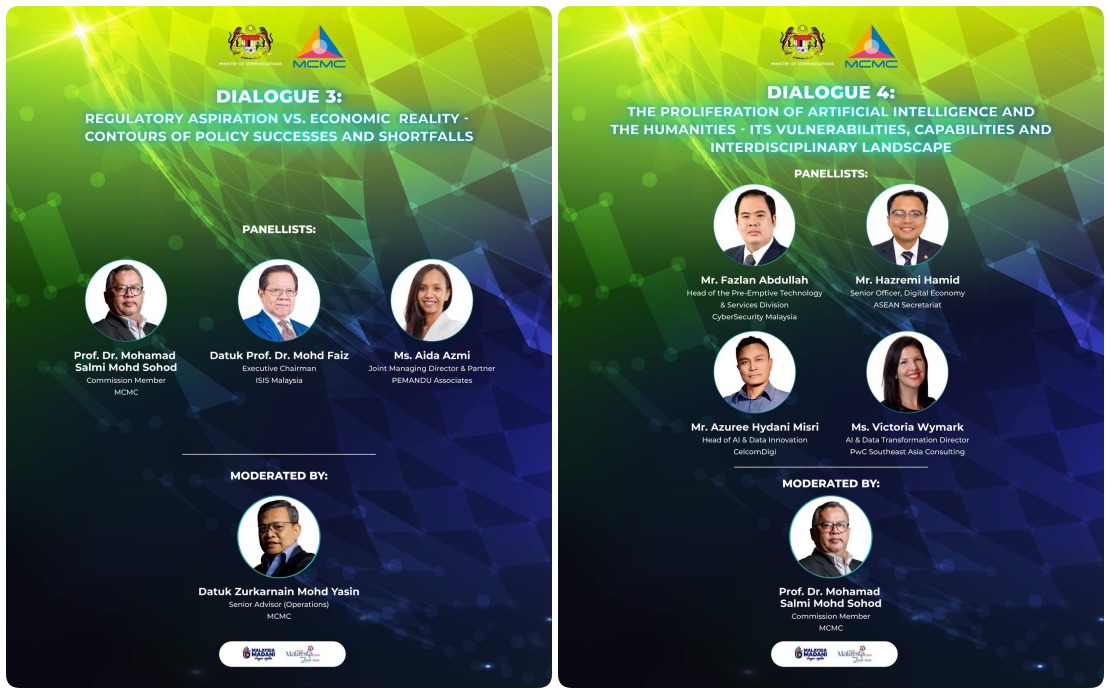
The tension between regulatory ambition and economic practicality occupies a central place in the conference's analytical framework. A dedicated afternoon session examines how policy objectives must be balanced against the realities of business operations and competitive pressures. Experts from the Institute of Strategic & International Studies (ISIS) Malaysia and PEMANDU Associates will probe instances where regulatory initiatives have succeeded or fallen short, offering evidence-based guidance for future policymaking. This pragmatic approach acknowledges that overly restrictive regulations risk driving innovation and investment elsewhere, while insufficient oversight leaves gaps that bad actors exploit.
Artificial intelligence and its societal ramifications warrant serious interdisciplinary examination, recognising that technology's impacts extend far beyond technical and commercial domains. The conference devotes a session to 'AI and the Humanities: Its Vulnerabilities, Capabilities and Interdisciplinary Landscape,' bringing together technologists, academics, and security specialists from the ASEAN Secretariat, PwC Southeast Asia Consulting, Universiti Kebangsaan Malaysia, CelcomDigi, and CyberSecurity Malaysia. This approach reflects growing recognition that understanding AI's societal consequences requires humanistic and ethical perspectives alongside engineering expertise, addressing concerns about algorithmic bias, workforce displacement, and concentration of digital power.
Looking beyond current challenges, Malaysia is preparing for emerging technologies that will reshape digital infrastructure and regulation. The conference's second day pivots toward future-frontier issues, including quantum technology and its implications for communication security and encryption. Experts from IBM Quantum, alongside academic leaders from Malaysia's top technological universities—Universiti Teknologi Malaysia, Universiti Malaya, and Universiti Kebangsaan Malaysia—will explore how quantum developments should inform today's regulatory planning. As quantum computing advances, governments must anticipate cryptographic vulnerabilities and begin transitioning digital systems accordingly, making this forward-looking dialogue strategically essential.
The robotics revolution represents another frontier requiring coordinated regulatory attention. A dedicated session on 'Regulating the Robotics Revolution: A Cross-Sector Imperative' acknowledges that automation and robotics span manufacturing, healthcare, services, and defence sectors, each requiring tailored governance approaches. Malaysia's multicultural, multi-sector economy presents distinctive challenges for robotics regulation, balancing technological adoption with workforce protection and ensuring that automation benefits are broadly distributed rather than concentrating wealth and opportunity.
Contemporary concerns about digital dependency and human autonomy address the psychological and cognitive dimensions of technology integration. A session exploring 'Digital Dependency and Human Autonomy: Mental Wellbeing, Knowledge Integrity and Boundaries in an Always-On Society' confronts questions about screen time, misinformation, attention fragmentation, and social cohesion in hyperconnected populations. These concerns resonate particularly in Malaysia, where social media usage rates are among the world's highest and where digital literacy remains unevenly distributed across demographic groups.
The IRC 2026 conference marks the third iteration of this biennial gathering since its 2024 inception, demonstrating Malaysia's sustained commitment to institutionalising digital policy dialogue. The conference timing coincides with the implementation phase of the Online Safety Act 2025 (ONSA), which formally commenced on January 1 this year. ONSA represents Malaysia's legislative response to online harms including cyberbullying, misinformation, and content harmful to minors and represents a crucial test case for how regulatory frameworks balance free expression with user protection in the Southeast Asian context.
The gathering's international participation, drawing regulators and policymakers from over seven countries, positions Malaysia at the centre of regional digital governance discussions. This convening role elevates Malaysia's influence over emerging standards and best practices across ASEAN, particularly as smaller neighbours look to larger economies for regulatory guidance. The conference's emphasis on sharing experiences and examining policy successes and failures creates opportunities for Malaysia to learn from others while establishing itself as a thoughtful, evidence-based player in digital governance conversations.
Deputy Communications Minister Teo Nie Ching will formally close the conference tomorrow afternoon, providing an opportunity to synthesise insights and indicate the government's priorities for the coming year. The IRC 2026 sequence of discussions reveals Malaysia's understanding that digital governance demands simultaneous attention to protection, innovation, sovereignty, and human flourishing. Rather than treating these as competing priorities, the conference structure suggests they should be pursued as complementary objectives, each reinforcing the others when properly balanced.

