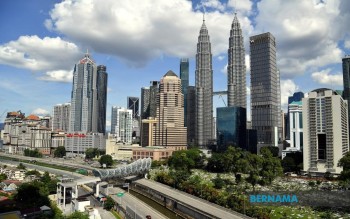
Malaysia's economy accelerated to 6.0 per cent growth in the second quarter of 2026, defying widespread expectations that the West Asia conflict and associated global supply chain disruptions would severely constrain regional economic performance. The expansion, announced by Prime Minister Datuk Seri Anwar Ibrahim, exceeded both the Department of Statistics Malaysia's advance projection of 5.8 per cent and the Bloomberg median forecast by the same margin. For a non-pandemic comparison, this represents the country's strongest second-quarter performance since 2014, underscoring the resilience of Malaysia's domestic economy even as international headwinds intensify.
Government intervention played a decisive role in sustaining consumer spending and business investment during a period of heightened uncertainty. The administration deployed a multi-layered approach combining direct cash transfers through Sumbangan Tunai Rahmah and Sumbangan Asas Rahmah with the targeted BUDI MADANI subsidy framework designed specifically to shield lower-income households. Critically, financing packages were made available to small and medium enterprises facing elevated operating costs and reduced demand from disrupted supply chains. These measures ensured purchasing power remained intact among vulnerable populations, preventing the sharp contraction in consumption that might otherwise have accompanied the geopolitical turmoil.
Inflation management proved equally crucial to the growth story. While global supply disruptions have pushed prices upward across most developed and emerging economies, Malaysia contained headline inflation to just 1.9 per cent in the second quarter—a remarkable achievement given the magnitude of external shocks. Prime Minister Anwar attributed this stability partly to the MADANI Economy framework, which incorporates structural reforms designed to enhance productivity and competitiveness while maintaining price stability. The government's willingness to absorb cost pressures through targeted subsidies rather than allowing them to cascade into consumer prices created space for households to maintain spending patterns.
The underlying composition of growth reveals the strength of Malaysia's economic structure. Domestic demand remained robust, with both consumption and investment contributing positively despite the uncertain external environment. Simultaneously, the external sector performed strongly, suggesting that Malaysia's export-oriented manufacturing base and services sectors maintained momentum even as regional trade patterns shifted. This dual-engine approach—where neither growth pillar collapsed into negative territory—differentiates Malaysia's performance from several regional peers that experienced more pronounced slowdowns.
Yet Prime Minister Anwar's statement struck a notably cautious tone, acknowledging that macroeconomic aggregates mask uneven outcomes across the population and business landscape. While headline figures remained encouraging, he recognized that many Malaysians continued experiencing cost-of-living pressures, wage stagnation, and reduced employment prospects. Certain sectors faced particularly difficult trading conditions, with workers in tourism, aviation, and export-dependent manufacturing bearing disproportionate burdens. This candid recognition reflects the government's awareness that statistical averages obscure the genuine hardship experienced by portions of the workforce left behind by growth dynamics.
The first half of 2026 cumulative growth rate of 5.7 per cent places Malaysia well-positioned to achieve the government's full-year forecast of 4.0 to 5.0 per cent expansion, even assuming some deceleration in the second half. This trajectory proves particularly impressive considering that the first quarter already expanded at 5.4 per cent, meaning the economy accelerated rather than decelerated as external pressures mounted. Sequential improvement of this magnitude suggests that the policy measures implemented by the MADANI Government generated genuine traction rather than merely slowing the pace of decline.
Looking forward, significant risks remain embedded within the regional and global economic outlook. Continued geopolitical uncertainty in West Asia threatens further supply chain fragmentation, while elevated input costs and food price inflation could eventually overwhelm government subsidy mechanisms if sustained over extended periods. Employment pressures in certain sectors may intensify if the current conflict expands or prolongs, potentially triggering more widespread redundancies. The sustainability of Malaysia's growth momentum depends critically on whether international conditions stabilize or deteriorate further in coming quarters.
The government's policy approach reflects an implicit bet that temporary, targeted interventions can effectively manage the transition through a crisis period without requiring fundamental economic restructuring. By combining transfer payments with subsidies and SME financing support, authorities attempted to preserve the existing productive base while protecting vulnerable households. This strategy contrasts with more laissez-faire approaches that might accept short-term pain for purported long-term efficiency gains, reflecting the political economy constraints facing elected officials accountable to populations experiencing real hardship.
For Malaysian and regional observers, the second-quarter performance offers both encouragement and caution. The economy's demonstrated resilience suggests that Asia's institutional frameworks, policy toolkits, and structural strengths possess greater shock-absorbing capacity than some external commentators acknowledged. Simultaneously, the acknowledged uneven distribution of growth benefits and persistent cost-of-living pressures underscore that statistical success at the national level does not automatically translate into improved conditions for all population segments. As geopolitical risks remain elevated and global supply chains continue adjusting to the new strategic environment, Malaysia's ability to sustain current momentum while progressively broadening the distribution of growth benefits will determine whether 2026 ultimately represents a turning point or merely a temporary respite.

