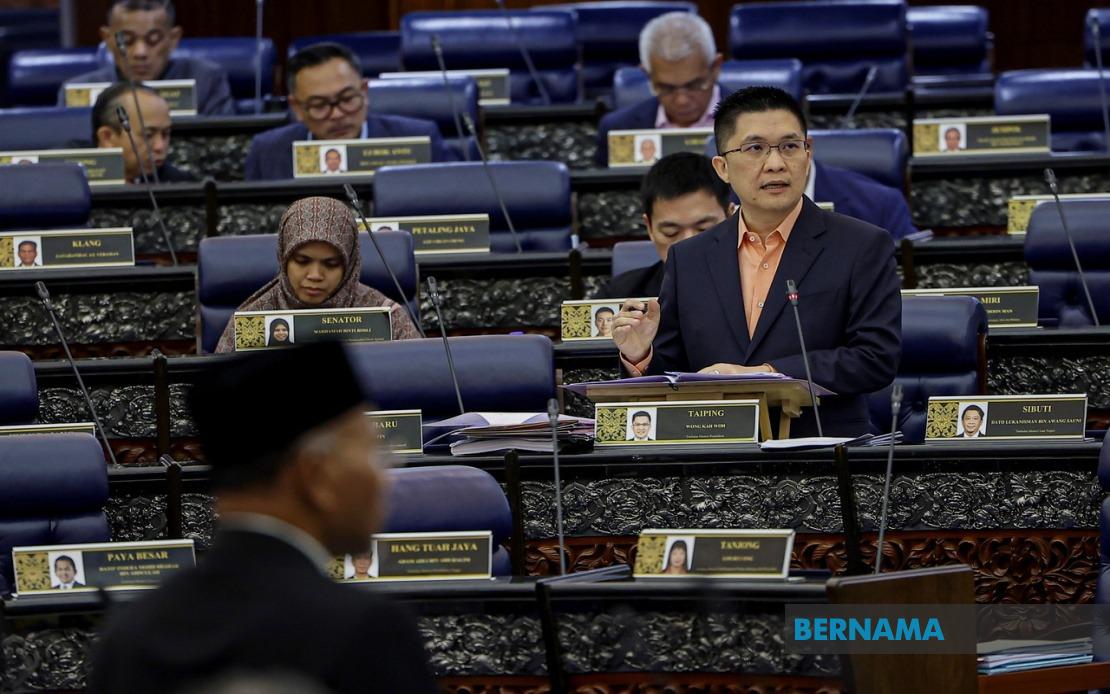
Malaysia's education system is bracing for a significant structural shift in 2027 when primary schools will simultaneously enrol two age cohorts into Year One—a historic policy change that is forcing the Ministry of Education to substantially expand its physical and human resources. Deputy Education Minister Wong Kah Woh revealed in Parliament that the ministry has received 478,419 Year One applications so far, comprising 73,386 registrations from six-year-old children entering the formal education system for the first time, and 405,033 from the traditional seven-year-old cohort. This combined figure represents a formidable 12.07 per cent spike relative to the 2026 Year One enrolment, which drew exclusively from the older age group, underscoring the logistical challenge this policy transition presents.
To manage this demographic surge, the ministry is pursuing an aggressive infrastructure development strategy centred on modular construction methods. Across 838 schools nationwide, the Education Ministry is deploying the Industrialised Building System (IBS) to erect 2,596 new classrooms, a technique designed to accelerate project timelines and standardise construction quality. Wong indicated that these classroom projects are expected to be finalised within the current calendar year, reflecting the ministry's determination to have facilities ready well in advance of the 2027 intake. The IBS approach represents a departure from traditional construction methodologies and signals the government's recognition that conventional building timelines would be insufficient to meet this deadline. For Malaysian taxpayers and parents, this modernised construction method offers potential cost efficiencies, though questions remain about the quality and durability of modular classroom structures in Malaysia's tropical climate.
The human resource dimension of this expansion is equally substantial. The ministry plans to hire 3,150 contract of service (COS) teachers to handle the increased classroom load and maintain acceptable pupil-to-teacher ratios. Beyond these contractual appointments, the ministry will also engage reserve candidates from the Education Service Commission (SPP) to plug remaining gaps. This multi-tiered recruitment strategy reflects awareness that filling teacher shortages through traditional civil service channels alone would be impractical given the compressed timeline. However, the reliance on contract teachers raises enduring concerns about job security, professional development, and the long-term stability of the teaching workforce—issues that continue to reverberate through Malaysian education circles.
Parental choice has been deliberately embedded into the policy framework to accommodate varying levels of developmental readiness among six-year-olds. Rather than imposing a hard cutoff, the Education Ministry is allowing parents to decide whether their child should join the younger cohort or defer entry until the following year when they would enrol with the seven-year-old group. This flexibility acknowledges that maturity and school-readiness vary considerably among individual children and that a one-size-fits-all approach could disadvantage pupils who are developmentally unprepared for formal primary education. The decision recognises practical realities that educators have long observed—not all children develop cognitive and social skills at identical rates, and premature enrolment can undermine academic confidence and social integration.
Concurrently, the ministry is substantially increasing pre-school provision to better prepare younger children for the transition into Year One. This year, 350 additional pre-school classes were established, a dramatic escalation from the approximately 150 classes added annually in previous years. This expansion deliberately targets B40 households—those in the bottom 40 per cent of household income distribution—who have historically lacked affordable access to quality early childhood education. By removing cost barriers to pre-school attendance, the ministry aims to level the developmental playing field, ensuring that disadvantaged children arrive in Year One with foundational literacy, numeracy, and social skills comparable to their wealthier peers who could afford private kindergartens. This represents a strategic investment in equity, though funding sustainability for scaled-up pre-school operations remains an important consideration.
The dual-cohort policy carries significant implications for Malaysia's private kindergarten sector, which has traditionally served as the primary custodian of early childhood education. With one age cohort now migrating into the public primary system, private kindergarten operators face the prospect of losing a substantial portion of their client base. Recognising this concern, the Education Ministry is actively reviewing the long-term viability and sustainability of private kindergarten businesses and has initiated engagement sessions with education stakeholders to address their anxieties and explore potential policy adjustments. These discussions will be crucial in determining whether the government might provide subsidies, regulatory relief, or other support mechanisms to allow viable kindergartens to survive the transition. The outcome will reshape Malaysia's early childhood education landscape, potentially consolidating provision more firmly within the public system.
Teacher preparation and curriculum alignment represent additional critical dimensions of this transition. The ministry is implementing professional training programmes specifically targeting instruction of younger six-year-old students, whose developmental needs and learning styles differ markedly from seven-year-olds. Wong indicated that strengthening pedagogical capacity through targeted professional development is a ministry priority, ensuring that teachers possess the skills and knowledge to differentiate instruction and provide developmentally appropriate learning experiences. Furthermore, the 2027 primary curriculum—to be introduced next year—has been deliberately tailored to accommodate the developmental levels and learning needs of both age cohorts. This curriculum redesign reflects educational research suggesting that primary learning experiences must align with children's cognitive development stages, a principle that becomes more complex when two age groups occupy the same classroom.
The ministry's five-year projection framework for teacher requirements across national and state levels demonstrates systemic planning intent, yet the accuracy of such projections remains contingent upon variables including demographic shifts, regional migration patterns, and changes in retention rates among existing educators. State-level variability will be particularly significant given Malaysia's uneven geographic distribution of population and varying economic conditions across peninsular Malaysia and the East Malaysian states. Some states may face acute teacher shortages requiring more aggressive recruitment and incentive strategies, whilst others may experience relative surplus. Understanding these regional nuances will be essential for equitable resource allocation and preventing further deterioration of teacher-pupil ratios in under-resourced areas.
The Year One transition programme represents the ministry's attempt to smooth the adjustment process for newly enrolled younger pupils who may experience anxiety, social disorientation, or academic difficulty. By providing structured transition support—potentially including extended orientation periods, age-appropriate classroom environments, and scaffolded learning activities—the ministry acknowledges that school entry constitutes a profound developmental milestone requiring sensitive institutional response. The success or failure of this transition programming will substantially influence both the immediate well-being of six-year-old pupils and their longer-term academic trajectories and attitudes toward schooling.
From a regional perspective, Malaysia's dual-cohort policy represents a distinctive approach to early primary enrolment compared with practices in neighbouring countries. Singapore maintains a rigid intake system based on birth dates, whilst some countries employ transitional early primary years. Malaysia's flexible approach, combined with substantial public pre-school expansion, suggests a policy philosophy emphasising equity of opportunity and developmental appropriateness over bureaucratic uniformity. However, implementation quality will ultimately determine whether this vision translates into measurable improvements in primary school readiness and academic achievement, particularly among disadvantaged cohorts.
The financial implications of this expansion are substantial but largely unquantified in Wong's parliamentary statement. The construction of 2,596 classrooms, recruitment of 3,150 teachers, expansion of 350 pre-school classes, and curriculum redesign collectively represent a major fiscal commitment at a time when Malaysian government budgets face competing demands. Whether current allocations prove adequate, or whether supplementary funding will be required, remains unclear—a transparency gap that should be addressed through detailed budget documents.
The success of Malaysia's 2027 dual-cohort transition will serve as a critical test of the government's capacity to implement large-scale educational infrastructure and policy changes whilst maintaining educational quality. The coming months will be crucial for monitoring whether planned classroom construction stays on schedule, whether teacher recruitment targets are met with qualified candidates, whether pre-school expansion effectively reaches B40 families, and whether curriculum materials and transition support mechanisms are adequately developed. These outcomes will offer valuable lessons not only for Malaysia but for other developing nations grappling with rapid demographic changes and the imperative to provide equitable, quality education to increasingly diverse student populations.

