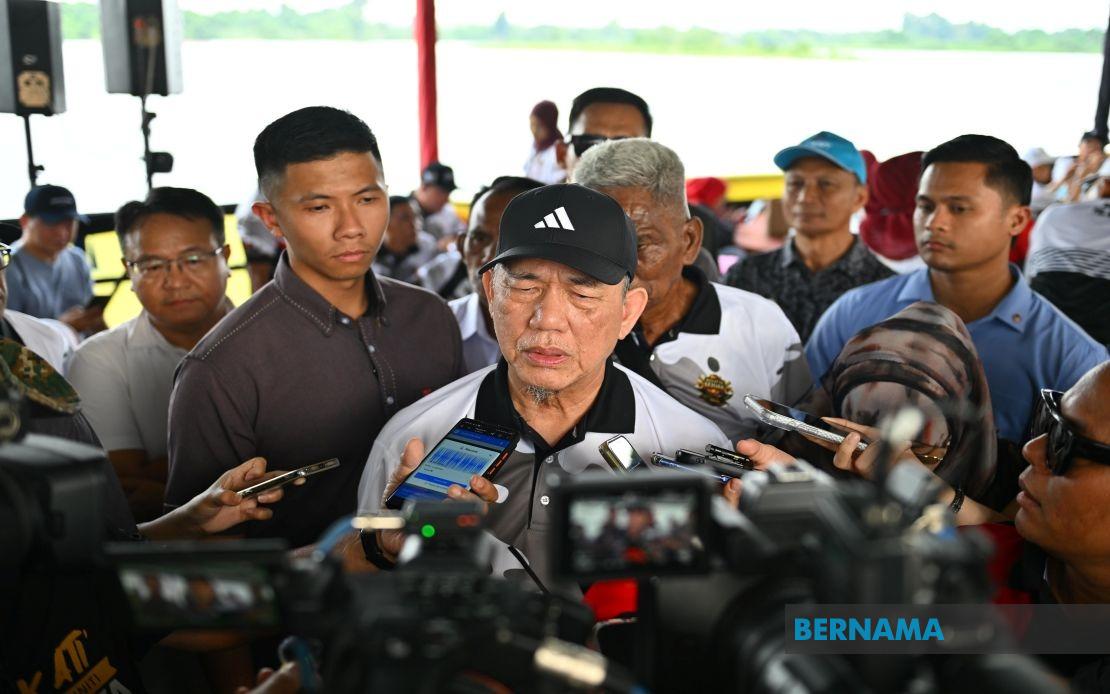
Malaysia's energy sector remains adequately supplied even as geopolitical tensions escalate around one of the world's most critical oil transit routes, according to Deputy Prime Minister Datuk Seri Fadillah Yusof. Speaking after an official engagement in Kuching on July 12, Fadillah provided reassurance that fuel availability has not been compromised, underlining the government's close monitoring of developments in the Strait of Hormuz—a waterway through which approximately one-third of the world's seaborne oil trade passes.
The stability of Malaysia's energy supply reflects proactive diplomatic and commercial efforts led jointly by Petronas and Prime Minister Datuk Seri Anwar Ibrahim, according to the Deputy Prime Minister. These initiatives operate across multiple engagement channels and negotiation platforms, designed to insulate Malaysia from supply disruptions that could otherwise ripple through the broader economy. The emphasis on multi-level dialogue suggests a strategy that balances direct commercial relationships with strategic diplomatic engagement to safeguard the nation's energy interests during a period of heightened regional uncertainty.
Fadillah, who holds the portfolio of Energy Transition and Water Transformation Minister, acknowledged that while immediate supply security has been achieved, the broader energy landscape presents persistent challenges. The pricing dimension of global oil and gas markets remains volatile and beyond Malaysia's direct control, creating a transmission mechanism through which international instability flows directly into domestic economic conditions. This distinction between supply availability and price stability is crucial for understanding Malaysia's actual vulnerability; the country may have sufficient volumes of fuel, yet fluctuating costs still pressure government budgets and household purchasing power.
The geopolitical uncertainty surrounding the Strait of Hormuz stems from wider regional tensions that have periodically disrupted shipping lanes and elevated insurance costs for vessels transiting the passage. For energy-importing nations like Malaysia, such disruptions translate into higher acquisition costs even when physical supply is not interrupted. The government's engagement through Petronas reflects recognition that commercial relationships and diplomatic channels must work in concert to maintain not just access to energy, but access on economically sustainable terms.
The Minister highlighted the dual challenge confronting policymakers: maintaining fiscal sustainability while simultaneously protecting citizens from the full brunt of international energy price volatility. Malaysia continues to operate subsidy and assistance programmes designed to shield lower-income households and essential sectors from extreme price swings. Yet these safety net programmes themselves impose fiscal demands that must be reconciled with other developmental priorities and deficit management objectives. This tension defines much of the current economic policy debate across the region, as governments attempt to balance social protection against long-term budgetary health.
The situation underscores Malaysia's structural dependence on energy imports and the risks inherent in that position. Although the country possesses domestic oil and gas reserves, particularly offshore in the South China Sea, the country must also purchase energy from international markets to meet growing demand. This mixed position—part producer, part consumer—creates complexity in energy policy formulation. Regional tensions that disrupt shipping lanes affect Malaysia even when domestic production remains steady, because the country relies on both internal resources and external supply chains.
Petronas' central role in navigating this landscape reflects its evolution from a purely extractive company into a broader energy security actor working in coordination with government. The national oil company engages not merely in commercial transactions but increasingly in strategic relationship-building aimed at diversifying supply sources and locking in long-term contractual arrangements that provide price predictability. These efforts extend beyond traditional upstream oil and gas into renewable energy, liquefied natural gas procurement, and regional energy trading mechanisms.
The government's public messaging on energy security carries particular weight at a time when energy costs directly influence inflation metrics and citizen sentiment about economic management. Reassurance statements from senior officials serve both practical and psychological functions—they signal competence in crisis management while also potentially anchoring expectations about future price movements. However, the candid acknowledgment that pricing remains challenging demonstrates an attempt to balance optimism with realism, avoiding overstatement that could later undermine credibility.
For Malaysian businesses and consumers, the immediate takeaway is that fuel will continue flowing through established supply chains without sudden disruption. Yet the underlying message carries a caveat: energy security in the modern era is multidimensional, encompassing not merely physical availability but also price stability and budgetary sustainability. The Strait of Hormuz tensions serve as a reminder of how distant geopolitical events—Middle Eastern conflicts, maritime security incidents, or shifts in global energy demand—ultimately manifest in Malaysian petrol station prices and electricity bills.
Looking forward, Malaysia's energy strategy must balance continued reliance on fossil fuels with the transition toward renewable sources and emerging technologies. The Deputy Prime Minister's portfolio title itself—Energy Transition and Water Transformation—signals governmental recognition that long-term energy security cannot rest indefinitely on imported hydrocarbons subject to external shocks. The immediate supply reassurance must be read alongside broader policy signals about diversification, sustainability, and regional cooperation in energy markets. These multifaceted efforts reflect the reality that contemporary energy security requires constant diplomatic, commercial, and technological adaptation.

