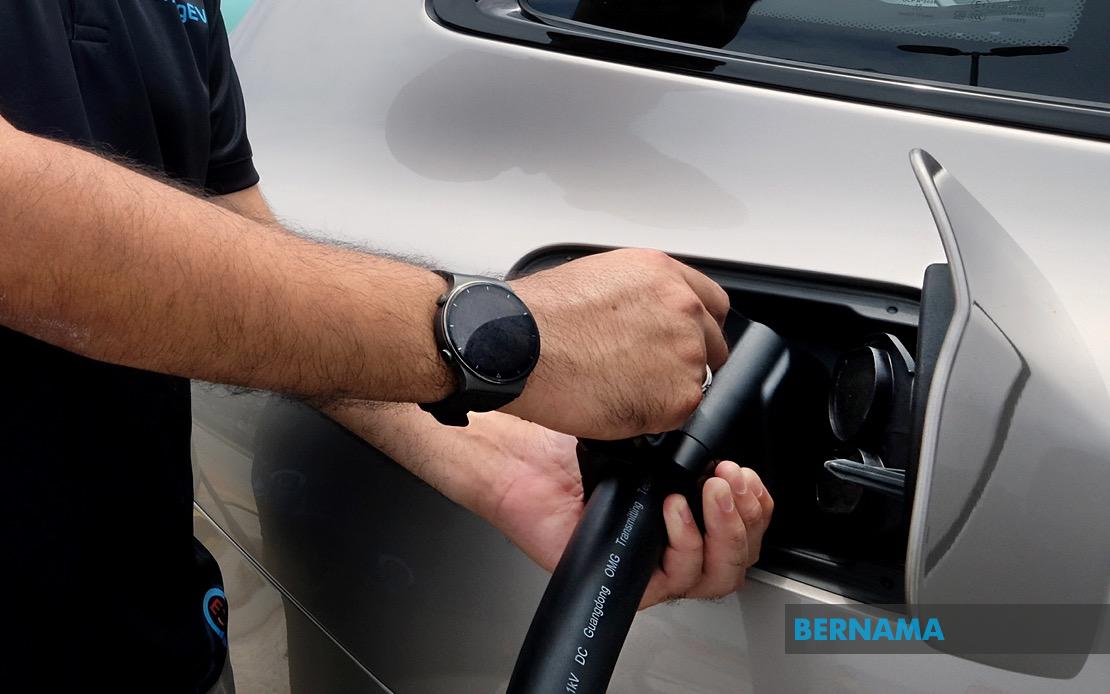
Malaysia's electric vehicle charging network has grown to 6,416 public installations as of late May 2026, marking a significant expansion in the nation's EV infrastructure. The Ministry of Investment, Trade and Industry disclosed the milestone in a parliamentary response, breaking down the deployment into 2,143 direct current fast chargers and 4,273 alternating current chargers. This distinction matters considerably for drivers, as DC fast chargers typically replenish batteries in 20 to 40 minutes, while AC chargers require several hours, shaping consumer convenience and adoption patterns across the country.
The government acknowledges that infrastructure gaps remain a critical bottleneck for wider EV uptake, particularly in secondary cities and rural areas where charging networks are sparse. To tackle this challenge, authorities have adopted a coordinated whole-of-government strategy involving multiple stakeholders. PLANMalaysia has introduced specific EV Charging Bay Planning Guidelines designed to expedite regulatory approvals, compressing the process from potentially months to as few as 14 working days. This streamlining removes administrative friction that previously deterred investors and businesses from installing chargers on their premises, a crucial reform given Malaysia's competitive position within Southeast Asia's emerging EV sector.
The expanded push reflects deeper collaboration among state actors and private entities. The Energy Commission, national utility Tenaga Nasional Bhd, licensed charging point operators, industry bodies including the EV Charging Industry Association and the Malaysia Zero Emission Vehicle Association, and local authorities now work in coordinated fashion to identify priority installation zones and accelerate deployment. This participatory approach contrasts with top-down mandates and allows ground-level stakeholders to shape infrastructure planning around actual demand clusters, such as shopping malls, office parks, and residential complexes where vehicles congregate.
Beyond charging hardware, MITI has signalled that building a self-sufficient domestic EV ecosystem ranks equally high on the policy agenda. The government is channelling investment into technology transfer partnerships and local supply chain development, recognising that Malaysia cannot compete globally if it remains dependent on foreign components and expertise. Strategic collaborations with original equipment manufacturers and international technology providers serve as conduits for knowledge, enabling Malaysian firms to leapfrog developmental stages that took other nations years to traverse.
The National EV Project, anchored by automaker Perodua under the New Industrial Master Plan 2030, exemplifies this ambition. So far, 62 local supplier companies have joined the initiative, alongside more than 300 Malaysian automotive engineers and specialists engaged in developing the national EV platform. These figures underscore a deliberate effort to distribute economic benefits across the supply chain rather than concentrating production in a handful of assembly plants. Local vendors gain capability and market access; the national project gains cost efficiency and supply security; and Malaysia inches toward regional manufacturing competitiveness.
Parallel efforts involving Proton, the other major national carmaker, target integration of 40 local companies into its EV supply chain. This dual-track approach—splitting flagship projects between Perodua and Proton—creates competitive pressure that typically spurns faster innovation and cost reduction. Both manufacturers vie for technical leadership and component quality, ultimately benefiting consumers and raising the bar for domestic suppliers who must meet standards set by international partners collaborating with the projects.
The focus on high-value components such as battery packs, electric drive motors, and Advanced Driver Assistance Systems reflects strategic thinking about where Malaysia can capture meaningful profit margins and intellectual property. Battery manufacturing, in particular, has emerged as a critical pinch point globally, with supply constraints and price volatility affecting automakers worldwide. By building domestic battery capabilities, Malaysia hedges against supply disruptions and positions itself as a potential exporter within the region as demand accelerates across Southeast Asia.
For Malaysian consumers and businesses, these initiatives carry tangible implications. Faster charging approvals and expanding networks should ease concerns about "range anxiety" that deter EV purchases, particularly among middle-income buyers exploring first-time adoption. Simultaneously, domestic component development could gradually lower vehicle prices as local suppliers achieve scale and efficiency, making EVs more affordable relative to petrol-powered vehicles. This pricing realignment proves essential for reaching mass-market adoption, since Malaysia's EV market remains skewed toward affluent early adopters.
The policy trajectory also signals Malaysia's commitment to the International Paris Agreement climate targets and its own low-carbon mobility agenda. Reducing transport sector fossil fuel dependence addresses both environmental imperatives and economic vulnerabilities tied to oil price volatility. A thriving domestic EV industry creates high-skilled manufacturing jobs, attracts foreign direct investment, and positions Malaysia as a credible technology partner within ASEAN, where regional integration of automotive supply chains is accelerating.
However, challenges persist. Six thousand chargers distributed across a nation of 33 million people remains sparse compared to developed markets with mature networks. Rural electrification, grid capacity expansion, and tariff structures for public charging remain unresolved policy questions. Additionally, success depends on sustained collaboration between government agencies, private investors, and operators—a coordination test that has tripped up previous infrastructure initiatives in Malaysia. Financing mechanisms for small and medium enterprises seeking to install chargers at their locations also require clarity, as capital requirements deter many prospective investors.
The parliamentary response suggests momentum is building, yet the next phase demands execution discipline and adaptive management. Regional competition from Thailand, Vietnam, and Indonesia—all aggressively wooing EV manufacturers and investing in charging networks—means Malaysia cannot afford prolonged delays or policy inconsistency. Success requires maintaining the institutional coordination efforts outlined, scaling approvals and financing mechanisms, and ensuring that local suppliers genuinely upgrade capabilities rather than simply assemble imported parts. These measures, taken together, position Malaysia to capture meaningful benefits from the global EV transition.

