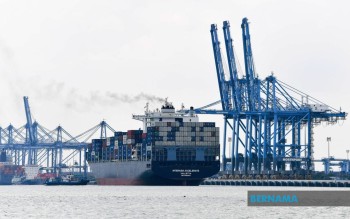
Malaysia's export prospects have brightened considerably, with major domestic investment banks revising their growth forecasts upward following exceptional trade performance in the opening months of 2026. RHB Investment Bank has raised its projection for annual export expansion to 21.7 per cent, a substantial increase from its previous estimate of 15.3 per cent. This optimism reflects reality on the ground, where year-to-date exports have already expanded by 27.5 per cent, suggesting that current momentum could sustain or exceed the bank's revised targets throughout the remainder of the year.
The revision underscores a fundamental shift in Malaysia's economic trajectory. The country's diversified export base, particularly its deep involvement in global semiconductor and electronics supply chains, has positioned it to capitalize on the current technology investment boom. Companies across Southeast Asia are watching Malaysia's performance closely, as the nation's success in pivoting towards higher-value electronics manufacturing offers a template for regional industrial development. For Malaysian policymakers, the upgraded figures validate years of investment in the electrical and electronics sector and suggest that strategic positioning within global tech supply networks remains a winning formula.
Central to the optimistic outlook is the sustained strength of the E&E sector, which continues to benefit from an ongoing technology upcycle and intensifying investment in artificial intelligence capabilities. The global demand for semiconductors, cloud computing infrastructure, data centre equipment, and components for electric vehicles remains extraordinarily robust. Industrial automation technologies are also driving requirements for advanced electronics components. This confluence of technological trends creates a favourable external environment for Malaysia's established manufacturing expertise, and analysts expect this advantage to persist throughout 2026 and potentially beyond.
The remarkable trade performance figures provide concrete evidence supporting the bullish forecasts. Malaysia recorded a trade surplus of RM83.9 billion in the second quarter of 2026, compared with just RM15.3 billion during the same period in 2025, representing a roughly fivefold increase year-on-year. These figures are particularly significant because trade balances directly feed into gross domestic product calculations, meaning stronger exports contribute measurably to overall economic growth. The June 2026 data further reinforces this momentum, with overall trade expanding by 44.7 per cent to RM340.9 billion compared to the corresponding month in the previous year.
Within that June performance, exports specifically climbed 45.4 per cent to RM177.9 billion while imports simultaneously rose 43.9 per cent to RM163.0 billion, indicating that the export surge is accompanied by equally robust domestic economic activity. This balanced expansion is economically healthy, as it suggests that Malaysia's growth is not merely driven by unsustainable export spikes but rather reflects broad-based strength across both external and internal demand. The trade surplus for June alone jumped 64.9 per cent to RM14.9 billion, demonstrating that export growth is outpacing import growth and generating genuine improvements in the current account.
Beyond RHB's analysis, MBSB Investment Bank has also upgraded its outlook, projecting export growth of 18.9 per cent for 2026, compared with 6.6 per cent achieved in 2025. MBSB identifies technology product demand and commodity-related shipments—specifically petroleum products and liquefied natural gas—as the primary growth engines. This dual-driver forecast reflects Malaysia's diverse export portfolio, which extends well beyond electronics manufacturing into natural resources. For a trading nation dependent on international commerce, this diversification provides crucial insurance against sector-specific downturns and demonstrates that Malaysia's economic resilience rests on multiple pillars rather than a single commodity or industry.
MBSB has also revised its import growth projection upward to 13 per cent for 2025, from a previous estimate of 6.0 per cent. This adjustment reflects strengthening domestic economic activity and rising consumption, suggesting that Malaysia's internal economy is expanding alongside its export performance. Sustained rises in domestic demand support continued employment, business investment, and tax revenues, creating a virtuous cycle of economic expansion. For regional observers, Malaysia's domestic vitality matters because it indicates that the country is not merely riding a temporary export wave but rather experiencing genuine, internally-anchored economic growth.
However, investment banks temper their optimism with carefully identified risks that warrant close attention. Prolonged geopolitical tensions could disrupt global trade flows and dampen demand for Malaysian exports. Persistently elevated oil prices represent another concern, as higher energy costs increase production, transportation, and operational expenses across manufacturing industries. These cost pressures could eventually squeeze profit margins or force price increases that make Malaysian exports less competitive. For businesses operating within global supply chains, such macroeconomic headwinds can quickly translate into reduced order volumes and delayed investment decisions.
Trade policy uncertainty, particularly regarding potential policy changes in the United States, presents an additional risk factor. Tighter trade rules or new tariff regimes could disrupt the integrated supply chains that Malaysia has spent decades developing. Supply disruptions themselves remain a concern, as geopolitical disruptions or logistics challenges can interrupt the smooth flow of components and finished goods. Price pressures in commodity markets represent yet another variable, as fluctuations in petroleum and LNG prices could affect the competitiveness of Malaysia's natural resource exports and the profitability of energy-related industries.
Despite these headwinds, RHB emphasizes that Malaysia remains well-positioned to navigate external challenges. The country's diversified economic structure provides multiple revenue streams rather than dependence on any single sector. Deep integration into regional and global supply chains, while creating vulnerability to external shocks, also represents a competitive advantage in capturing technology-driven growth. Malaysian policymakers' ongoing efforts to diversify export markets and expand product offerings—reducing reliance on traditional destinations and sectors—further strengthen the economy's resilience.
For Malaysia and the wider Southeast Asian region, these upgraded forecasts carry significant implications. A growing Malaysian export sector creates demand for regional inputs and supports prices for commodities like natural gas and petroleum that other regional producers depend upon. Strong Malaysian export performance also typically correlates with expanding trade within ASEAN, as regional supply chains have become deeply intertwined. Neighbouring countries benefit from Malaysian demand for intermediate goods, services, and capital equipment, creating a multiplier effect throughout the region.
The optimistic 2026 export outlook also provides economic breathing room for Malaysian policymakers to address structural challenges and pursue longer-term development priorities. With trade and export growth projected to exceed earlier expectations, government revenues should remain robust, enabling continued investment in infrastructure, education, and research and development. The improved fiscal position could support efforts to transition Malaysia towards higher-value manufacturing and service sectors, reducing dependence on lower-margin activities and positioning the economy for sustainable long-term growth.
Looking forward, the convergence of RHB and MBSB's upgraded forecasts, though separated by a few percentage points, suggests broad analytical agreement that Malaysia has entered a genuinely strong growth phase. The actual performance in the opening months of 2026 has proven stronger than anticipated, and the underlying drivers—global technology demand and diverse commodity markets—appear likely to persist. Nonetheless, the risk factors identified by analysts deserve serious attention, as geopolitical disruptions, policy changes, or cost pressures could quickly erode the current momentum. Malaysia's economic managers will need to remain vigilant, maintaining the institutional frameworks and policy flexibility necessary to capitalize on current advantages while cushioning against potential external shocks.

