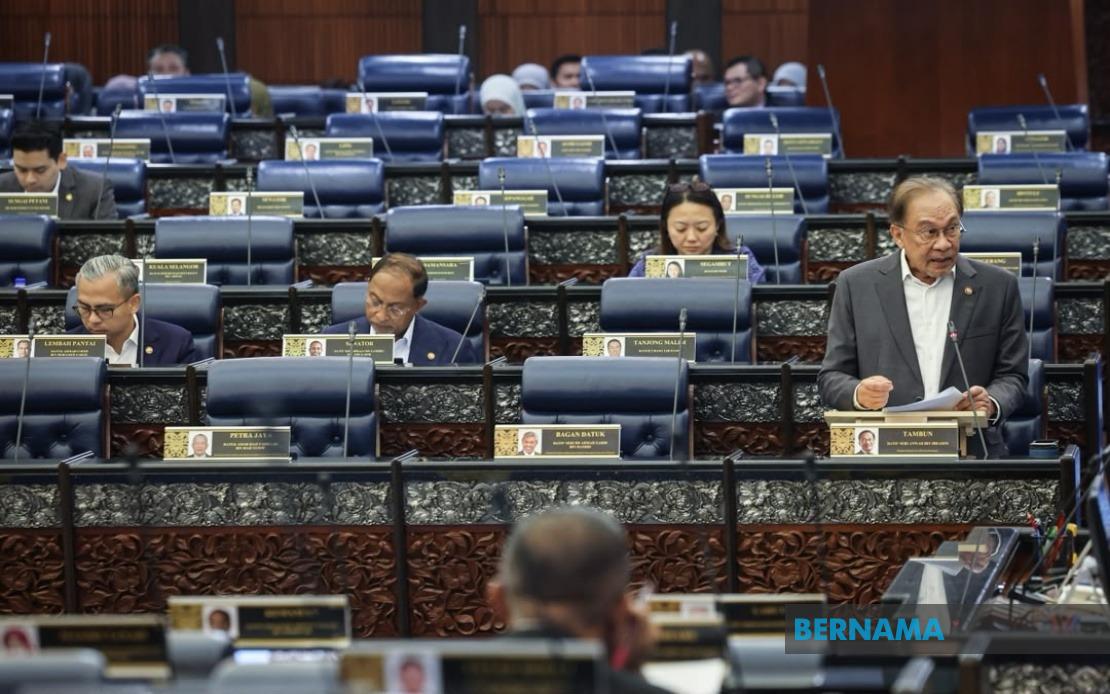
Prime Minister Datuk Seri Anwar Ibrahim sought to reassure Malaysians about the nation's fuel pricing competitiveness on July 14, asserting that petrol costs remain lower than those in significant petroleum-exporting economies. The statement, delivered in Parliament, directly countered suggestions that Malaysia's fuel market had lost its competitive edge relative to oil-rich neighbours, a concern that has periodically surfaced in public discourse as global energy markets fluctuate.
The government's BUDI MADANI initiative continues to maintain subsidised RON95 petrol at RM1.99 per litre, forming the centrepiece of Anwar's case. By drawing explicit comparisons with Saudi Arabia—currently pricing RON95 above RM2.40 per litre—the Prime Minister highlighted the tangible benefit of Malaysia's subsidy mechanism. This price differential underscores how policy choices can insulate domestic consumers from commodity market volatility, a particularly relevant point given the strategic importance of fuel affordability in a developing economy where transportation costs directly influence inflation and competitiveness.
The comparison extends beyond Saudi Arabia to encompass other significant regional players. Qatar and the United Arab Emirates, both major oil producers with substantial hydrocarbon reserves, similarly register higher retail fuel prices than Malaysia. Notably, the UAE implemented a fuel price increase merely two months prior to Anwar's parliamentary statement, demonstrating that even petro-states with direct control over oil production occasionally pass costs to consumers rather than absorb them entirely. This regional pattern suggests that Malaysia's pricing approach reflects deliberate policy prioritisation rather than simple market mechanics.
Anwar specifically referenced historical context to strengthen his position, invoking comparisons from an earlier period when his political movement, then in opposition, had campaigned for reduced fuel prices. He noted that when the opposition had called for RM1.50 per litre pricing, Saudi Arabia's comparable benchmark stood around 50 sen higher. The current gap—nearly 50 sen separating Malaysia from Saudi Arabia—thus represents a significant preservation of relative affordability, contradicting narratives suggesting deteriorating competitiveness.
The Prime Minister's remarks emerged during parliamentary questioning from Datuk Rosol Wahid of Hulu Terengganu, who sought clarification regarding fuel price differences across successive administrations. The question specifically juxtaposed pricing under the previous government of Datuk Seri Najib Razak with Anwar's own historical pledge to reduce fuel costs. This framing forced Anwar to reconcile campaign promises made from opposition benches with the fiscal realities confronting a sitting administration managing state resources and inflationary pressures.
The BUDI MADANI initiative represents a significant continuation of subsidy policy, maintaining government support for essential commodities even as fiscal pressures mount. For Malaysian consumers—particularly lower and middle-income households for whom fuel constitutes a meaningful portion of monthly expenditure—this commitment carries substantial practical importance. The programme reflects recognition that energy price shocks can cascade through economies, affecting transport, logistics, food costs, and general living expenses.
Regionally, Malaysia's pricing strategy occupies an interesting position within Southeast Asia. While not all regional neighbours maintain identical subsidy levels, Malaysia's approach of sustained government price support distinguishes it from some peers pursuing more market-aligned models. The comparison with Gulf states carries particular weight given their status as major crude producers; if Saudi Arabia and Qatar maintain higher pump prices despite owning upstream assets, Malaysia's position appears defensible even without equivalent oil reserves.
The statistical evidence presented—RON95 at RM1.99 versus Saudi Arabia's RM2.40-plus—provides concrete ammunition against critics suggesting Malaysian prices lack competitiveness. These figures also implicitly acknowledge global market realities; petroleum trades in international markets, limiting how far any nation can sustainably decouple domestic prices from global benchmarks without creating unsustainable fiscal obligations. Malaysia's subsidy mechanism thus represents a bounded response: supportive of consumers, yet calibrated to remain manageable within government budgets.
The parliamentary exchange touches on a recurring tension in Malaysian politics: balancing electoral expectations for low commodity prices against fiscal sustainability. Anwar's defence suggests the government believes current pricing strikes an appropriate equilibrium—affordable enough to cushion households and businesses, yet sufficient to reduce subsidy burdens compared to alternatives. Whether this balance will satisfy all stakeholders remains uncertain, particularly if global oil prices spike unexpectedly or fiscal pressures intensify.
Looking forward, Malaysia's fuel pricing narrative will likely remain politically sensitive. Successive governments have discovered that fuel prices command disproportionate public attention and emotional investment, with price changes frequently triggering broader perceptions of economic competence. Anwar's emphasis on regional comparisons appears designed to frame Malaysia's approach as pragmatic and consumer-conscious, differentiating current policy from potential criticisms about inadequate support or erosion of benefits.
For Malaysian readers and businesses monitoring energy costs, the immediate takeaway centres on stability: the government has signalled commitment to maintaining current pricing under BUDI MADANI. International comparisons suggest this pricing remains genuinely competitive relative to regional alternatives, providing context for those assessing Malaysia's fiscal health and consumer-friendly positioning. The broader implication—that commodity pricing reflects policy choice as much as market forces—reinforces the political economy dimension of energy markets in developing nations navigating between populist pressures and fiscal responsibility.

