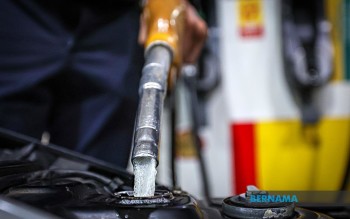
Malaysia faces a substantial monthly bill for fuel subsidies if crude oil prices stabilize around US$90 per barrel, according to projections laid out in parliament this week. Deputy Finance Minister Liew Chin Tong outlined the figures during question-and-answer proceedings in the Dewan Negara, indicating that the government anticipates spending roughly RM2 billion monthly on RON95 petrol subsidies alone, alongside approximately RM1.5 billion for diesel support.
These subsidy costs represent a significant commitment from federal coffers at a time when global energy markets remain volatile. The projections underscore the challenge Malaysia faces in balancing consumer purchasing power against fiscal sustainability—a delicate equilibrium that successive administrations have struggled to maintain. Higher fuel subsidies inevitably constrain resources available for other policy priorities, from infrastructure investment to healthcare and education spending.
Despite the scale of potential subsidy obligations, Liew provided assurances that Malaysia's underlying fiscal position has not deteriorated. He emphasized that current fiscal projections remain unchanged even as crude oil prices have ticked upward, suggesting the government believes it can accommodate these expenses within its budgetary framework. This confidence stems partly from an offsetting revenue mechanism that works in the government's favor when energy prices rise.
The petroleum revenue equation operates as a natural hedge for Malaysia's fiscal health. Government coffers receive a direct boost when crude prices climb, as the country derives significant income from petroleum sales and related taxation. Liew highlighted that each one-dollar increase in crude oil prices per barrel is anticipated to generate an additional RM300 million in government revenue. At first glance, this offset appears substantial, yet the relationship is not perfectly symmetrical—subsidy costs can escalate faster than revenue gains depending on consumption patterns and global market dynamics.
The government's approach to managing these fiscal pressures will become clearer when Prime Minister Datuk Seri Anwar Ibrahim tables the 2027 Budget in October. That fiscal blueprint will incorporate refreshed economic projections reflecting conditions prevailing at that moment, Liew confirmed. Such timing allows policymakers to respond more dynamically to whatever energy price environment has emerged by autumn, rather than locking in assumptions that may have shifted dramatically in the intervening months.
For Malaysia and Southeast Asia more broadly, fuel subsidy management represents a recurring policy headache. The region contains several petroleum producers and exporters, yet most maintain some form of domestic fuel price support to shield citizens from international market volatility. This creates a structural tension: supporting local pump prices provides political benefits and protects low-income households, but drains public finances and can distort consumption patterns. Finding the optimal balance requires continuous calibration.
During parliamentary proceedings, attention also turned to regional variations in fuel support arrangements. Senator Datuk Anna Bell @ Suzieana Perian raised the matter of BUDI Diesel quotas for Sabah and Sarawak, seeking expansion of the program. The BUDI scheme provides subsidized diesel to specific user groups, particularly in East Malaysia where transport costs and geographic isolation make fuel prices especially consequential for economic activity and rural livelihoods. Liew's response indicated flexibility, noting that the government will entertain applications from sectors demonstrating particular need.
The government has already extended targeted increases to certain constituencies. Pickup truck owners, identified as economically important in agricultural and resource sectors, secured an additional 100-litre quota through streamlined application procedures. This micro-targeted approach allows policymakers to concentrate subsidy benefits where they generate greatest economic benefit or address genuine hardship, rather than distributing support uniformly across all fuel consumers. Such precision, however, requires administrative capacity and political sensitivity to avoid accusations of favoritism.
Malaysia's subsidy strategy reflects broader regional trends toward means-testing and targeted support rather than blanket price controls. This evolution acknowledges fiscal constraints whilst attempting to protect vulnerable populations and economically essential sectors. Yet implementation remains challenging, especially in federal systems where East Malaysian states possess distinct interests and demographics. The willingness Liew demonstrated toward reviewing specific applications suggests space for negotiation between federal authorities and state representatives.
Looking ahead, Malaysia's fuel subsidy trajectory will hinge on multiple variables beyond crude price levels. Consumption patterns may shift with economic growth or behavioral change; the global energy transition could alter long-term petroleum dynamics; and domestic political pressures will continuously test the government's resolve to maintain fiscal discipline. The October budget announcement will provide crucial signaling about how seriously the administration intends to balance short-term support against medium-term sustainability.
The RM3.5 billion monthly exposure underscores why fuel pricing has become such a central feature of Malaysian economic policy. At that scale, subsidy decisions materially affect the government's capacity to invest in education, health, and infrastructure—the very priorities that drive long-term prosperity. Managing this intersection between immediate consumer relief and future economic development remains one of Malaysia's most consequential policy challenges.

