Malaysia's Ministry of Health is pressing ahead with developing a comprehensive workplace mental health policy, with Health Minister Datuk Seri Dr Dzulkefly Ahmad confirming that a finalised draft should be ready by September or October. The announcement comes as the ministry undertakes extensive consultation rounds with relevant government bodies and industry representatives to shape the framework, which aims to establish safer and more harmonious working environments across the nation's employment sector.
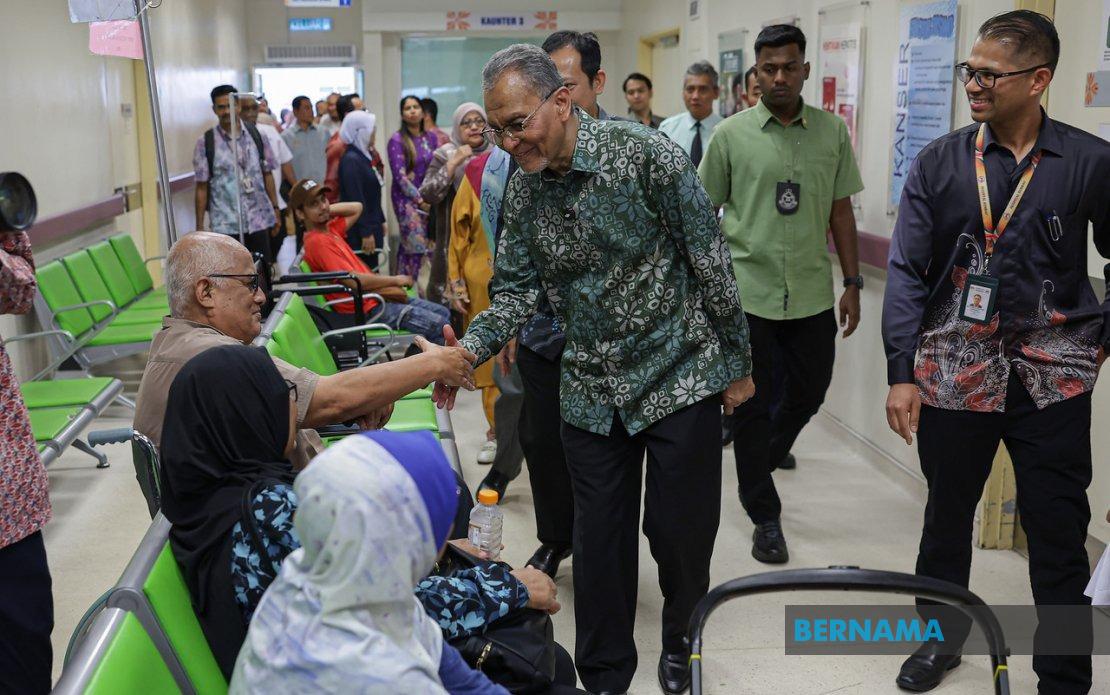
The engagement process involves four key stakeholder groups critical to successful workplace mental health implementation: the Ministry of Human Resources (KESUMA), the Department of Occupational Safety and Health (DOSH), the Malaysian Employers Federation (MEF), and the Malaysian Trades Union Congress (MTUC). By bringing these diverse perspectives to the table—encompassing government policy, workplace safety oversight, employer interests, and worker representation—the health ministry seeks to create a policy that commands broad support and reflects practical workplace realities. Dr Dzulkefly made the remarks during a visit to Hospital Rembau in Negeri Sembilan, where he attended the health ministry's 2026 Merdeka Celebration programme.
The timeline extending into September and October provides the ministry's working team sufficient space to conduct thorough consultations and subsequently draft detailed guidelines. According to Dr Dzulkefly, this phased approach is necessary to ensure the resulting policy addresses the multifaceted nature of workplace mental health comprehensively. The minister stressed that mental health challenges demand serious attention at the national level, signalling that this policy represents a significant priority within the health ministry's broader agenda.
Beyond the provision of basic counselling services—the traditional response to mental health in workplaces—the policy framework will encompass a broader range of support mechanisms and preventative measures. Work-life balance initiatives, employee support systems, and organisational cultures that prioritise psychological well-being form integral components of the ministry's vision. This expanded approach reflects growing international evidence that sustainable workplace mental health requires systemic change rather than reactive interventions alone.
The proposed policy directly aligns with Malaysia's commitment to the United Nations Sustainable Development Goals (SDGs), which include specific targets around good health and well-being. By embedding mental health considerations into workplace standards, the ministry advances SDG 3 (ensure healthy lives and promote well-being for all), while also contributing to SDG 5 (gender equality) and SDG 8 (decent work and economic growth). This international framing demonstrates that workplace mental health is no longer viewed as a peripheral welfare concern but as a fundamental component of sustainable development.
A critical focus of the policy involves creating workplace environments with adequate capacity to support employee mental well-being while simultaneously reducing burnout risk and mitigating excessive workload pressures. Malaysian organisations, particularly in high-stress sectors such as healthcare, education, and finance, have increasingly grappled with burnout among staff members. A nationally coordinated policy would provide employers with evidence-based frameworks for workload management, stress reduction protocols, and mental health literacy programmes.
Parallel to the mental health policy development, Dr Dzulkefly outlined the ministry's strategy for strengthening hospital services across Malaysia through a cluster hospital model. Under this approach, specialist doctors from leading tertiary hospitals extend services to smaller, non-specialist facilities, effectively widening access to specialist expertise without requiring each hospital to maintain a full complement of specialists. This model addresses a persistent challenge in Malaysian healthcare delivery: the concentration of advanced services in major urban centres.
The cluster hospital strategy will operate alongside staged upgrades of non-specialist hospitals, which will gradually incorporate selected specialist services based on localised demand patterns and clinical suitability. Rather than undertaking expensive new hospital construction or expansion projects, the ministry prioritises capability enhancement in existing facilities. This pragmatic approach reflects budget-conscious healthcare governance while maximising utilisation of existing infrastructure.
The specialist services targeted for strengthening include paediatrics, obstetrics and gynaecology, ophthalmology, and ear, nose and throat disciplines—sectors where demand exceeds current supply in many parts of the country. By reinforcing these specialties within the cluster system, the ministry aims to reduce patient waitlists and improve access for communities beyond major metropolitan regions. The strategy equally emphasises bolstering primary healthcare systems, recognising that robust frontline services reduce unnecessary specialist referrals and improve population health outcomes.
Dr Dzulkefly's emphasis on enhancement rather than new construction reflects the ministry's strategic recalibration toward efficiency and accessibility. Rather than pursuing costly expansion projects, the health ministry invests in human resource development, specialist training pipelines, and cross-hospital collaboration mechanisms. For Malaysian healthcare users, this translates to potentially shorter waiting times and improved service availability at regional hospital levels.
The twin initiatives—the workplace mental health policy and the hospital cluster strategy—reveal the ministry's multifaceted approach to contemporary health challenges. The mental health policy addresses workplace stress and psychological well-being across Malaysia's employed population, while the cluster hospital model tackles geographic disparities in specialist service access. Together, these initiatives suggest a ministry increasingly focused on preventative health promotion and equitable service distribution.
For Malaysian employers and workers, the forthcoming mental health policy represents an opportunity to establish baseline standards across organisations of varying sizes. As consultation processes unfold through the coming months, industry bodies and labour representatives have a critical window to shape implementation mechanisms that reflect workplace realities. The September-October finalisation date ensures policy availability for potential rollout planning within the 2025 calendar year, though the ministry has yet to announce specific implementation timelines or enforcement mechanisms.

