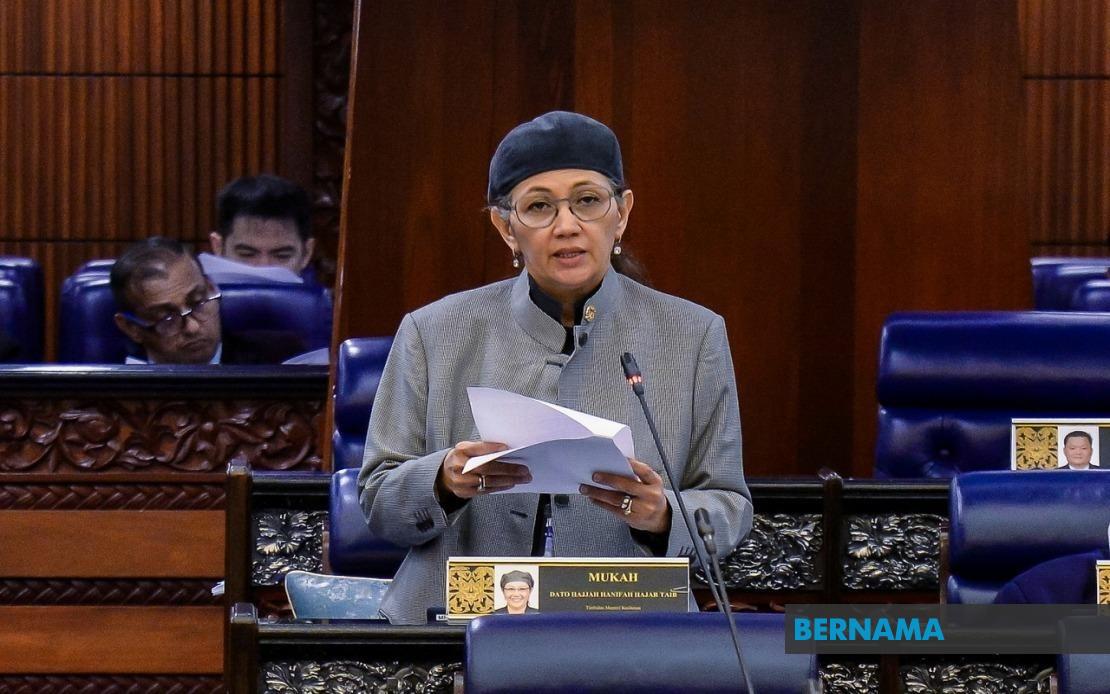
Confronting a deepening medical workforce crisis in Sabah, Malaysia's Health Ministry has unveiled an aggressive expansion plan to inject 560 permanent medical officers into the state beginning this October. Deputy Health Minister Datuk Hanifah Hajar Taib disclosed the initiative to Parliament, framing it as a critical intervention to narrow Sabah's documented physician deficit of 256 positions. The announcement reflects mounting political pressure on federal health authorities to address inequities in doctor distribution across Malaysia's eastern states, where rural populations and stretched public hospitals have struggled with inadequate medical staffing for years.
The scale of Sabah's staffing challenge becomes clearer when examining current deployment figures. The state maintains 2,803 authorised medical officer posts, of which only 1,863—approximately 66.5 per cent—are actively filled. An additional 366 positions are occupied by officers on study leave, while 570 posts remain unfilled. To manage this fragmentation, the ministry has deployed 680 contract physicians throughout Sabah, a temporary measure that masks underlying structural deficits and creates employment instability for healthcare workers. This patchwork approach has constrained service capacity at district hospitals and primary care facilities, particularly in rural and remote constituencies where physician recruitment has proven consistently difficult.
However, ministry planners harbour substantial doubts about whether the ambitious recruitment will translate into meaningful improvements on the ground. Historical data presents a sobering picture: acceptance rates for posting offers have hovered around 50 per cent across comparable recruitment cycles. Applying this rate to Sabah's 560 new positions suggests only approximately 280 doctors will actually report for duty, addressing roughly half the identified shortfall. This discrepancy between positions offered and positions filled reveals a fundamental tension within Malaysia's medical workforce strategy—the ministry can create postings, but cannot guarantee that newly qualified or contract physicians will accept assignments in states perceived as having weaker career prospects, lower living standards, or geographic remoteness compared to urban centres like Kuala Lumpur and Penang.
Sabah's doctor shortage exists within a broader national context of physician distribution imbalance. The Ministry is simultaneously accelerating recruitment across the country, targeting 4,500 permanent medical officer postings through two coordinated phases. In the initial phase concluding in June 2026, 328 officers were offered permanent positions nationwide, with 39 designated for Sabah. The actual outcome proved disappointing: only 20 of those 39 accepted placement in Sabah, whilst 19 declined. This 51 per cent acceptance rate in Sabah fell notably below expectations, underscoring the challenges inherent in persuading physicians to work in peripheral locations. The second recruitment phase, launching in October 2026, will distribute 4,172 permanent offers nationally, with Sabah receiving 560—representing 13.4 per cent of the total allocation.
The ministry's strategic response has evolved beyond simple recruitment targets. Officials have introduced procedural modifications designed to incentivise acceptance of postings in underserved regions. A revised e-Placement system now requires contract medical officers transitioning to permanent employment to select at least one preferred location from Sabah, Sarawak, or Labuan. This mandatory geographic preference mechanism attempts to increase acceptance rates by embedding regional consideration into the selection process rather than allowing candidates to concentrate exclusively on urban postings. Additionally, the ministry has assigned explicit placement quotas through the e-Placement system: 650 permanent positions for Sarawak and 310 for Sabah, representing 42.7 per cent of the nationwide placement quota of 2,248 positions. These quotas institutionalise priority allocation for East Malaysia, acknowledging that voluntary market-based mechanisms have failed to generate sufficient physician supply in these regions.
Performance data suggest modest progress despite persistent challenges. According to the 2024 Health Indicators report, Sabah ranks among eight states falling below the national average for doctor-to-population ratios, a metric that shapes healthcare access and service quality across communities. Yet within this underperforming cohort, Sabah has registered encouraging momentum. The state's physician-to-population ratio improved by 25.1 per cent between 2020 and 2023, indicating that previous recruitment initiatives and policy interventions have begun generating measurable improvements. This trend demonstrates that sustained effort and targeted investment can reshape workforce distribution, though the baseline deficit remains substantial enough to require continued action.
For Malaysian healthcare policymakers, Sabah's situation encapsulates a recurring dilemma facing federal health systems in developing nations: achieving equitable physician distribution requires sustained policy commitment and resources beyond what market forces alone can deliver. Doctors, like other professionals, gravitate toward urban centres with established infrastructure, educational opportunities for families, and career advancement prospects. Rural and peripheral postings carry reputational weight as career interruptions rather than stepping stones, particularly for physicians early in their careers. By mandating geographic preferences within the e-Placement system, the ministry acknowledges this reality whilst attempting to counterbalance private incentives through institutional requirements.
The implications of sustained doctor shortages extend beyond administrative frustration for health administrators. Insufficient physician staffing constrains diagnostic capabilities, increases waiting times for specialist consultations, and limits the range of procedures available locally—forcing patients to travel to distant tertiary hospitals or seek private healthcare at personal expense. For Sabah's lower-income populations, these constraints translate into reduced healthcare access and potentially worse health outcomes. Maternal mortality, communicable disease management, and chronic disease monitoring all depend on adequate physician presence and continuity of care. The 25.1 per cent improvement in physician ratios between 2020 and 2023 suggests that previous interventions have yielded real health benefits; completing this progress requires sustained commitment beyond October 2026.
Looking forward, the ministry faces a critical implementation challenge: ensuring that the 560 new permanent positions in Sabah actually materialise as occupied posts rather than vacant allocations. Previous experience demonstrates that numbers on paper frequently diverge from lived workforce reality. To maximise acceptance rates, the ministry might consider complementary measures beyond the e-Placement modifications—enhanced allowances for peripheral postings, accelerated promotion pathways, spousal employment assistance, or family housing provisions. These investments cost money but address the underlying economic and social barriers that drive physician reluctance toward East Malaysian assignments.
Sabah's physician recruitment saga also reflects broader questions about Southeast Asia's medical workforce capacity and distribution. As regional economies expand and competition for specialist healthcare intensifies, countries across Southeast Asia confront similar workforce imbalances. Malaysia's experience—combining federal coordination with targeted regional quotas—offers instructive lessons for neighbouring nations wrestling with rural-urban physician distribution. The 42.7 per cent allocation to East Malaysia through the e-Placement system represents acknowledgment that peripheral regions require disproportionate resources to achieve equitable outcomes, a principle applicable across the region.
For Sabah's constituents and their elected representatives like Mohd Kurniawan Naim Moktar, who raised the shortage in Parliament, the October 2026 recruitment phase represents both opportunity and test. The opportunity lies in potentially narrowing a documented 256-position deficit through systematic federal intervention. The test involves whether the ministry can overcome historical acceptance barriers and actually deploy promised physicians to state facilities. Success would validate the reformed e-Placement system and demonstrate that institutional innovation can reshape incentive structures. Failure would necessitate more fundamental rethinking of how Malaysia approaches medical workforce distribution and regional equity in healthcare delivery.

