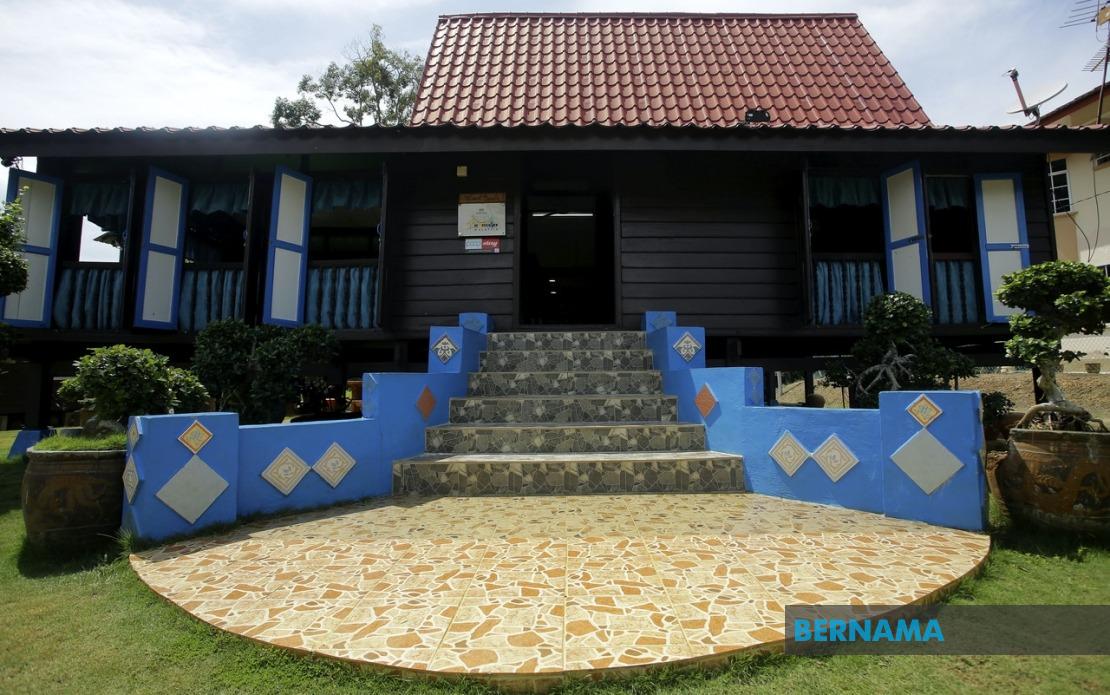
The holiday homes sector has emerged as a substantial pillar of Malaysia's tourism economy, with official statistics now documenting the industry's scale and impact for the first time. Data released by the Department of Statistics Malaysia (DOSM) on July 7 reveals that 71,101 holiday homes operated across the country during 2025, collectively contributing RM2.2 billion in revenue. This inaugural comprehensive assessment marks a watershed moment for understanding Malaysia's accommodation landscape beyond traditional hotel chains and resorts.
Chief Statistician Datuk Seri Dr Mohd Uzir Mahidin characterised the performance as evidence of sustained momentum within the sector, noting that the growth trajectory reflects evolving traveller preferences toward alternative lodging options. The expansion demonstrates how the holiday homes market has matured from a niche offering to a mainstream component of the tourism industry, capturing a meaningful portion of both domestic and international visitors seeking personalised, independent accommodation experiences.
The economic footprint of holiday homes extends well beyond direct accommodation revenue. The industry generates cascading benefits across multiple service sectors, particularly in food and beverage, ground transportation, retail commerce, and leisure activities. Local communities, particularly proprietors of small and medium enterprises, benefit directly from this increased spending power as guests patronise nearby restaurants, shops, and attractions. This multiplier effect represents a significant but often underappreciated dimension of tourism's contribution to Malaysia's economy, one that benefits grassroots operators more equitably than concentrated resort development might achieve.
Geographic concentration reveals important patterns about Malaysia's tourism landscape and infrastructure development. Selangor's dominance with 19,095 units—representing more than one-quarter of the national total—reflects multiple convergent factors. The state benefits from Malaysia's most extensive transport infrastructure, encompassing international airports, highways, and public transit networks that facilitate both domestic and foreign visitor mobility. Its economic dynamism, combined with proximity to Kuala Lumpur's international airports and tourist attractions, creates a gravitational pull for accommodation investment. Kuala Lumpur itself ranks second with 8,207 units, underscoring the capital's enduring appeal as a destination while highlighting how metropolitan tourism demands support diverse accommodation formats beyond luxury hotels.
Johor's positioning as the third-largest hub with 7,274 units reflects the state's growing tourism maturity, driven partly by its accessibility to Singapore and its own cultural and natural attractions. The three leading states account for a substantial majority of Malaysia's holiday homes inventory, suggesting that tourism development remains concentrated in economically advanced regions with superior connectivity and established visitor markets. This concentration pattern raises questions about regional equity and whether emerging tourism destinations in states like Sabah, Sarawak, and Pahang possess adequate infrastructure and marketing support to develop competitive holiday homes sectors.
The DOSM statistics represent the first officially published data providing district-level breakdown of holiday homes distribution across Malaysia. This granular approach offers policymakers, developers, and investors unprecedented clarity regarding market saturation, regional opportunities, and competitive dynamics. Prior to this publication, understanding the sector required piecing together fragmentary commercial data from fragmented private sources, limiting evidence-based decision-making around tourism policy and infrastructure allocation.
Datak Seri Dr Mohd Uzir emphasised that these statistics provide an empirical foundation for developing Malaysia's tourism sector more strategically. Tourism planning has historically relied on hotel occupancy rates and visitor arrival numbers, metrics that omit the substantial alternative accommodation economy. By incorporating holiday homes data into official tourism statistics, Malaysia joins international best practices where alternative accommodation forms part of integrated tourism measurement frameworks. This enables more comprehensive understanding of how visitors are distributed across accommodation types, informing decisions about infrastructure investment, environmental management, and community impacts.
The emergence of comprehensive holiday homes statistics carries particular significance for Southeast Asian regional tourism development. As destinations across the region grapple with overtourism, environmental degradation, and economic inequality stemming from tourism concentration, Malaysia's detailed sector documentation offers a model for other nations seeking to understand and manage their accommodation landscapes. The data enables identification of which regions benefit from tourism spending and which remain peripheral, supporting more deliberate efforts toward distributed, sustainable growth.
Microeconomic opportunities embedded within these 71,101 properties warrant particular attention for policymakers. Holiday homes typically involve individual or small-group proprietors managing their own assets, contrasting sharply with corporate hotel chains where profits concentrate at head offices. These predominantly small-scale operators invest locally, employ household members and neighbours, and reinvest earnings within their communities rather than remitting them to distant shareholders. This structural characteristic positions holiday homes as potentially more economically inclusive than traditional tourism accommodation, though realising this potential requires supportive regulatory frameworks, access to financing, and professional training.
The RM2.2 billion revenue figure deserves contextualisation within Malaysia's broader tourism earnings. While substantial, this represents accommodation revenue alone and excludes multiplier effects flowing through associated spending on food, transport, and entertainment. Conservative estimates suggest total economic impact might reach RM4-5 billion when accounting for indirect spending by guests and employees. By comparison, Malaysia's tourism sector generated approximately RM101.2 billion in 2023 according to tourism ministry data, suggesting holiday homes represent roughly 2-5 percent of direct tourism revenue. Despite this percentage, the sector's growth rate exceeds hotel industry expansion, indicating shifting market dynamics and consumer preferences.
Looking forward, the availability of official holiday homes statistics enables more sophisticated policy interventions than previously possible. State governments can identify which districts face accommodation shortages or oversupply, informing business licensing and infrastructure decisions. Environmental agencies can assess whether rapid growth in particular regions threatens natural resources. Tourism authorities can target marketing campaigns toward underutilised areas seeking visitor volume, or alternatively restrict promotion in saturated markets. Revenue authorities gain clarity on taxable holiday homes income, potentially improving tax collection. These applications demonstrate how comprehensive statistical knowledge translates into improved governance capacity.
The DOSM publication simultaneously highlights data gaps requiring future attention. The statistics reveal distribution across states and districts but omit crucial metrics regarding occupancy rates, average daily rates, visitor origins, and employment effects. Longitudinal tracking would illuminate whether growth is accelerating or plateauing across different regions. Analysis of profitability and compliance with tax and safety regulations remains absent from current publications. Future iterations of holiday homes statistics would benefit from integration with visitor surveys identifying accommodation choices, satisfaction levels, and spending patterns, enabling comprehensive understanding of how this sector functions within Malaysia's larger tourism ecosystem.
The holiday homes sector's contribution to employment, particularly among women and rural communities, deserves investigation beyond current aggregate statistics. Anecdotal evidence suggests the sector provides flexible income opportunities for property owners unable or unwilling to engage in conventional employment, but quantifying this impact requires targeted research. Similarly, understanding how holiday homes development influences housing affordability and real estate speculation in popular tourism areas remains unexplored in official statistics. These dimensions matter significantly for assessing whether the sector contributes to sustainable, inclusive development or exacerbates existing inequalities.

