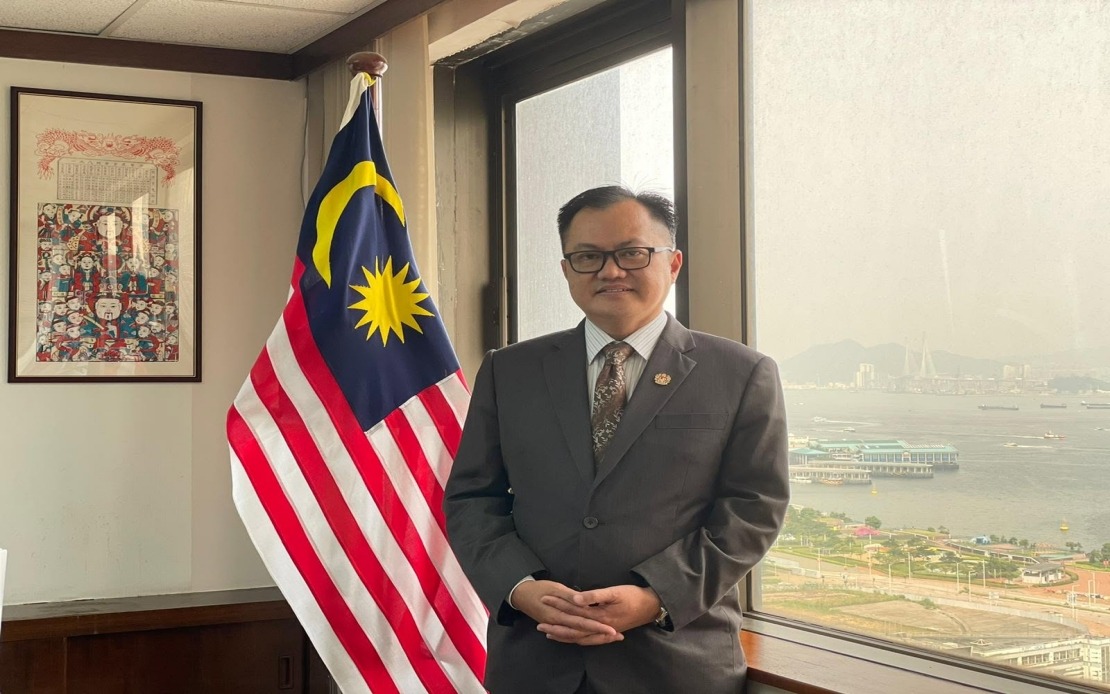
The Consulate General of Malaysia in Hong Kong has responded to international media coverage questioning whether Malaysian diaspora voters had adequate information about the recent Johor state election, asserting that its diplomatic mission deployed a comprehensive strategy to keep voters informed. In a statement issued this week, Consul General Muzambli Markam outlined the scope of the consulate's communication initiatives, emphasizing that the mission had gone beyond standard diplomatic practices to actively encourage electoral participation among the Malaysian community in Hong Kong.
The response came after the South China Morning Post published an article suggesting that overseas Malaysians faced obstacles participating in the Johor state election due to restricted voting deadlines and insufficient awareness-raising. Muzambli contended that the newspaper's characterization did not reflect the reality on the ground, arguing that the mission had worked consistently to make relevant information accessible through multiple channels. The consul general specifically highlighted that the consulate had partnered with the Malaysian Association of Hong Kong, a key community organization, to ensure registration deadlines and procedural requirements reached the intended audience across the diaspora population.
Central to the consulate's defence is its assertion that describing overseas Malaysians as hindered by awareness gaps fundamentally misrepresents the scale of local engagement efforts undertaken by the mission. According to Muzambli, the consulate had maintained a sustained information campaign that included regular postings of advisories and step-by-step guides across its official digital platforms. This multi-platform approach was designed to capture different demographic segments within Hong Kong's Malaysian expatriate community, recognizing that not all voters rely on a single information source. The partnership with MAHK extended beyond simple information distribution, serving also to encourage active participation in civic processes among citizens living abroad.
The consul general also addressed what he characterized as inaccurate representation of the Election Commission's modernization efforts. Muzambli emphasized that the EC had invested significantly in digitizing the overseas voter registration system, introducing the MySPR online portal that allows Malaysians abroad to apply directly without requiring intermediaries such as consulates. He positioned this architectural choice not as an administrative gap but as an intentional design feature reflecting contemporary best practices in secure electoral administration. The direct-to-system approach, he argued, reduces bureaucratic friction while maintaining the integrity of the registration process by eliminating unnecessary handoff points that could introduce error or delay.
The consulate's pushback against the South China Morning Post article reflected broader sensitivities around Malaysia's international image regarding democratic participation. Muzambli objected to the newspaper's headline, stating that it misrepresented not only the consulate's activities but also the broader commitment of Malaysia's government and electoral authorities to facilitating overseas voting rights. He suggested that the article, despite the journalist having been briefed on the consulate's proactive strategy beforehand, had omitted this crucial context from the published piece. This omission, he contended, resulted in a narrative that undermined the credibility of Malaysian democratic institutions and mischaracterized the state's engagement with its diaspora.
The treatment of the consulate's voter statistics also became a point of contention. The original article had suggested that the consulate's inability to provide specific numbers of Malaysian voters in Hong Kong indicated administrative inadequacy. Muzambli rejected this interpretation, explaining that the consulate deliberately maintained distance from the digital registration workflow to ensure a streamlined process. By not serving as an intermediary, the mission avoided becoming a bottleneck while simultaneously reducing the technical load on consular staff. The consul general framed this as a feature rather than a deficiency, reflecting Malaysia's confidence in its modernized electoral infrastructure.
For Malaysian policymakers and electoral authorities, this dispute highlights ongoing tensions between diaspora representation and administrative efficiency in overseas voting systems. Southeast Asian nations, increasingly home to millions of expatriate workers and professionals, face similar challenges in balancing accessibility with security and accuracy. Malaysia's shift toward digitized, direct-to-system registration represents a regional trend toward reducing consular involvement in electoral processes, though this approach requires sustained public communication to succeed. The Hong Kong experience suggests that technological modernization alone cannot guarantee voter participation if outreach and awareness campaigns do not keep pace.
The controversy also underscores the importance of media literacy and diplomatic engagement in covering transnational electoral processes. International news organizations covering elections in jurisdictions where significant diaspora populations exist must navigate competing narratives about access, awareness, and democratic quality. The consulate's response indicates sensitivity to how overseas voting challenges are portrayed globally, recognizing that perceptions of exclusion or barriers can affect Malaysia's diplomatic standing and the morale of its diaspora community. For news organizations, balancing critical scrutiny of electoral administration with acknowledgment of genuine outreach efforts remains a challenging editorial judgment.
Moving forward, the Malaysian government's commitment to facilitating democratic participation among overseas citizens will likely depend on continuous improvement of digital infrastructure combined with enhanced diplomatic outreach. The Hong Kong case demonstrates that even well-resourced missions must actively publicize electoral opportunities rather than assuming information naturally reaches target audiences. As Malaysia's diaspora communities grow across Asia, the Middle East, and beyond, the model of digitized registration paired with proactive consular communication may become increasingly important for ensuring that geographic distance does not translate into democratic exclusion. The consulate's measured response suggests confidence in Malaysia's electoral systems while acknowledging that public perception requires careful management.

