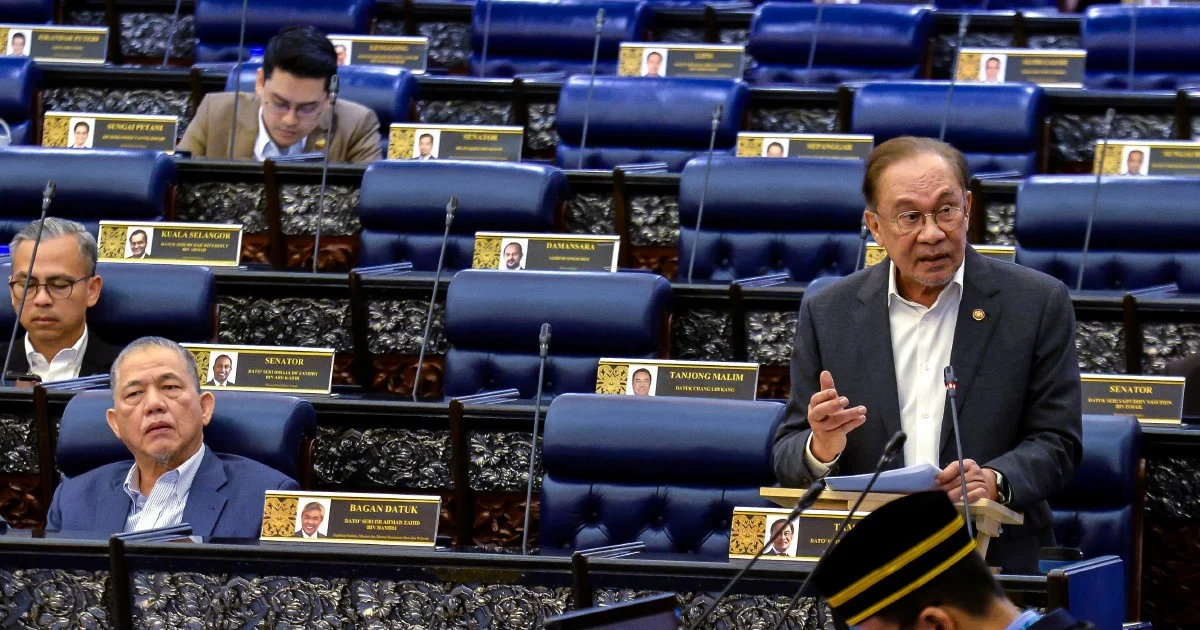
Malaysia's financial health has come under increased scrutiny following revelations that household debt has swollen to RM1.73 trillion by the end of March 2026, a figure that Prime Minister Datuk Seri Anwar Ibrahim disclosed amid growing concerns about personal indebtedness across the nation. The debt burden now represents 84.4 per cent of the country's gross domestic product, a metric that underscores the substantial weight of family borrowing relative to the nation's overall economic output.
This elevation in household debt reflects a broader pattern of consumer borrowing that has accelerated in recent years, driven by a combination of rising living costs, property acquisitions, and consumer spending habits. Malaysian households have increasingly relied on credit facilities to maintain consumption levels and finance major purchases, even as wage growth has struggled to keep pace with inflationary pressures affecting everything from food prices to housing costs. The persistence of relatively affordable credit terms has further encouraged borrowing, creating a delicate balance between household liquidity and long-term financial sustainability.
The ratio of household debt to GDP provides critical insight into the vulnerability of Malaysia's consumer sector. At 84.4 per cent, this proportion places considerable strain on household budgets, particularly among middle and lower-income families who dedicate substantial portions of their monthly income to servicing various debt obligations. Such elevated debt levels typically constrain discretionary spending capacity, reduce households' ability to weather economic shocks, and potentially limit their investment in education, healthcare, and wealth accumulation through property ownership.
Property financing constitutes a significant component of total household debt, as homeownership remains a central financial objective for many Malaysian families. The combination of housing loans, motor vehicle financing, credit card debt, and personal loans creates a complex debt ecosystem that can become precarious should interest rates rise or employment circumstances change unexpectedly. The vulnerability is particularly acute in urban centres like Kuala Lumpur, the Klang Valley, and Penang, where property prices have surged substantially over the past decade, necessitating larger loan amounts and extended repayment periods.
Regional comparisons reveal that Malaysia's household debt to GDP ratio aligns closely with other developed and developing economies in the Asia-Pacific region, though the implications vary depending on income levels and employment stability. Singapore, Thailand, and South Korea all maintain comparable or higher household debt ratios, but their higher average household incomes and stronger wage growth trajectories provide greater cushions for debt servicing. Malaysia's particular challenge lies in the combination of elevated debt levels with moderate wage growth and increasing cost-of-living pressures, creating a potentially unsustainable trajectory for vulnerable household segments.
Banks and financial institutions have maintained relatively cautious lending standards in response to regulatory oversight, though competition for market share has occasionally resulted in the extension of credit to borrowers with marginal repayment capacity. The financial regulator's implementation of debt service ratio requirements has attempted to limit excessive borrowing by capping the proportion of income that can be committed to debt servicing, yet loopholes and alternative financing channels outside the traditional banking system have partially circumvented these safeguards.
The economic implications of this household debt burden extend far beyond individual family finances, as it directly influences consumer spending patterns that drive domestic demand and support economic growth. When households prioritise debt repayment over consumption and investment, the multiplier effects ripple through the broader economy, potentially dampening retail sales, restaurant spending, and discretionary consumption that provides revenue for small and medium enterprises throughout Malaysia.
Young Malaysians entering the workforce face particular challenges, as they increasingly accumulate debt for education, vehicle purchases, and home acquisition simultaneously, often before establishing stable income trajectories or building adequate financial reserves. This demographic cohort's debt burden will carry implications for long-term wealth accumulation, retirement preparedness, and their capacity to support ageing parents—a crucial consideration in Malaysian society where intergenerational financial responsibility remains culturally significant.
Government interventions aimed at addressing household debt have included financial literacy initiatives, targeted assistance programmes for vulnerable segments, and regulatory measures designed to prevent predatory lending practices. However, addressing the structural drivers of household indebtedness—including housing affordability challenges, wage stagnation relative to living costs, and the prevalence of lower-skilled employment offering limited income progression—requires sustained commitment across multiple policy domains.
The sustainability of Malaysia's economic trajectory increasingly hinges on rebalancing household debt levels with income growth and creating pathways for families to build financial resilience without excessive dependence on credit. Policymakers, financial institutions, and employers must collaborate to support wage growth that outpaces cost-of-living increases, enhance employment quality, and promote financial discipline among consumers navigating an increasingly complex economic landscape where debt management has become a critical life skill.

