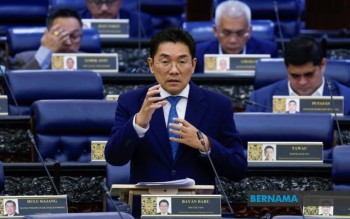
Malaysia's reputation as a stable investment hub continues to draw multinational corporations while simultaneously encouraging local enterprises to expand their commitments, according to Deputy Investment, Trade and Industry Minister Sim Tze Tzin. Speaking in Parliament, he attributed this dual momentum to the country's geographical position, political stability, and access to regional and global markets. Over the past three years under the MADANI Government, these factors have collectively generated RM1.14 trillion in approved investments across the economy, positioning Malaysia as an increasingly competitive destination in Southeast Asia's investment landscape.
The symbiotic relationship between foreign and domestic capital represents a strategic shift in how Malaysia approaches economic development. Rather than viewing foreign direct investment as a standalone achievement, policymakers now recognise its catalytic effect on domestic confidence. Sim explained that when multinational corporations establish operations in Malaysia, local entrepreneurs perceive this as validation of the country's investment-friendly environment, prompting them to commit their own capital to expansion and modernisation. This psychological confidence factor, though difficult to quantify, has proven influential in driving reinvestment patterns across multiple sectors.
Domestic investment now accounts for approximately 45 per cent of total approved investment, a substantial proportion that reflects the success of this interdependent approach. Between 2021 and March 2026, the figures paint a picture of growing equilibrium: RM818.5 billion flowed from local sources while RM996.4 billion came from foreign investors, totalling RM1.8 trillion across various economic sectors. This near-parity demonstrates that Malaysia is not becoming overly dependent on external capital but rather building a self-sustaining investment ecosystem where both domestic and international players contribute meaningfully to growth.
The government has implemented targeted mechanisms to nurture domestic investment capacity. The New Incentive Framework, launched in March 2026, offers various tax breaks and grants specifically designed to encourage Malaysian companies to undertake expansion projects. These incentives recognise that local enterprises often operate with different risk profiles and capital availability compared to multinational corporations, requiring tailored support mechanisms. By calibrating incentive structures to match the needs of domestic investors, the government aims to level the playing field and ensure that local companies can compete effectively in global supply chains.
One particularly effective strategy involves connecting local suppliers with foreign multinational corporations seeking reliable vendors and supply chain partners. By facilitating these relationships, the government enables Malaysian companies to access stable, long-term contracts while allowing foreign investors to secure high-quality local sourcing arrangements. This approach generates mutual benefits: domestic enterprises gain revenue certainty and technical knowledge transfer, while foreign investors reduce logistics costs and strengthen community ties. The supply chain integration model represents a more sophisticated approach than simply attracting headline investment figures.
Concrete examples demonstrate the traction of this strategy. Between 2021 and March 2026, Malaysian-owned companies submitted 4,242 projects worth RM116.1 billion for approval under the Malaysian Investment Development Authority, collectively creating more than 37,000 new jobs. These were not peripheral ventures but significant commitments across diverse sectors. QL Foods invested RM1.3 billion to create 3,000 jobs, while ViTrox Technologies committed RM250 million generating nearly 1,900 positions. Institut Jantung Negara's RM260 million healthcare investment created 920 jobs, and Ain Medicare contributed RM170.9 million from Kelantan, adding 82 positions. These examples span food manufacturing, technology, healthcare, and medical devices, illustrating sectoral breadth.
The government's deliberate rejection of rigid key performance indicators reflects pragmatic policymaking. Rather than imposing arbitrary targets dividing investment between domestic and foreign sources, officials acknowledge that investment flows respond to macroeconomic conditions, global commodity cycles, geopolitical factors, and market cycles beyond government control. This flexible approach allows policymakers to respond dynamically to changing circumstances without being constrained by metrics established during different economic conditions. However, it also requires robust monitoring systems to ensure that policy adjustments genuinely serve national economic interests.
Malaysia's neutrality in the current global geopolitical environment increasingly differentiates it from competitors. As tensions between major powers reshape investment patterns, companies seeking to diversify supply chains and avoid geopolitical exposure view Malaysia as a relatively safe jurisdiction. Unlike countries potentially drawn into regional conflicts or subject to shifting trade relationships, Malaysia's non-aligned status permits it to maintain relationships with multiple economic blocs. This positioning becomes increasingly valuable as multinational corporations develop multiple sourcing locations and manufacturing hubs to reduce systemic risk.
The emphasis on symbiotic growth between foreign and domestic investment represents a maturation of Malaysia's economic strategy. Rather than pursuing a quantity-focused approach measuring success purely by investment inflows, policymakers now emphasise quality, integration, and knowledge transfer. The objective extends beyond securing capital to building productive capacity, developing human resources, and strengthening the technological capabilities of Malaysian companies. This longer-term perspective recognises that sustainable development depends on domestic firms becoming genuine competitors and innovators, not merely subcontractors to multinational operations.
For Malaysian investors and entrepreneurs, this environment creates meaningful opportunities. Access to foreign technology partners, exposure to global supply chains, and availability of government incentives create pathways for domestic companies to scale rapidly. Young firms can leverage foreign investor demand to secure initial contracts, then use these relationships to build independent capabilities. The track record of successful reinvestments demonstrates that this progression is achievable across sectors ranging from agriculture-related food manufacturing to advanced technology and healthcare services.
Regional competitors will likely monitor Malaysia's investment performance closely. Singapore's traditional dominance in attracting foreign capital faces increasing competition as Malaysia demonstrates capacity to simultaneously attract multinational investors and mobilise domestic capital. Indonesia, Thailand, and Vietnam compete for similar investment flows, making Malaysia's success in achieving balanced growth a significant regional development. The emerging template of coupling foreign investment attraction with domestic capability building may influence investment strategies throughout Southeast Asia.
Looking forward, sustaining this investment momentum requires continued attention to infrastructure quality, regulatory consistency, and human capital development. While geopolitical advantages and incentive frameworks attract initial interest, the quality of Malaysia's institutions, workforce skills, and physical infrastructure determines whether investors maintain operations and reinvest profits long-term. The government's success in converting initial investment approvals into sustained economic activity, job creation, and technology diffusion will ultimately define whether current investment trends translate into genuine, transformative economic growth benefiting Malaysian workers and businesses across the nation.

