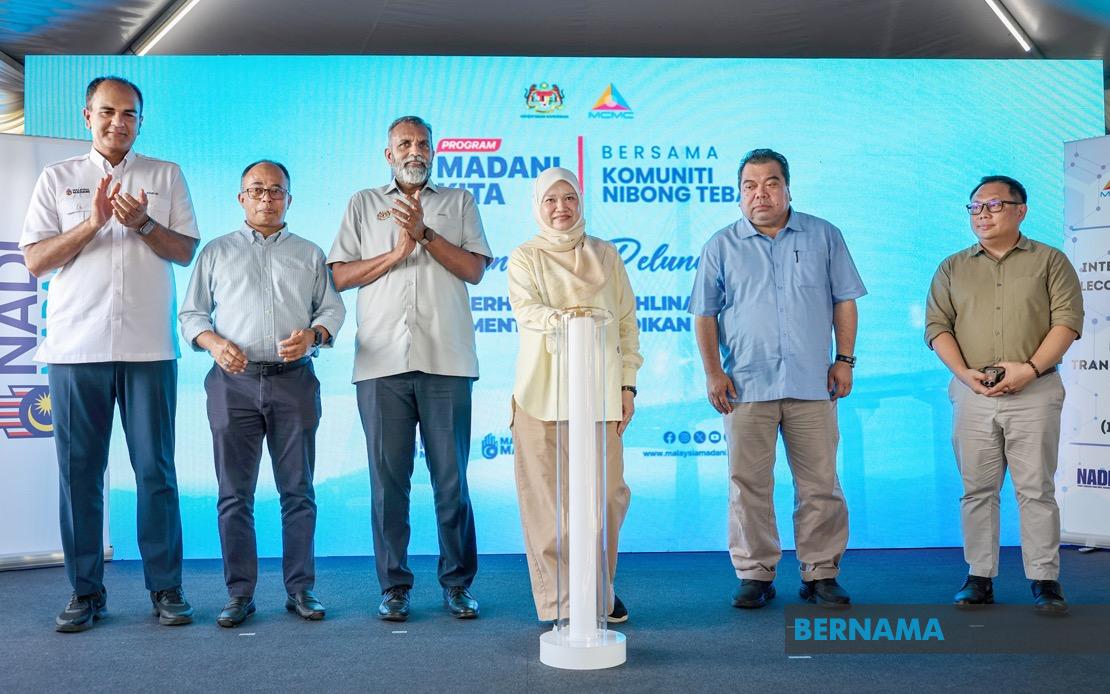
The Malaysian government is intensifying its push to bring administrative services and policy information directly to neighbourhoods and towns through an expanding network of community engagement initiatives. The Communications Ministry has now conducted 41 MADANI Kita programmes—a significant milestone in what appears to be a sustained effort to reshape how authorities interact with ordinary citizens outside the corridors of power in Kuala Lumpur. The latest instalment in this campaign took place in Nibong Tebal, where Education Minister and Nibong Tebal MP Fadhlina Sidek officially inaugurated the event, underscoring the programme's status as a priority initiative within the current administration's governance framework.
The scale and scope of these programmes reflect a deliberate shift in communication strategy. Rather than expecting citizens to navigate government bureaucracies on their own terms, MADANI Kita inverts the traditional dynamic by assembling multiple ministries and agencies in a single location—often in town centres, markets, or community spaces—where residents can access information, submit queries, and voice concerns without travelling to state capitals or federal offices. This decentralisation of services addresses a longstanding friction point in Malaysian public administration, where geographic distance and procedural complexity often deter ordinary people from seeking official assistance or clarifying government programmes that may directly affect their livelihoods.
According to Mano Verabathran, the Communications Ministry's deputy secretary-general for Telecommunications Infrastructure, the programmes operate through a collaborative framework involving the Community Communications Department (J-KOM), the Malaysian Information Department (JaPen), and the Malaysian Communications and Multimedia Commission (MCMC), all coordinated through the National Information Dissemination Centre (NADI). This inter-agency approach suggests a recognition that effective public communication requires institutional coordination across multiple domains—telecommunications, media, information management—rather than isolated efforts by individual departments. The involvement of NADI as the operational hub indicates a centralised but geographically distributed architecture, allowing the government to maintain messaging consistency while tailoring content and services to local contexts.
Beyond mere information distribution, these events function as forums for genuine two-way dialogue. Citizens attending MADANI Kita programmes gain opportunities to ask questions, seek clarifications about government policies and initiatives, and articulate grievances or suggestions directly to officials who can escalate concerns through proper channels. Mano emphasised that this interactive dimension addresses a public expectation that has perhaps been growing sharper in Malaysia's increasingly connected society: people no longer want passive consumption of government announcements. They seek to understand the real-world implications of policies, to see tangible benefits materialising in their communities, and to know that their feedback influences future governmental decisions. For many Malaysians, especially those in smaller towns or rural areas, such direct access to decision-makers remains rare and valuable.
The programmes incorporate a surprisingly diverse portfolio of activities designed to appeal across demographic segments. While core services and policy information remain central, the organisers have integrated technology-focused components, educational workshops, skills training modules, and community wellbeing initiatives. This breadth reflects an understanding that citizen engagement requires more than transactional service delivery—it demands creating an environment where people feel invested in the broader national project and perceive government as responsive to their aspirations, not merely their grievances. For young people, the inclusion of e-sports competitions and talent-building activities signals an attempt to make government feel contemporary and relevant to a generation that might otherwise view bureaucracy with indifference or cynicism.
The MADANI Kita Permatang Pauh event, which drew more than 17,000 attendees and coincided with the Penang International Halal Expo 2026 from July 24 to 26, demonstrates the programme's capacity to achieve meaningful scale. A turnout exceeding 17,000 people represents significant community mobilisation and suggests that the combination of government services with ancillary attractions—in this case, a major regional trade exposition—can effectively draw citizens into engagement opportunities they might otherwise skip. The strategic pairing of administrative outreach with commercial and cultural events reflects sophisticated campaign planning and suggests that future MADANI Kita iterations may increasingly leverage such synergies to maximise attendance and community participation.
For Malaysian readers, understanding these programmes requires some appreciation of their broader political context. The MADANI framework, launched by the current administration as a guiding philosophy, emphasises prosperity, spirituality, and harmony. MADANI Kita programmes represent the practical operationalisation of these values in citizen-facing interactions. By establishing direct contact points and demonstrating government commitment to accessibility, the administration seeks to rebuild public trust—a crucial objective in a country where previous administrations faced significant legitimacy challenges and where political polarisation remains pronounced. The programmes thus serve dual purposes: they genuinely deliver services and information, but they also function as symbols of a government intent on reforming its relationship with citizens.
Regional observers should note the implications of this approach for governance innovation across Southeast Asia. Malaysia's MADANI Kita model echoes similar citizen engagement initiatives attempted or contemplated in other regional democracies, from Indonesia's Jaga Desa programmes to Thailand's decentralised government-community meetings. The Malaysian approach distinguishes itself through its emphasis on inter-agency coordination and its integration of technology and youth engagement into the community contact infrastructure. If successful in generating sustained participation and measurable improvements in service accessibility, this model could influence how other Southeast Asian governments conceptualise public administration modernisation.
The concrete benefits of these programmes for individual citizens merit careful observation. Early evidence—such as the strong turnout in Permatang Pauh—suggests public appetite for direct government engagement when conducted in accessible settings with genuine service provision. However, the true measure of success will depend on whether the programmes translate citizen feedback into actual policy adjustments, whether communities perceive tangible improvements in service delivery following their participation, and whether the initiative can sustain momentum beyond initial novelty. Sceptics might worry that without substantive follow-up and demonstrated responsiveness to community input, MADANI Kita could devolve into theatrical governance—elaborate performances of accessibility that change little in actual practice.
Moving forward, the expansion to 41 programmes and the apparent intention to continue rolling out additional initiatives suggest institutional confidence in the model. The engagement of Education Minister Fadhlina Sidek in launching the Nibong Tebal event underscores high-level political support and indicates that such programmes may increasingly feature cabinet-level participation. This visibility could enhance their legitimacy and effectiveness, though it also risks politicising what might ideally function as non-partisan administrative outreach. The challenge for the Communications Ministry and its partner agencies will involve maintaining momentum, ensuring consistency of service quality and messaging across all 41 and future locations, and genuinely responding to citizen input in ways that build confidence in government responsiveness and accountability.

