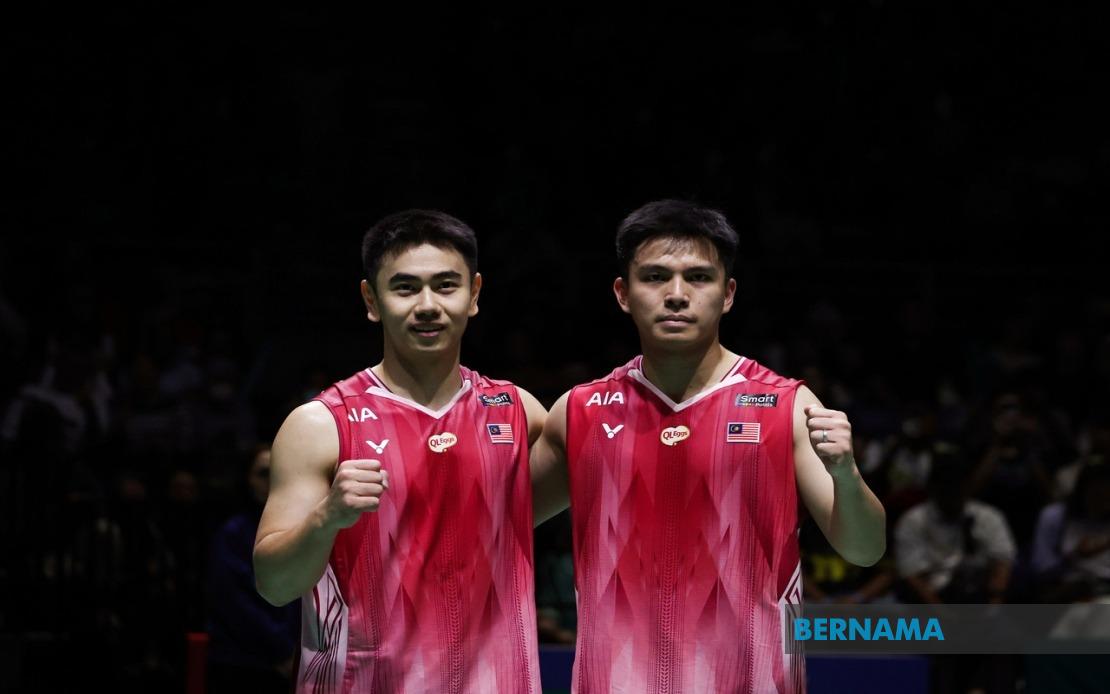
Malaysia's badminton contingent at the Japan Open 2026 made significant progress on July 17, with two pairs advancing to the semifinals in Tokyo and keeping national hopes alive in the tournament. The performance marks a strong showing for the country's doubles specialists on the international circuit, demonstrating the depth of talent available in this particular discipline where Malaysia has historically competed at elite levels.
The unseeded mixed doubles partnership of Jimmy Wong and Cheng Su Yin delivered the day's most impressive result by toppling Denmark's third-seeded pair Mathias Christiansen and Alexandra Boje in their quarterfinal encounter. Playing with controlled aggression and precise court positioning, the Malaysian duo secured a commanding 21-17, 21-17 victory in just 39 minutes, completing the match decisively after a tightly contested opening game. This result represents a significant scalp, as unseeded players defeating seeded opponents at major tournaments demonstrates their rising form and the unpredictability that makes badminton such a compelling sport at this level.
The victory against the Danish pair also carries particular significance for Jimmy Wong and Cheng Su Yin as it levels their career head-to-head record against Christiansen and Boje at 1-1, suggesting an increasingly competitive rivalry between these two combinations. As the pair prepares for their semifinal match, they face the formidable challenge of meeting Hong Kong's seventh-seeded Tang Chun Man and Tse Ying Suet, a matchup that will pit them against opponents they have not previously encountered on the badminton circuit. The Hong Kong pair's seeding and experience at major tournaments suggests another difficult obstacle lies ahead, though the Malaysian duo's upset victory should provide considerable confidence heading into that contest.
While the mixed doubles pair captured the day's headlines, the men's doubles team of Goh Sze Fei and Nur Izzuddin Rumsani also secured their place in the last four with a hard-fought performance against the United States combination of Chen Zhi Yi and Presley Smith. Seeded fifth in the tournament, Sze Fei and Nur Izzuddin needed the full distance and 50 minutes of intense rallying before prevailing 21-18, 15-21, 21-13. The victory extended their dominance over the American pair, making it their fourth consecutive triumph against Chen and Smith and suggesting Malaysia has developed a clear tactical understanding of how to dismantle this particular opposition.
The competitive history between Sze Fei-Nur Izzuddin and their American opponents underscores an important principle in modern badminton, where familiarity often breeds success as pairs develop comprehensive knowledge of each other's patterns, strengths, and tendencies. However, the Malaysian pair's path to the final will require them to overcome South Korea's top-seeded Kim Won Ho and Seo Seung Jae, currently ranked the world's premier men's doubles combination. The semifinal contest carries particular intrigue given that the head-to-head record between these two pairs stands locked at 2-2, indicating a genuinely competitive dynamic rather than dominance by either side.
Remarkably, Sze Fei and Nur Izzuddin enter this semifinal with recent momentum, having defeated the South Korean top seeds at the Indonesia Open 2026 in their most recent meeting. This recent victory provides psychological advantage and demonstrates that the Malaysian pair possesses the tactical weaponry and execution capability to trouble even the world's highest-ranked men's doubles outfit. Badminton's match-by-match nature means that previous form often proves more influential than seeding in determining outcomes, and Malaysia's recent success against Kim Won Ho and Seo Seung Jae suggests a competitive final could materialise should both pairs progress.
The Malaysian progress was tempered somewhat by the earlier quarterfinal elimination of Kang Khai Xing and Aaron Tai, who encountered those same South Korean top seeds and fell 21-13, 21-10 in straight sets. The comprehensive nature of that defeat highlighted the gap between Malaysia's second doubles pairing and the tournament's elite, as the Koreans controlled both games from beginning to end with dominant serving and efficient shot-making. This result demonstrates that while Malaysia has competitive pairs capable of reaching deep into tournaments, consistent excellence across multiple pairing combinations remains challenging even for badminton nations with strong pedigrees.
Looking at the broader context, Malaysia's advancement of two pairs to the Japan Open 2026 semifinals underscores the importance of the mixed and men's doubles categories in the country's badminton structure. These disciplines have historically provided Malaysia with medal opportunities at major competitions, and the current generation of players appears capable of maintaining that tradition. The participation of Malaysian pairs in high-profile tournaments like the Japan Open helps develop player experience, test strategies against international opposition, and maintain the competitive sharpness necessary for success at world championships and other prestigious events.
For Malaysian badminton administrators and fans, the results provide encouraging validation that the system is producing competitive players capable of contending with the world's elite at major tournaments. The path to medals remains challenging given the dominance of Chinese, Korean, Indonesian, and Thai badminton programmes, but performances such as these demonstrate that Malaysia retains the capacity to compete meaningfully and occasionally prevail in crucial matches. As the semifinal rounds unfold in Tokyo, these two Malaysian pairs will represent national badminton ambitions, carrying with them the hopes of supporters back home who have long cherished Malaysia's place among badminton's traditional powerhouses.

