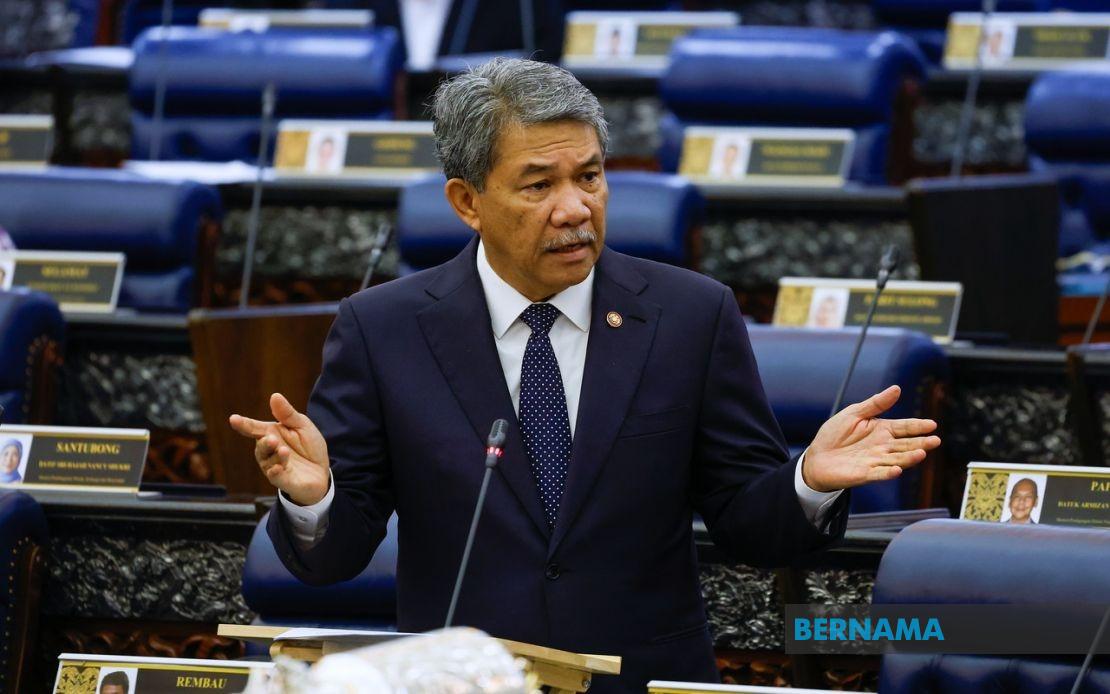
Foreign Minister Datuk Seri Mohamad Hasan has moved to clarify that Malaysia's delegation visit to Myanmar last month carries no implication of recognizing the country's military administration, instead framing the engagement as part of ASEAN's broader strategy to maintain diplomatic channels amid the ongoing regional crisis. Speaking in parliament, Mohamad reiterated that Malaysia remains firm in its non-recognition position toward the Myanmar junta and that the visit had not compromised the country's adherence to ASEAN's Five-Point Consensus framework.
The clarification came in response to a parliamentary question from Datuk Seri Saifuddin Abdullah, underscoring the sensitivity surrounding ASEAN nations' interactions with Myanmar following the military's assumption of power. Mohamad noted that the May visit was undertaken in accordance with a directive issued by the 48th ASEAN Summit, which had explicitly instructed ASEAN foreign ministers to pursue informal engagement channels with Myanmar. This distinction between formal recognition and pragmatic dialogue has become increasingly important as regional governments navigate the delicate balance between maintaining principles and preserving channels for potential conflict resolution.
During his meeting with Myanmar Foreign Minister Tin Maung Swe, Mohamad deliberately chose a hotel venue rather than the Foreign Ministry building—a symbolic gesture intended to underscore the unofficial nature of the engagement. In those discussions, the Malaysian delegation conveyed ASEAN's collective expectations regarding steps that should be taken to facilitate positive developments in Myanmar. The choice of setting, while apparently procedural, carries diplomatic weight in the context of ASEAN's non-recognition stance, clearly distinguishing between formal state-to-state relations and interim communication efforts.
A central component of Mohamad's message to the Myanmar delegation involved articulating the reciprocal nature of ASEAN membership obligations. While acknowledging Myanmar's rights as a member state of the regional organization, Mohamad emphasized that these rights come coupled with corresponding responsibilities and commitments to the bloc's principles and agreements. This framing reflects ASEAN's pragmatic approach—maintaining some form of constructive dialogue while simultaneously asserting that membership privileges are contingent upon upholding agreed standards and frameworks.
The Malaysian foreign minister outlined a strategic rationale for sustaining open communication channels with Myanmar despite international concerns about the junta's grip on power. Allowing Myanmar to become further isolated, he contended, would create a diplomatic vacuum that external actors—potentially those with geopolitical interests divergent from ASEAN's—could exploit. This argument reflects broader regional anxiety about great power competition in Southeast Asia, where isolating Myanmar might inadvertently strengthen non-regional influence in the country. Mohamad's concern about creating space for parties "with vested interests" implicitly signals Malaysia's wariness about Chinese or other external powers expanding their leverage in Myanmar through the junta's desperation for international support.
The implications for Malaysia and ASEAN are substantial, particularly as the regional bloc attempts to reconcile its foundational principle of non-interference with its contemporary responsibility to address humanitarian crises and political instability. The Five-Point Consensus, which calls for an immediate cessation of violence, the initiation of dialogue among Myanmar stakeholders, humanitarian assistance, and mediation by ASEAN, has proven difficult to implement without some level of engagement with the military authorities. Mohamad's approach represents an attempt to maintain this delicate equilibrium—engaging without endorsing, communicating without capitulating.
Planners are reportedly arranging additional rounds of stakeholder meetings with Myanmar representatives for early or mid-July, signaling that Malaysia and ASEAN intend to sustain their diplomatic efforts despite the absence of dramatic breakthroughs. These continued engagements suggest a long-term commitment to dialogue rather than a capitulation to the junta or a pivot toward recognizing its authority. The Malaysian government appears convinced that abandoning the communication channel would be counterproductive to ASEAN's stated goal of finding a peaceful resolution to the Myanmar crisis.
Mohamad reiterated Malaysia's consistent advocacy for all parties within Myanmar to end violence, observe a ceasefire, engage in substantive dialogue across factional lines, and permit humanitarian aid to reach affected populations. This multipronged approach—combining pressure for military restraint, inclusive political dialogue, and humanitarian access—defines ASEAN's Five-Point Consensus and reflects the bloc's assessment that Myanmar's stability depends on parallel progress across military, political, and humanitarian dimensions. Malaysia's positioning as an interlocutor reflects its broader interest in maintaining regional order and preventing Myanmar's instability from destabilizing neighboring countries, particularly along shared borders.
The diplomatic balancing act Mohamad is navigating reflects deeper tensions within ASEAN itself regarding how member states should handle political crises in fellow members. Some nations have leaned toward stronger condemnation, while others emphasize dialogue and pragmatism. Malaysia's approach—engagement without recognition—attempts to thread this needle, maintaining ASEAN unity while preserving pathways for future evolution in Myanmar's political situation. For Malaysian readers, this approach carries implications for how ASEAN as a bloc will manage future crises among its membership and whether the organization can evolve beyond purely declarative statements toward more substantive conflict resolution mechanisms.
Looking ahead, the success of these continued diplomatic efforts will likely determine whether Malaysia and ASEAN can claim progress in addressing the Myanmar crisis or whether the strategy will be perceived as having merely prolonged a deadlock. The approach assumes that the Myanmar military authorities can be persuaded through dialogue to reconsider their trajectory, an assumption that successive summits and meetings have not yet validated. Nevertheless, the Malaysian government appears committed to maintaining this engagement strategy as the lesser of available alternatives, viewing isolation as potentially more destabilizing to regional interests than sustained, conditional communication.

