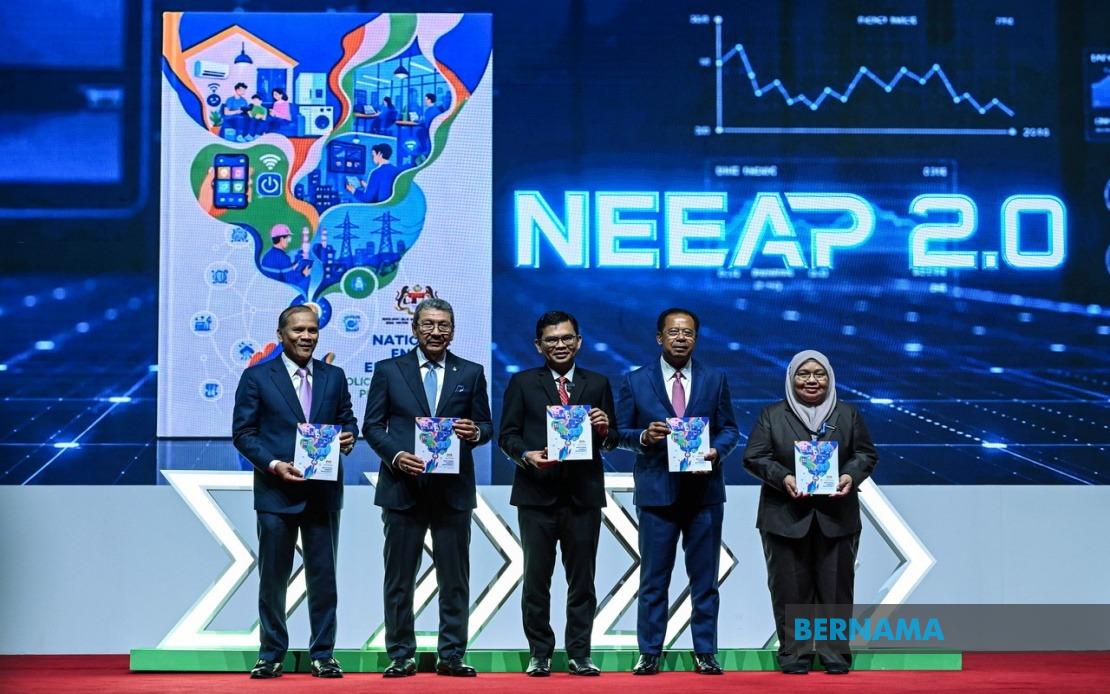
Malaysia has unveiled an ambitious decade-long energy efficiency roadmap designed to reshape how the nation consumes electricity and thermal energy while generating substantial economic benefits. The National Energy Efficiency Policy and Action Plan 2026-2035, officially launched this week at the 7th International Sustainable Energy Summit in Putrajaya, represents the government's strategy to decouple economic growth from rising energy consumption. The initiative, steered by the Ministry of Energy Transition and Water Transformation, projects RM85 billion in net energy savings alongside RM36 billion in private sector investment flowing into efficiency projects across multiple industries.
The scale of the employment opportunity embedded within NEEAP 2.0 underscores the government's recognition that energy transition is fundamentally an economic transformation. Creating approximately 29,000 new positions across energy management, retrofit services, technology deployment and related fields will provide entry points for workers across skill levels. These jobs span both established industries and emerging sectors, from manufacturing facilities upgrading their systems to the growing renewable energy and efficiency technology services sector. For Malaysian policymakers, this employment multiplier effect justifies the policy's integrated approach, which treats energy efficiency not merely as an environmental imperative but as a vehicle for inclusive economic development.
From an environmental standpoint, NEEAP 2.0 carries particular weight given Malaysia's commitment to achieving net-zero emissions by 2050. The plan targets a 26 million tonne reduction in carbon dioxide equivalent emissions through 2035, a substantial contribution to the nation's decarbonisation pathway. This emissions reduction trajectory aligns with Malaysia's internationally pledged climate commitments and reflects the reality that energy efficiency remains one of the fastest and most cost-effective tools for lowering greenhouse gas outputs. For Southeast Asia's third-largest economy, demonstrating tangible progress on emissions cuts matters both domestically, as Malaysia positions itself as a climate leader within the region, and internationally, where investors increasingly scrutinise corporate and national sustainability credentials.
The technical ambition embedded in NEEAP 2.0 is striking: the plan targets an 11.6 percent improvement in electricity and thermal energy efficiency relative to a business-as-usual scenario. Ministry officials quantified this through an expected cumulative energy saving of 815,000 terajoules, a figure they illustrate by noting it equals the electricity supply needed to power Peninsular Malaysia for nearly two years. This efficiency gain does not materialise through conservation messaging alone but requires substantial infrastructure upgrades, technological deployment, and behavioural change across the industrial, commercial and residential sectors. The magnitude of the efficiency improvement signals that policymakers expect meaningful retrofitting, equipment replacement, process redesign and operational changes to embed themselves across the economy.
Industrial and commercial sectors will likely shoulder the heaviest efficiency burden, given their outsized energy consumption and the economic case for upgrading. Manufacturing facilities, data centres, shopping malls, office parks and hospitality operations consume electricity at rates far exceeding residential users, making them natural targets for efficiency interventions. Many such facilities operate older systems designed before energy costs and climate concerns dominated decision-making. NEEAP 2.0's emphasis on high-impact sectors reflects this reality—concentrating resources where efficiency gains yield the largest aggregate savings and where commercial logic often aligns with environmental objectives. However, the residential sector's inclusion acknowledges that household energy use, though individually modest, collectively represents a substantial portion of national consumption.
The policy's timing reinforces the Malaysia MADANI framework, the government's broader development philosophy centring on inclusive prosperity, sustainability and well-being. NEEAP 2.0 operationalises these abstract commitments by translating them into concrete energy-saving targets, employment pathways and emissions reductions. By framing efficiency improvements as contributors to low-carbon development and resource sustainability, the policy connects energy management to everyday concerns about rising electricity bills, power reliability and environmental quality. This narrative resonates with Malaysian consumers facing household cost pressures and policymakers seeking development models that enhance living standards without depleting natural resources.
Private sector participation emerges as crucial to NEEAP 2.0's success. The projected RM36 billion in private investment suggests that the policy framework creates conditions where companies see financial returns in efficiency improvements, whether through energy cost savings, government incentives, or emerging market opportunities. This private capital mobilisation differentiates NEEAP 2.0 from purely regulatory approaches. By structuring incentives to encourage rather than mandate efficiency upgrades, policymakers can harness commercial dynamics while achieving environmental objectives. For Malaysian businesses, particularly multinational corporations facing shareholder pressure to reduce operational carbon footprints, NEEAP 2.0 provides a policy environment supportive of their sustainability commitments.
The policy's continuity with Malaysia's previous energy efficiency action plan reflects institutional learning and incremental policy refinement. Rather than abandoning earlier approaches, NEEAP 2.0 builds on documented successes while addressing shortcomings and expanding ambition. This evolutionary approach enhances policy credibility among stakeholders who have experienced prior initiatives and expect realistic targets grounded in empirical evidence. For Malaysia's regional standing, a track record of successfully implementing successive energy policies demonstrates commitment to climate action that exceeds mere rhetorical pledges.
Implementation of NEEAP 2.0 across diverse stakeholders—from multinational industrial operations to individual households—requires coordinated engagement spanning multiple government agencies, industry associations, financial institutions and community organisations. The policy's emphasis on fostering an energy efficiency culture suggests that behavioural and attitudinal shifts must accompany technological upgrades. This cultural dimension recognises that efficiency improvements ultimately depend on millions of daily decisions by building operators, facility managers, procurement officers and household decision-makers. Successfully embedding efficiency as a routine consideration in energy-related choices represents a significant achievement beyond mere technical metrics.
For Malaysian businesses and investors, NEEAP 2.0 signals a policy environment increasingly supportive of clean energy transitions. Companies seeking to expand manufacturing operations or establish regional headquarters may view Malaysia's efficiency commitment as evidence of stable, forward-looking governance. The RM36 billion private investment projection suggests profitable business models exist in efficiency services, encouraging entrepreneurship and technology adoption. This competitive advantage in attracting investment flows could differentiate Malaysia from regional competitors less committed to energy transition.
The emissions reduction target of 26 million tonnes CO₂eq by 2035 positions energy efficiency as a cornerstone of Malaysia's climate strategy. While renewable energy expansion and electrification of transport receive greater public attention, efficiency improvements often deliver emissions reductions more quickly and at lower cost. NEEAP 2.0's scale indicates that Malaysia recognises this reality and intends to leverage efficiency as a primary climate mitigation tool. For Southeast Asia more broadly, where rapid industrialisation and urbanisation are driving energy demand growth, Malaysia's efficiency-focused approach offers a model for decoupling development from emissions—a challenge every regional economy must solve.
Success in executing NEEAP 2.0 will ultimately depend on translating ambitious targets into sustained implementation across dispersed organisations and countless individual decisions. Policy frameworks, financial incentives and regulatory requirements create the enabling conditions, but realising RM85 billion in savings and 29,000 jobs requires persistent engagement with stakeholders, monitoring of progress against milestones, and adaptive management as implementation reveals unforeseen challenges. The coming decade will test whether Malaysia can institutionalise energy efficiency as a routine consideration in investment, operations and consumption patterns—a transformation that, if achieved, would position the nation as a regional leader in sustainable development.

