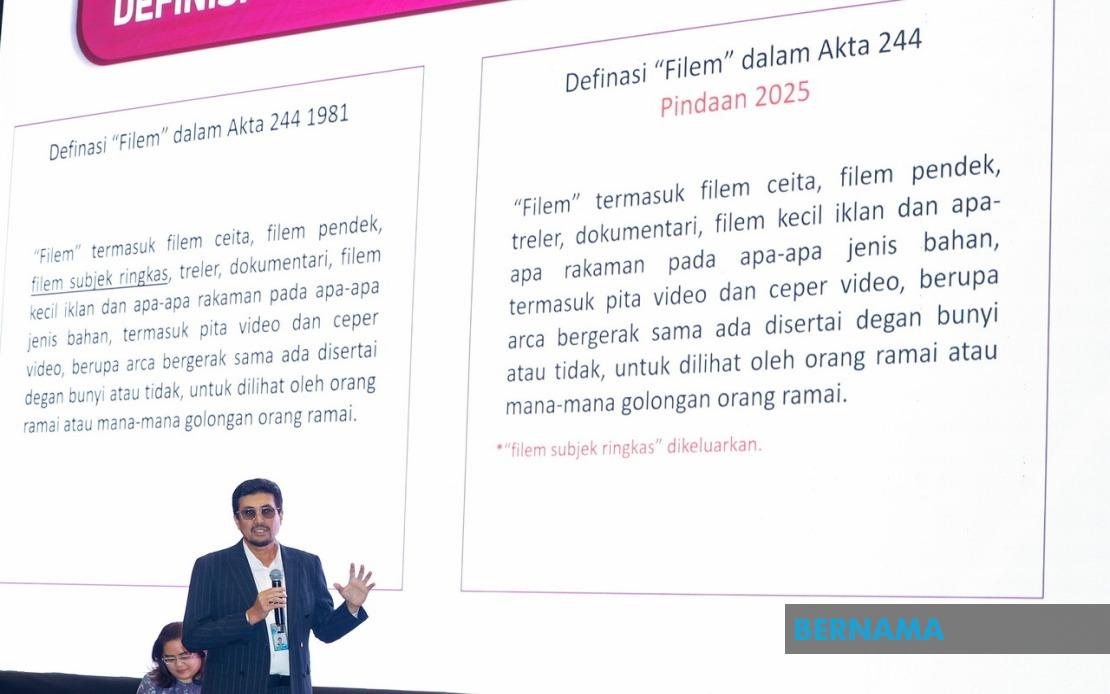
Malaysia's film industry is poised for a significant strategic overhaul with the imminent launch of the National Film Policy 2026-2035, a comprehensive blueprint that represents the nation's most ambitious attempt to modernize cinema production and distribution since the previous policy framework took effect two decades ago. The initiative, now in its final preparatory stages, aims to position the country's creative sector as a regional powerhouse by tackling persistent challenges in financing, market reach, and technological adoption—issues that have long constrained the local film industry's ability to compete globally.
According to Datuk Azmir Saifuddin Mutalib, chief executive of the National Film Development Corporation Malaysia (FINAS), the new policy framework encompasses more than 70 distinct initiatives clustered around five strategic pillars designed to address interconnected gaps within the industry. The financing and investment pillar acknowledges that traditional funding mechanisms have proven insufficient for producing high-quality commercial content, while the marketing and promotion component recognizes Malaysia's struggle to achieve international distribution for locally-produced films. The emphasis on industry collaboration and technology integration reflects growing acknowledgment that artificial intelligence and digital tools are reshaping global filmmaking, and Malaysian creators cannot afford to lag behind. Human capital development addresses a persistent skills shortage, whilst governance improvements aim to clarify regulatory frameworks that have sometimes hindered rather than supported film production.
The formulation process has consumed between one and two years of intensive stakeholder consultation, reflecting FINAS's commitment to building broad consensus before implementation. This collaborative approach involved engaging industry practitioners, government bodies, academic institutions including Universiti Teknologi MARA and the National Academy of Arts, Culture and Heritage, and relevant government agencies to ensure the proposed measures complement rather than duplicate existing initiatives. Such thoroughness stands in contrast to policy-making approaches sometimes criticized for insufficient industry input, suggesting FINAS has learned from previous implementation challenges. The extensive consultation also serves to address Malaysian film industry's characteristic fragmentation, where production companies, distributors, exhibitors, and creative workers often operate with competing interests.
Following recent stakeholder engagement sessions, refinement continues on specific provisions, with industry participants particularly requesting clarification on how FINAS will operationalize cooperation frameworks with industry associations. This feedback indicates that while the strategic direction enjoys broad support, practitioners remain concerned about translating policy objectives into workable mechanisms. The final phase now involves professional copywriting and compilation into formal documentation suitable for Cabinet presentation—a procedural step that, while administrative, carries symbolic weight by elevating film policy to high-level government consideration.
The new policy represents Malaysia's third national film strategy since initial frameworks emerged during the 1980s, yet it constitutes the first substantive legislative update following the 2005 National Film Policy. This two-decade gap underscores how rapidly the global film and audiovisual production landscape has transformed, with streaming platforms, digital distribution, and international co-production becoming central to industry economics. Malaysia's previous policy framework, developed for an era of theatrical releases and domestic television markets, required fundamental reimagining to address contemporary realities. The 2026-2035 timeline itself signals commitment to medium-term planning, acknowledging that meaningful industry transformation requires sustained effort beyond typical electoral cycles.
Alternative financing mechanisms represent a critical focus area, as conventional funding sources—government grants, domestic private investment, and bank lending—have proven inadequate for ambitious projects seeking international market traction. The policy framework appears designed to encourage innovative arrangements including co-production partnerships, tax incentives for international investment, and potentially new mechanisms like film funds modeled on successful regional and international examples. For Malaysian filmmakers, access to diverse funding sources could enable projects of greater ambition and commercial viability, reducing reliance on government support that sometimes constrains creative freedom or prioritizes cultural messaging over market appeal.
Market expansion initiatives target a structural weakness where Malaysian films achieve limited international distribution despite occasional critical acclaim. Systematic approaches might include trade mission support, festival participation funding, and relationships with international distributors. This addresses a fundamental asymmetry where Malaysian audiences consume substantial foreign content through theatrical and streaming channels, yet Malaysian productions rarely achieve comparable cross-border penetration. Expanding market access particularly benefits the industry's commercial viability, since domestic box office alone cannot justify productions competing with international studios' scale and resources.
The technology adoption component acknowledges that artificial intelligence and digital tools are becoming industry infrastructure rather than optional extras. Machine learning applications in script analysis, post-production, and audience targeting offer Malaysian producers pathways to efficiency improvements and data-driven decision-making. However, this emphasis also raises questions about skills development—Malaysian film professionals will require training in these emerging tools to avoid widening gaps between international and domestic production standards. The policy framework appears to anticipate such needs through its human capital development pillar, though specific training initiatives and funding mechanisms remain to be detailed.
Intellectual property protections warrant particular emphasis in the policy's governance component, as film industry participants frequently cite piracy and unauthorized online distribution as significant revenue threats. Strengthened legal frameworks could enhance investor confidence by providing clearer remedies for rights infringement. This particularly matters for attracting international co-production partners and financing, as overseas investors require confidence in intellectual property security. Malaysia's position within ASEAN also means regional coordination on piracy enforcement could yield economies of scale in protecting digital content across borders.
The policy's framing—positioning Malaysian film as an engine of economic growth, a reflection of national multicultural identity, and a driver of social cohesion—reflects broader recognition that creative industries merit strategic government support comparable to manufacturing or technology sectors. Malaysia's domestic consumption of film and serialized content remains substantial, and the production ecosystem generates employment across locations, post-production, and related services. International recognition of Malaysian cinema, particularly through festival success, provides soft power benefits and tourism marketing that extend beyond direct revenue considerations.
Implementation will prove decisive in determining whether this policy framework achieves transformative impact or joins previous strategic documents in generating limited industry-wide change. Key variables include funding allocation, institutional coordination between FINAS and other government bodies, and whether regulatory barriers to film production actually diminish rather than simply being redistributed. The policy's success will likely be measurable through indicators including increased foreign investment in Malaysian productions, growth in international distribution deals, and diversification of funding sources supporting local films.
The policy's submission to the Communications Minister and subsequent Cabinet approval represents an important transition point where strategic intentions become government priority. Once launched later this year, implementation will require sustained bureaucratic commitment and adequate resource allocation. For Malaysia's film industry, the 2026-2035 framework offers the most comprehensive strategic guidance in two decades, potentially providing momentum for meaningful industry development if execution matches ambition.

