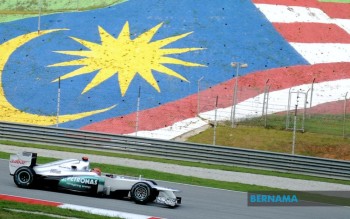
Malaysia is set to welcome Formula 1 back to the Sepang International Circuit for the first time since 2017, when the country will host the Bahrain Grand Prix on October 2–4, 2026. The announcement, confirmed by Formula 1 and the Fédération Internationale de l'Automobile, marks a landmark moment for Malaysian motorsport, positioning the nation as a temporary substitute venue while opening fresh economic prospects for the region. The race will slot strategically between the Azerbaijan and Singapore rounds, creating a compelling window for international motorsport enthusiasts traversing Southeast Asia.
Datuk Razlan Razali, the former chief executive of Sepang International Circuit, views the arrangement as a pragmatic decision that strengthens Malaysia's competitive position among global racing venues. His assessment centres on cost-effectiveness: Malaysia's established infrastructure and operational capabilities make it the natural choice compared with alternative locations such as Portugal's Portimao. The Sepang circuit requires minimal modification to accommodate the race, and Razali emphasises that the track already meets the highest safety homologation standards, though FIA inspection remains necessary before final clearance. This operational readiness translates directly into financial efficiency for Bahrain, which assumes the primary financial burden of staging the event, thereby insulating Malaysia from the substantial risks typically associated with hosting a premier motorsport championship.
From an infrastructure perspective, Razali acknowledges that Sepang operates at international standards across all domains, from track construction to facility management. While some upgrades may be necessary depending on Bahrain's specific requirements, these improvements would benefit the circuit's long-term capacity and reputation. The tight timeline—approximately sixteen months between confirmation and race day—presents no insurmountable operational hurdles for a venue of Sepang's maturity and experience. Razali's measured optimism reflects confidence that the circuit can accommodate the event's technical demands without substantial capital expenditure or restructuring, a critical advantage given the compressed preparation schedule.
The economic implications extend well beyond the racing surface. Tan Sri Mokhzani Mahathir, president of the Motorsports Association of Malaysia, projects substantial benefits across hospitality, tourism, airline, and food and beverage sectors. Historical data from comparable Formula 1 and MotoGP events suggests that approximately 30 per cent of spectators are international visitors, generating spending across accommodation, dining, and entertainment. Critically, Malaysia's geographic proximity to Singapore offers a regional advantage: visitors attending the Sepang race will likely remain in Malaysia for the week preceding the Singapore Grand Prix, capitalising on Malaysia's significantly lower cost structure. This extended visitation pattern could amplify spending by attracting price-conscious international fans seeking value without sacrificing premium motorsport experiences.
The financial risk profile favours Malaysia distinctly. Unlike previous hosting arrangements where the Malaysian government or local partners bore substantial event costs, Bahrain assumes the primary financial and organisational responsibility. Mokhzani characterises this arrangement as exceptionally favourable, noting that Malaysia's return on investment becomes unusually high when external parties absorb staging expenses. The nation functions essentially as a landlord rather than primary promoter, a model that minimises downside exposure whilst preserving upside opportunity. This risk-averse structure may explain why Malaysian stakeholders express genuine enthusiasm despite the abbreviated preparation window.
Domestic tourism represents another significant opportunity, though Razali cautions that the compressed timeline may suppress international attendance. Formula 1 enthusiasts conventionally plan major trips at least six months ahead, and October 2026 bookings are already underway. Nevertheless, dedicated fans—particularly those already engaged with Southeast Asian motorsport circuits—will likely prioritise attending Sepang after an eight-year absence. Local suppliers, contractors, and service providers stand to capture substantial business opportunities as event organisers source everything from catering to security to transportation locally. Razali emphasises that Bahrain's promotional burden rests primarily with the race organisers, positioning Malaysia's role as facilitator rather than active marketer.
Yet beyond the immediate economic windfall lies a more complex question: can this one-off event catalyse Malaysia's permanent return to Formula 1? Razali's assessment proves sobering. The astronomical costs of maintaining a permanent F1 calendar slot—involving not merely race organisation but sustained promotional and infrastructure commitments—remain prohibitive absent direct government intervention. Prime Minister Datuk Seri Anwar Ibrahim would need to champion a sustained commercial case during the race weekend to meaningfully advance permanent hosting prospects. The short-term nature of this arrangement suggests Malaysia views October 2026 as a valuable proving ground rather than a stepping stone to permanent restoration, a pragmatic acknowledgment of the championship's escalating financial demands on host nations.
Former F1 driver Alex Yoong articulates a broader strategic perspective that transcends single-event economics. While acknowledging tourism and commercial benefits, Yoong argues that Formula 1's return should catalyse deeper investment in grassroots motorsport development and emerging driver talent across Southeast Asia. Malaysia's world-class infrastructure at Sepang positions it uniquely as a regional motorsport hub, yet leveraging this advantage requires vision extending beyond one race weekend. The circuit's return to international prominence could stimulate expanded funding for junior racing programmes, driver academies, and indigenous motorsport talent development—investments that would generate long-term returns across multiple generations. Yoong's perspective reframes the October 2026 race not merely as a tourism event but as potential foundation for revitalised motorsport ecosystem engagement throughout the region.
The Motorsports Association of Malaysia's role remains circumscribed but essential. MAM will ensure compliance with FIA safety regulations, circuit readiness standards, and manpower requirements, functioning as domestic overseer rather than event organiser. This limited scope clarifies Malaysia's position within the broader arrangement: the nation provides facilities and regulatory oversight whilst Bahrain handles promotion, sponsorship, and operational direction. Such clarity reduces coordination complexity whilst establishing transparent accountability for various stakeholders. The association's existing experience with major motorsport events positions it well to navigate technical compliance requirements without disruption to event delivery or schedule.
Malaysia's infrastructure ecosystem—encompassing five-star hospitality throughout Kuala Lumpur, Putrajaya, and surrounding regions—requires no substantial augmentation to accommodate Formula 1's demanding operational specifications. Mokhzani's confidence reflects Malaysia's proven capacity to host international-scale events efficiently. The nation has repeatedly demonstrated logistical competence across multiple hemispheres and disciplines, suggesting that a sixteen-month preparation window provides adequate time for flawless execution. This operational confidence distinguishes Malaysia from less-developed venues, explaining partly why Formula 1 and the FIA selected Sepang as the Bahrain GP's relocation destination.
The strategic timing between Azerbaijan and Singapore generates additional competitive advantages. This temporal positioning allows race enthusiasts to experience three consecutive weekends of elite motorsport within Southeast Asian and Middle Eastern venues, effectively transforming the region into a motorsport tourism destination. Airlines, hotels, and hospitality providers benefit from extended tourist flows, whilst the region's profile as a motorsport centre strengthens internationally. For Malaysia specifically, hosting the middle event in this trilogy establishes the nation's reinvigoration as a serious motorsport jurisdiction, potentially influencing future championship calendar decisions and attracting additional motorsport investments beyond Formula 1.
Looking beyond October 2026, Malaysia faces a choice regarding motorsport's strategic role in national development. The Bahrain Grand Prix serves simultaneously as economic opportunity and test case for governmental commitment to sustaining Formula 1 presence. Industry leaders across motorsport, hospitality, and tourism sectors will be monitoring visitor numbers, spending patterns, and international media coverage to build the commercial case for permanent restoration. If the October 2026 race generates sufficient economic activity and political will, Malaysia could position itself for future calendar consideration, though the championship's relentless cost escalation suggests this remains a long-term aspiration rather than immediate likelihood.

