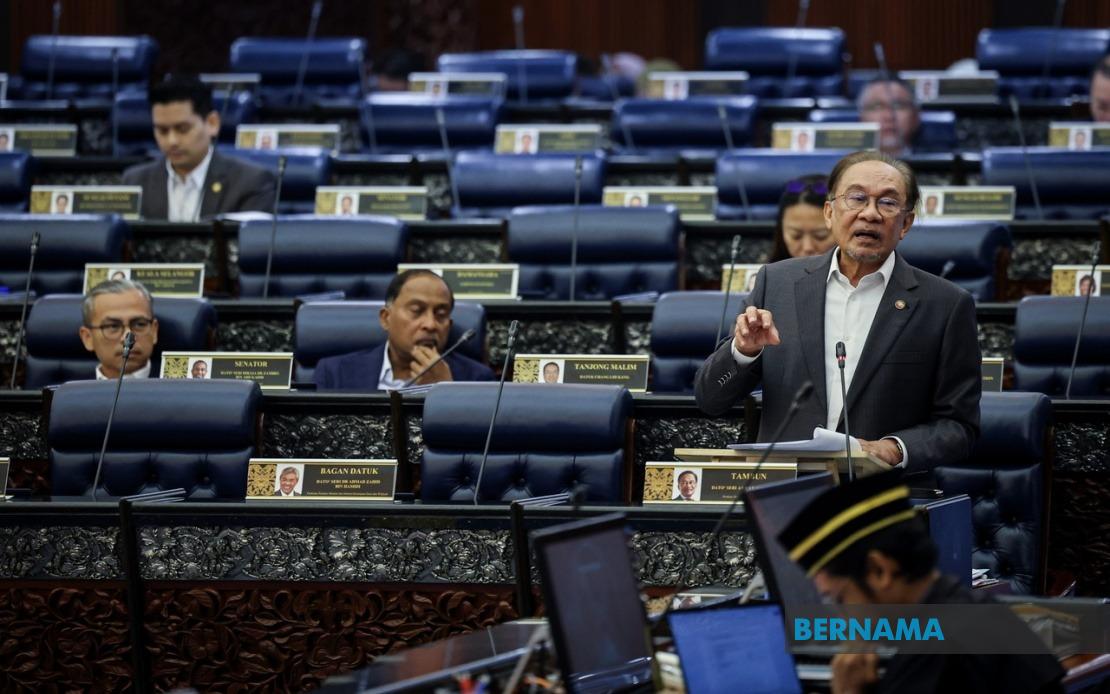
Malaysia's slip in the latest World Press Freedom Index represents a complex intersection of regulatory action and international perception, according to Prime Minister Datuk Seri Anwar Ibrahim. Speaking in Parliament on July 7, the Premier acknowledged that the country's descent from 88th position last year to 95th in the 2026 rankings reflects how global media watchdogs assess national press environments. Rather than framing the decline as evidence of deteriorating freedoms, Anwar characterised it as a consequence of how international observers, particularly Reporters Without Borders, interpret enforcement measures taken against specific categories of content.
The government's actions against publications including Sin Chew Daily and Sinar Harian have drawn particular scrutiny from the international press freedom community. Sin Chew Daily faced action over an inaccurate illustration of the Jalur Gemilang, the national flag, while Sinar Harian encountered enforcement related to the publication of the Inspector-General of Police's biography. These cases, Anwar explained, carry disproportionate weight in global press freedom assessments because they involve established media organisations with international standing. When major news outlets experience government enforcement, regardless of the underlying rationale, foreign media analysts tend to interpret such actions as potential threats to journalistic independence.
Central to Anwar's defence is a distinction between suppressing legitimate journalism and protecting content boundaries around what the government terms the 3R issues—religion, race, and the royal institution. The Prime Minister stressed that enforcement action has not targeted factually accurate reporting or political criticism, but rather specific categories deemed sensitive under Malaysia's constitutional and legal framework. This distinction reflects the unique constitutional position of the Malay-Muslim majority, the special status of the Yang di-Pertuan Agong and state rulers, and provisions protecting religious and racial harmony enshrined in the Federal Constitution. The government's position, Anwar indicated, remains bound by agreements reached at the Conference of Rulers, which monitors content that could insult the monarchy or inflame communal tensions.
What distinguishes this government's approach, according to the Prime Minister, is a shift toward clarification rather than blanket enforcement for most categories of inaccuracy or political disagreement. Parliament itself has become a forum where the government provides public explanations and corrections, treating the legislative chamber as a mechanism for addressing contested claims. This method ostensibly preserves press freedom while allowing government response without resorting to legal action. The distinction matters because it reflects an attempt to calibrate enforcement toward the narrowest possible range of prohibited content rather than using regulation as a blunt tool against critical journalism.
Anwar pointed to recent legislative amendments as evidence of liberalisation within the regulatory framework. Changes to Section 233 of the Communications and Multimedia Act 1998 explicitly removed criminal penalties for satirical remarks directed at the Prime Minister or other leaders. This reform signals an intent to distinguish between legitimate satire and content designed to undermine state institutions or incite communal division. Such amendments matter for Malaysia's international standing because they demonstrate active effort to narrow rather than expand the scope of restricted speech, a distinction that should theoretically register with international press freedom assessments over time.
The complexity of Malaysia's press environment extends beyond government action. Anwar highlighted the significant but often overlooked role of social media platforms in removing content independently of state direction. Posts related to Hamas, including those from the Prime Minister himself, have been removed by platforms based on their own policies or user complaints, despite government disagreement with those decisions. This reality complicates the narrative that government action alone explains press freedom constraints. The Malaysian Communications and Multimedia Commission issues requests to platforms, but the final authority rests with platform operators—a distinction important for understanding where responsibility for content restrictions actually lies in the digital media ecosystem.
For Malaysian readers and regional observers, this distinction carries practical implications. The enforcement actions documented over the past year have primarily targeted three specific domains: misuse of national symbols, sensitive religious and racial commentary, and content regarding the monarchy. While these categories undoubtedly constrain some forms of expression, they represent a narrower range than blanket political suppression. The challenge for Malaysia's international standing lies in persuading the global press freedom community that distinctions between protecting constitutional provisions and censoring political dissent remain meaningful and enforced in practice.
The international assessment methodology itself influences Malaysia's rankings in ways sometimes disconnected from ground-level press freedom conditions. Reporters Without Borders considers multiple indicators including the political environment, legal framework, economic conditions, socio-cultural context, and security climate. A single enforcement action against a prominent outlet can significantly impact rankings because such cases receive international media attention and are interpreted as signals about systemic press freedom. Conversely, the absence of dramatic enforcement actions against political criticism receives less attention globally, making it difficult for countries to recover lost ground simply through restraint.
For Southeast Asia more broadly, Malaysia's situation illustrates a recurring tension between protecting communal harmony and accommodating international norms around press freedom. Several regional governments face similar pressures to enforce restrictions on religion, race, and state institution commentary, yet those restrictions increasingly trigger criticism from international bodies. The Malaysian government's explicit acknowledgement of this tension and effort to distinguish between categories of restricted speech represents a more transparent approach than silent enforcement, but transparency alone may not shift international perceptions if the underlying restrictions remain in place.
Moving forward, Malaysia's position in global press freedom rankings may depend less on eliminating enforcement action altogether and more on demonstrating consistent, narrow application of restrictions while expanding protections for political commentary and factual reporting. The government has chosen to emphasise its constitutional obligations regarding the 3R framework rather than abandon those restrictions entirely. This stance reflects the political realities of Malaysia's multi-ethnic, multi-religious context and the constitutional guarantees that anchor the social contract. Whether that explanation gains traction internationally remains uncertain, but it signals an intent to balance competing claims rather than simply accepting the rankings as indictments of state intention.

