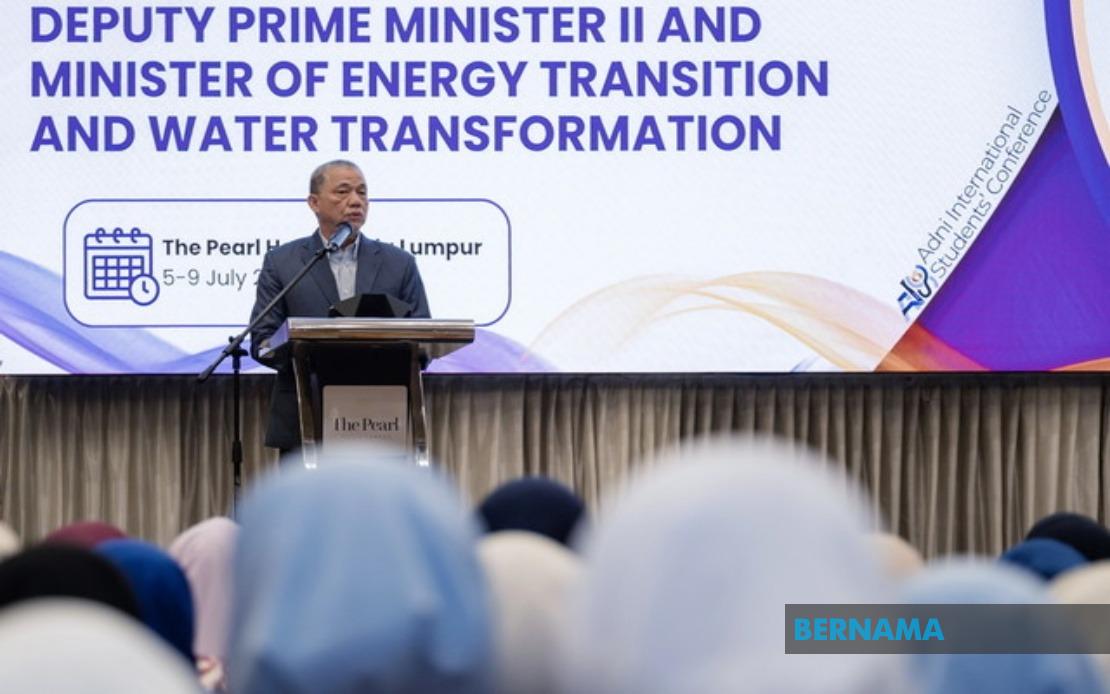
Deputy Prime Minister Datuk Seri Fadillah Yusof has underscored a fundamental shift in how nations must approach development, arguing that Malaysia's trajectory in the coming decades will be determined by the calibre of its workforce and citizens rather than by economic prowess or technological infrastructure alone. Speaking at the opening of the ADNI International Students' Conference (AISC) 2026 in Kuala Lumpur on July 6, Fadillah laid out a vision for national progress that prioritizes the cultivation of individuals equipped with critical thinking skills, strong communication abilities, and the capacity to navigate rapid global change.
The deputy premier's remarks reflect a growing recognition across Southeast Asia that conventional measures of development—gross domestic product, infrastructure investment, or digital adoption rates—provide an incomplete picture of a nation's readiness for the future. In an increasingly interconnected world where challenges transcend borders, Fadillah argued, success cannot be measured in isolation. The complex problems facing humanity today, from climate change and public health crises to digital transformation and persistent social inequality, demand coordinated responses that span multiple sectors and nations. No single entity—whether government, corporation, or institution—possesses the full toolkit needed to address these multifaceted issues.
Fadillah's framework explicitly calls for what he termed a "collaborative ecosystem" involving governments, educational institutions, the private sector, civil society organizations, and young people themselves. This multilayered approach contrasts with traditional top-down development models and acknowledges that solutions to tomorrow's challenges must be co-created by stakeholders with diverse expertise and perspectives. For Malaysia specifically, this represents both an opportunity and a challenge. The country's position as a regional economic hub gives it leverage to convene such partnerships, yet realizing this vision requires sustained commitment and structural reforms across education, policy, and institutional frameworks.
Central to the deputy PM's message is the MADANI Government's commitment to positioning human capital development as the cornerstone of national advancement. This philosophy echoes principles articulated decades earlier by Malaysia's third Prime Minister Tun Hussein Onn, who maintained that a nation's true strength derives from the unity and character of its populace rather than material accumulation alone. By invoking this historical perspective, Fadillah connects contemporary policy priorities to Malaysia's established philosophical foundations, lending credibility to the human capital agenda while suggesting continuity in national values across administrations.
The deputy premier drew a sharp distinction between connectivity and cohesion, a differentiation particularly relevant in the digital age. While technology facilitates the rapid movement of information and enables instantaneous global communication, he observed, it cannot substitute for the intangible elements that bind societies together: shared values, mutual respect, and interpersonal trust. This nuance carries weight in Malaysia's context, where rapid technological adoption has sometimes outpaced efforts to strengthen social bonds across diverse communities. Fadillah's framing suggests that true national development must be holistic, encompassing not only material wellbeing but also ethical development, creative expression, environmental sustainability, and robust social cohesion.
In outlining the components of genuine development, Fadillah identified six pillars: quality education, personal and collective wellbeing, ethical grounding, creative capability, sustainability consciousness, and social cohesion. This comprehensive approach transcends the narrow focus on economic metrics that has traditionally dominated policy discourse. Each pillar addresses a specific dimension of human flourishing and national resilience. Quality education provides the foundation for critical thinking and skill development; wellbeing ensures that citizens can contribute meaningfully to society; ethics establishes the moral framework for responsible decision-making; creativity drives innovation and problem-solving; sustainability awareness builds long-term stewardship; and social cohesion creates the trust necessary for collective action.
The AISC 2026 conference itself exemplifies the principles Fadillah articulated. Themed "Thriving Together: Diversity, Education and Wellness in a Digital World," the gathering assembled approximately 150 students from Malaysia and across the region, including representatives from Thailand, the Philippines, and Indonesia. This cross-border composition transforms the conference from a domestic event into a regional platform for intellectual exchange and friendship-building among young people who will shape Southeast Asia's future. The conference directly reflects alignment with the United Nations Sustainable Development Goals, particularly those emphasizing quality education, inclusive institutions, and strategic partnerships.
Fadillah emphasized the indispensable value of intellectual discourse and cross-cultural engagement in developing globally-minded individuals who maintain strong personal values and cultural identity. This formulation addresses a persistent tension in globalization: how to embrace international perspectives and opportunities without diluting local identities or values. For Southeast Asian nations navigating rapid change, this balance proves critical. Young people who can operate confidently in international contexts while remaining rooted in their own cultural traditions become bridges between societies and agents of nuanced collaboration rather than cultural homogenization.
A striking element of the deputy PM's address involved his reflection on artificial intelligence and human capability. While acknowledging that AI systems will continue to become more sophisticated and capable in narrowly defined domains, Fadillah contended that machines will never replicate wisdom—the deeper understanding that synthesizes knowledge with judgment and experience. Equally important, technology cannot substitute for compassion, the emotional and moral capacity to genuinely understand and respond to human suffering. This distinction proves crucial for Malaysian policymakers as the country grapples with how to integrate AI and automation into economic and social systems without losing the human dimensions essential to functioning societies.
The emphasis on these intangible human qualities responds to a widespread anxiety in Southeast Asia that rapid technological change will render workers and citizens obsolete unless they acquire new skills continuously. Fadillah's message offers a partial counterweight to this narrative, suggesting that certain human attributes—wisdom, compassion, ethical judgment, creative insight—retain irreplaceable value in any plausible future. This reframing may help Malaysian educators and policymakers design curricula and development programs that cultivate these capacities alongside technical competencies.
For Malaysia's broader development trajectory, Fadillah's framework has substantial implications. If human capital quality truly constitutes the decisive factor in national progress, then investments in education, skills training, mental health services, cultural development, and community building must receive comparable priority to infrastructure and industrial policy. The deputy PM's articulation suggests a sophisticated understanding that economic competitiveness in advanced sectors depends increasingly on the availability of highly educated, adaptable, ethically grounded workers who can engage in complex problem-solving and cross-cultural collaboration.
Regionally, Fadillah's emphasis on collaborative, multi-sectoral approaches to shared challenges offers a template for ASEAN cooperation. If individual Southeast Asian nations embrace this human capital-centered development model, their capacity to address transnational issues—from climate adaptation to pandemic preparedness to digital governance—will depend on whether they can coordinate effectively and build trust across borders. The AISC 2026 conference, with its regional composition and emphasis on shared values and mutual understanding, serves as a microcosm of the kind of regional collaboration Fadillah envisions at a broader scale.

