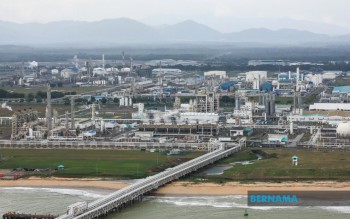
Malaysia's plan to investigate the establishment of a national petroleum reserve has gained support from energy analysts who see the initiative as a necessary response to mounting geopolitical instability. Prime Minister Datuk Seri Anwar Ibrahim recently announced that the government would examine the feasibility and implementation strategies for such a reserve, positioning it as a safeguard against energy supply disruptions and global crises. The timing of this proposal comes as recurring tensions around critical maritime chokepoints have moved beyond isolated incidents to become persistent structural challenges for global energy markets.
The Strait of Hormuz stands as the most vulnerable link in Malaysia's energy supply chain. Approximately one-fifth of the world's daily oil consumption—roughly 20 million barrels—transits through this narrow waterway connecting the Persian Gulf to the wider Indian Ocean. Rather than treating disruptions here as occasional emergencies, energy experts increasingly recognise them as recurring risks that will likely persist for years. SPI Asset Management managing partner Stephen Innes characterised the situation as fundamentally structural, noting that while the intensity of threats may fluctuate, the underlying vulnerabilities remain. He pointed out that building alternative pipeline networks, new export routes and shipping bypasses to bypass the Strait would require many years of development, meaning the region cannot expect relief from this chokepoint pressure anytime soon.
Recent attacks by Iranian-backed Houthi forces in Yemen have broadened the geographic scope of shipping risks beyond the Strait of Hormuz. Following American military strikes on Iranian targets, these groups reportedly prepared and executed attacks on vessels transiting the Red Sea's southern approaches, including strikes on Saudi oil tankers. This expansion of conflict zones into multiple critical waterways has alarmed regional policymakers and analysts. The prospect of simultaneous disruptions affecting both the Strait of Hormuz and the Red Sea corridor poses genuine dangers to Southeast Asia's energy security. Such compound disruptions would likely trigger sharp rises in oil prices, increased freight costs and significant supply delays that could cascade through regional economies dependent on affordable energy imports.
Malaysia's own vulnerability to these supply shocks runs deep. Although the country produces around 570,000 barrels of oil per day from domestic sources, it remains a net importer of refined petroleum products. The statistics reveal heavy dependence on a single chokepoint: in 2025, Malaysia sourced 69.2 percent of its crude oil imports from suppliers connected to the Strait of Hormuz region. This concentration of import sources means any significant disruption would directly impact Malaysia's access to fuel. BMI oil and gas analyst Tariro Chiweza observed that while commercial petroleum inventories typically serve operational needs, they often prove insufficient to cushion prolonged external supply shocks. A dedicated national reserve, by contrast, would function as a strategic buffer specifically designed to weather extended disruptions.
The distinction between energy security and energy resilience proves critical to understanding why a petroleum reserve matters. Innes defined energy security narrowly as assured access to supplies, while energy resilience encompasses the broader capacity for energy systems to continue functioning when normal supply and transport routes fail. Achieving genuine resilience demands multiple reinforcing measures: adequate backup inventories, relationships with diverse suppliers, access to alternative shipping routes, robust electrical infrastructure and the capability to substitute between different fuel types before crises emerge. A national petroleum reserve fits into this ecosystem as what Innes termed "emergency insurance," providing policymakers with crucial time to implement other responses during acute shortages. However, such reserves cannot solve every supply problem independently and must complement, not replace, commercial inventory systems and other resilience measures.
Immediate priorities for Malaysian policymakers should include a comprehensive audit of strategic fuel inventories alongside efforts to diversify both crude oil and liquefied natural gas suppliers. Establishing stronger coordination mechanisms with other ASEAN nations on emergency supply protocols and stock management would amplify regional resilience. Regional cooperation becomes especially important given that multiple Southeast Asian countries share similar vulnerabilities to Strait of Hormuz disruptions. Coordinated responses—including agreements on emergency supply-sharing, joint strategic reserves and unified shipping protocols—could significantly reduce the economic damage from supply shocks affecting the entire region.
Beyond petroleum reserves, analysts advocate for Malaysia to pursue a comprehensive energy strategy addressing multiple vulnerability points. Innes recommended reassessing broad fuel subsidies in favour of more targeted support for lower-income households and critical industries, a shift that would prove more economically sustainable if elevated oil prices persist as expected. Malaysia should simultaneously accelerate domestic gas production expansion, strengthen renewable energy capacity backed by battery storage systems, improve regional power grid interconnections and investigate nuclear energy options. These measures collectively reduce dependence on imported liquid fuels while building institutional capacity to manage energy transitions.
Existing Malaysian initiatives already support these broader objectives. The Solar@PETRA programme and the Corporate Renewable Energy Supply Scheme demonstrate growing commitment to renewable energy deployment. Support for biodiesel blending at B15 levels and development of electric public transport infrastructure further diversify the energy mix away from petroleum dependency. BMI forecasts Malaysia's domestic dry gas production will reach 82.3 billion cubic metres by 2026, strengthening the country's self-sufficiency in natural gas and reducing import reliance on foreign suppliers. This expanding domestic production capacity, coupled with renewable energy growth, provides a counterbalance to liquid fuel vulnerabilities.
Market conditions underscore the urgency of these steps. At the time of the government's petroleum reserve announcement, Brent crude oil had surged 2.97 percent to US$96.86 per barrel while West Texas Intermediate climbed 1.93 percent to US$88.76 per barrel. These price movements reflect precisely the risk premiums that analysts describe as now structural rather than temporary. Shipping delays, elevated insurance costs and constrained tanker availability have become persistent features rather than occasional occurrences. As long as geopolitical flashpoints continue multiplying and maritime chokepoints remain militarised, these cost pressures will likely persist.
The case for Malaysia's national petroleum reserve ultimately rests on recognition that energy market volatility has fundamentally changed character. Where policymakers once planned for occasional disruptions, they must now prepare for recurring ones. A strategic petroleum reserve represents one essential tool within a comprehensive resilience strategy, providing both tactical flexibility during acute shortages and valuable political space for implementing longer-term solutions. Combined with diversified sourcing, expanded domestic production, renewable energy transition and regional coordination, such a reserve could meaningfully reduce Malaysia's vulnerability to geopolitical shocks. The government's decision to study this proposal reflects pragmatic acknowledgment that incremental approaches to energy security no longer suffice in an increasingly fractious global environment.

