Sudden cardiac arrest remains a silent killer in Malaysia, striking without warning and leaving only minutes—sometimes seconds—to determine whether someone lives or dies. The statistics paint a grim picture: survival rates from out-of-hospital cardiac arrest in Malaysia languish between 0.5 and 8.5 per cent, a stark contrast to developed nations where rates can exceed 30 per cent. This disparity is not due to a lack of medical expertise, but rather a critical gap in emergency infrastructure and public access to life-saving equipment. The tragedy deepens when considering that survival chances plummet dramatically with each passing minute after collapse, particularly once eight to ten minutes have elapsed without immediate intervention.
Sunway Medical Centre Velocity (SMCV) has recognised this urgent gap and responded with a comprehensive programme that treats emergency readiness as a public health imperative rather than an afterthought. The hospital's expanded initiative, built on its earlier "Save A Number, Save A Life" campaign, represents a shift in thinking about how healthcare institutions can serve communities beyond hospital walls. By strategically positioning Automated External Defibrillators (AEDs) at high-traffic public locations and coupling this infrastructure with intensive public training programmes, SMCV is attempting to fundamentally reshape Malaysia's capacity to respond to cardiac emergencies in the critical window when intervention matters most.
The timing of this initiative could not be more crucial. Every second truly does count when the heart stops beating. Without immediate cardiopulmonary resuscitation (CPR) intervention, brain damage begins within minutes and the chances of meaningful recovery diminish exponentially. The current landscape in Malaysia—where both AED availability and CPR knowledge remain limited among the general public—essentially condemns many cardiac arrest victims to death or severe disability before professional emergency services can even arrive. Dr Wee Tong Ming, Medical Director and Consultant Emergency Physician at SMCV, emphasises that "oftentimes, when an emergency occurs, lives are not lost due to lack of help, but because of delays in response and the lack of access to life-saving tools, which can have severe consequences between life and death."
SMCV's geographical approach reflects careful consideration of where cardiac emergencies are most likely to occur and where bystander intervention can be most effective. The hospital has identified multiple strategic locations across Kuala Lumpur for AED installations: Tun Razak Exchange (TRX), Bukit Bintang, Ampang Park and Muzium Negara MRT stations represent critical transportation nodes where large crowds congregate daily. Aquaria KLCC, Menara Public Bank, and Menara Public Bank 2 serve as commercial hubs with constant foot traffic. Additionally, the initiative extends to the National Heritage Building at Stadium Merdeka within the Merdeka 118 Precinct, the Public Bank-ITTC, and Bangunan Public Bank on Jalan Sultan Sulaiman. This multi-location strategy acknowledges that cardiac emergencies do not confine themselves to hospitals or specific neighbourhoods—they strike at shopping malls, office buildings, train stations and public monuments.
Beyond simply installing equipment, SMCV has designed each AED station with user accessibility in mind. Clear standees mark each unit's location, enabling quick identification in moments of panic and confusion. QR code stickers on the standees link directly to the hospital's educational resources and emergency guidance, allowing bystanders to access quick reference information even as they prepare to act. These stickers also appear on general practitioner clinic notices, extending awareness to healthcare touchpoints throughout the city. The integration of technology with physical placement demonstrates sophisticated understanding of how people respond in emergencies—clear, visible, findable equipment that reduces friction between recognition of a problem and action to solve it.
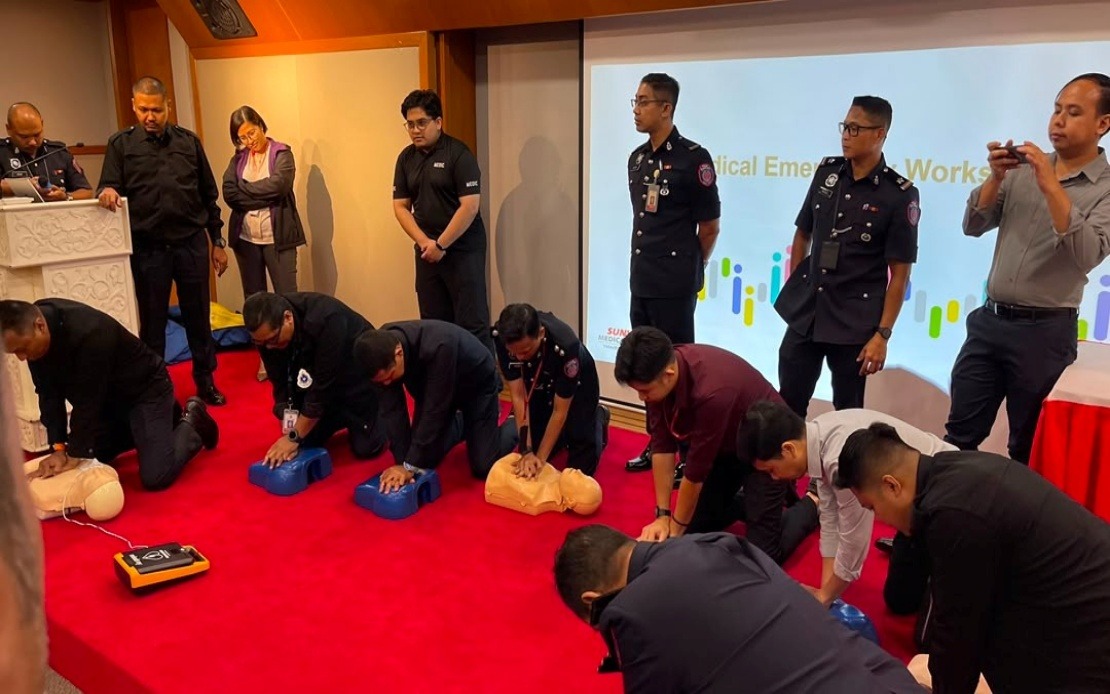
Equally important as the physical infrastructure is the human component of SMCV's programme. The hospital has conducted on-site training sessions and Accident and Emergency awareness talks throughout relevant locations, equipping members of the public with practical knowledge in basic life support. These sessions cover recognition of cardiac arrest symptoms, proper CPR technique, and safe AED operation—the three pillars of effective bystander intervention. Susan Cheow, Chief Executive Officer of SMCV, recognises that "installing AEDs is only one part of improving emergency response. What is equally important is ensuring that people know how to use them correctly when every second matters."
The training initiative addresses a critical weakness in Malaysia's cardiac emergency response ecosystem. Many Malaysians, even educated professionals in busy commercial centres, have never received formal CPR training or seen an AED in operation. This knowledge gap means that even when equipment is available, it may remain unused because bystanders fear they will do something wrong or lack confidence in their own intervention. By proactively training staff and members of the public at each location where AEDs are installed, SMCV is building a cadre of individuals who can respond with competence and confidence. Dr Wee emphasises that "timely and proper action can help save more lives," placing responsibility not just on the hospital but on every trained bystander who might witness a cardiac emergency.
The broader implications of this initiative extend beyond the immediate locations of AED installation. Malaysia's healthcare system faces mounting pressure from non-communicable diseases, with cardiovascular conditions among the leading causes of mortality. Any meaningful reduction in cardiac deaths requires systemic change that incorporates both preventive health measures and emergency response capability. SMCV's programme represents one institution's commitment to the emergency response component of this equation. If successful, it could model a pathway for other hospitals and healthcare organisations to follow, gradually creating a network of accessible life-saving equipment across urban Malaysia.
From a regulatory and policy perspective, SMCV's initiative also highlights the need for coordinated national planning around AED placement and maintenance. Unlike some countries where AED networks are mandated by law in certain public spaces and buildings, Malaysia currently lacks comprehensive national standards for AED distribution or public access requirements. The hospital's voluntary programme fills a gap but also raises questions about whether sporadic private-sector initiatives can adequately address a public health crisis. Government and regulatory bodies may need to consider whether mandatory AED installation requirements, training standards, and maintenance protocols should become part of Malaysia's building codes and public health regulations.
The sustainability of SMCV's programme depends on consistent maintenance, regular training refresher cycles, and ongoing public awareness campaigns. AEDs require regular battery checks, electrode pad replacements, and operational testing to remain functional. Staff at each location must receive periodic retraining to maintain competency. Public memory tends to fade unless reinforced by repeated messaging and visibility. SMCV's commitment to these ongoing requirements will determine whether the initial launch translates into lasting impact. Susan Cheow's vision that "in a medical emergency, no one should feel helpless, whether it's because they don't know what to do or don't have access to the right equipment" can only be realised through sustained effort extending far beyond the installation phase.
For Malaysian readers, particularly those in Kuala Lumpur, the practical takeaway is clear: cardiac emergencies are not someone else's problem to be managed by ambulances and hospitals. They are community events that demand bystander action, and that action is only possible when people know how to respond and can access the necessary tools. By familiarising yourself with AED locations in spaces you frequent regularly, by considering CPR training as a valuable life skill alongside swimming or first aid, and by remembering that the first ten minutes after collapse are critical, every Malaysian can become part of the solution to this mortality crisis. SMCV's initiative makes that participation tangible, practical, and achievable.

