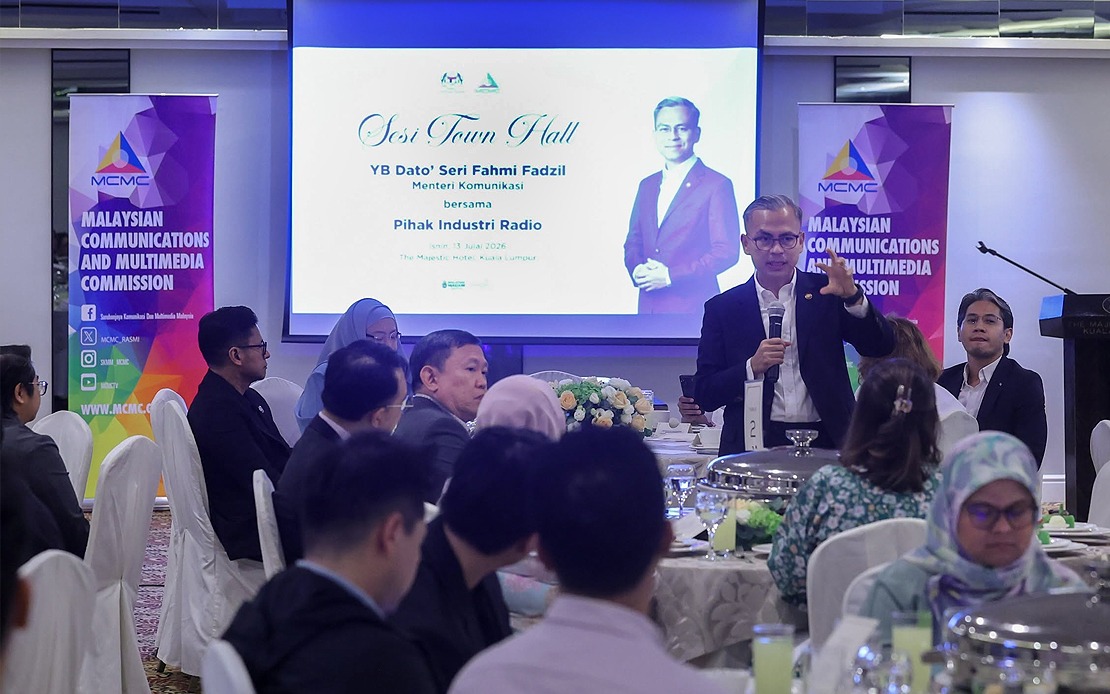
Malaysia's radio broadcasting sector faces a pivotal moment as Communications Minister Datuk Seri Fahmi Fadzil announced plans for a comprehensive industry review aimed at revitalising the medium's role in the national media ecosystem. The Malaysian Communications and Multimedia Commission will spearhead the study of the National Broadcasting Policy, signalling government intent to address structural challenges facing an industry that has undergone significant transformation over the past decade. This initiative reflects broader strategic priorities aligned with the Orange Economy Council's agenda and the National Creative Industry Policy, positioning radio within Malaysia's larger creative economy ambitions.
The impetus for this review emerged from a town hall session bringing together MCMC officials, government representatives, and key stakeholders from the local radio industry. During these discussions, participants aired persistent concerns affecting the sector's long-term viability and competitive positioning. The dialogue revealed substantive gaps between current regulatory frameworks and the operational realities facing contemporary broadcasters navigating an increasingly crowded media environment. Government officials listened as industry players articulated specific challenges requiring policy intervention, creating space for collaborative problem-solving around issues that have simmered for years without formal resolution at the ministerial level.
Local music content emerges as a primary concern driving the policy review. Malaysian radio stations have grappled with balancing commercial pressures favouring international hits against mandates or industry expectations to support homegrown artists and production. The sector's capacity to nurture local talent, provide stable revenue streams to musicians, and compete against streaming platforms depends partly on policies governing airtime allocation and royalty structures. By elevating music content to central importance in the broadcasting policy discussion, the government acknowledges radio's traditional role as a crucial promotional platform for Malaysian artists seeking market penetration and audience connection before the streaming era fundamentally altered music consumption patterns.
Licensing models represent another critical area requiring policy attention. Malaysia's current framework governing radio station licenses, renewal terms, and conditions has remained largely static despite profound industry evolution. The proliferation of digital platforms, online streaming services, and podcast networks has fractured the audience base that once made traditional radio a mass medium. Reviewing licensing structures offers opportunity to introduce flexibility allowing stations to adapt business models, explore hybrid delivery methods combining terrestrial and digital distribution, and potentially reduce regulatory barriers that may inadvertently favour larger, better-capitalised operators over smaller or community-focused broadcasters.
The financial sustainability of the radio industry underpins the entire review process. Local radio stations depend primarily on advertising revenue, a funding source increasingly diverted toward digital platforms offering superior targeting capabilities and measurable audience metrics. Traditional radio's inability to provide granular listener data comparable to online advertising platforms has weakened its value proposition to advertisers managing increasingly constrained budgets. The policy review must confront this revenue challenge directly, examining whether regulatory reforms, content strategies, or public funding mechanisms might stabilise the sector while preserving editorial independence and programming quality.
Minister Fahmi's explicit mention of radio's role in the expanding digital landscape reflects government recognition that traditional broadcasting cannot survive by resisting technological change. Instead, successful radio operators must integrate digital distribution methods, develop mobile applications, produce podcasts, and leverage social media to maintain audience relevance. Policy frameworks should facilitate rather than obstruct this transition, allowing stations to experiment with new formats while maintaining core broadcasting standards. The review offers opportunity to clarify regulatory positions on hybrid operations, digital rights, and platform neutrality.
For Malaysian readers and industry observers, this initiative signals that policymakers take seriously the medium's cultural and economic importance despite predictions of radio's obsolescence in the streaming age. Globally, radio has demonstrated surprising resilience, particularly for driving-time audiences, news consumption, and community connection. Malaysia's radio sector employs thousands and generates significant advertising revenue, justifying government attention even as its market share contracts. The MCMC review offers chance to establish policies supporting this employment base while ensuring Malaysian content receives appropriate prominence in a globalised media ecosystem.
The Orange Economy Council's involvement in this review connects radio policy to broader creative industry development strategies. Radio production requires skilled technicians, producers, on-air talent, and support staff. Strengthening the sector contributes to creative economy employment targets and helps develop Malaysia's media production capabilities. This framing positions radio not as a legacy medium requiring sunset provisions, but as integral infrastructure supporting creative sector growth and cultural expression.
Industry participation in the policy review process matters significantly. Radio operators, equipment manufacturers, content producers, and artist representatives now have formal opportunity to shape the regulatory environment affecting their businesses. This collaborative approach, departing from top-down policy formulation, increases likelihood that resulting reforms will reflect practical operational realities rather than theoretical assumptions. Broadcasters can articulate specific regulatory obstacles, propose workable solutions, and contribute expertise accumulated through years navigating market pressures.
The timeline for completing this comprehensive review remains unspecified, though substantive policy work typically requires six to twelve months of research, stakeholder consultation, and drafting. Industry participants will likely await concrete outcomes with mixed anticipation and anxiety. Positive reforms addressing licensing flexibility, digital distribution rights, or local content support could meaningfully improve operational conditions. Conversely, additional regulatory burdens or revenue-neutral policy shifts would disappoint stations hoping for material relief from financial pressures.
Southeast Asian context matters here as well. Regional broadcasting markets face comparable challenges from digital disruption and audience fragmentation. Malaysia's policy review, should it produce innovative solutions, could offer models for neighbouring countries managing similar transitions. Conversely, regional best practices from successful radio markets might inform MCMC's deliberations, ensuring Malaysian reforms align with international trends while reflecting local conditions.
Ultimately, this review represents government commitment to ensuring Malaysia's broadcasting ecosystem remains robust, diverse, and culturally relevant. Rather than allowing radio to decline passively under digital pressure, authorities are intervening proactively to strengthen the medium's institutional foundations. Success depends on translating stakeholder input into coherent policy reforms implemented over adequate transition periods, supporting industry adaptation while preserving quality standards and local content investment. The coming months will determine whether this initiative produces meaningful change or becomes another policy exercise with limited implementation impact.

