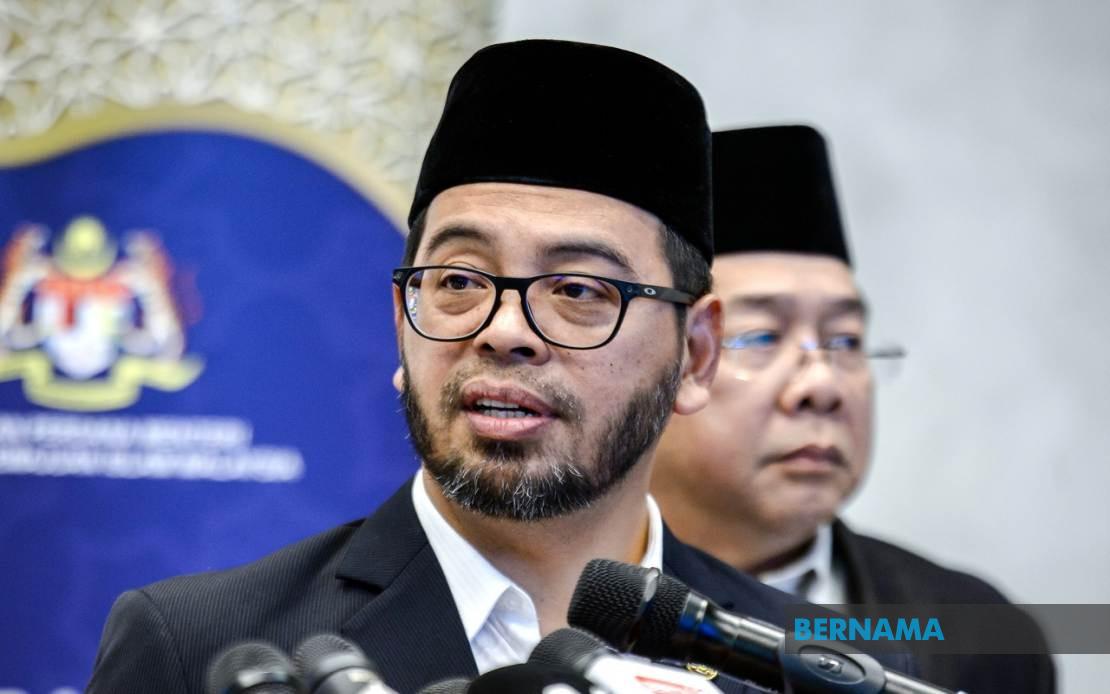
The Prime Minister's Department (Religious Affairs) has issued a forceful rebuke following the detention of Sheikh Muhammad Hussein, the Grand Mufti of Jerusalem and custodian of Al-Aqsa Mosque, by Israeli authorities after last Friday prayers. Although the religious leader was subsequently released, the incident has sparked diplomatic concern from Kuala Lumpur, with Minister in the Prime Minister's Department (Religious Affairs) Senator Dr Zulkifli Hasan characterising the detention as a serious breach of religious freedom and an affront to one of Islam's most sacred sites.
The episode represents a troubling pattern of restrictions on Muslim religious leaders exercising their fundamental duties, according to Malaysia's official position. Even though Sheikh Muhammad Hussein's detention proved temporary, the government argues that the very act of detaining a prominent religious figure while performing worship responsibilities at Al-Aqsa constitutes a violation of basic human and religious rights. The incident carries particular weight given the symbolic importance of Al-Aqsa Mosque as the third holiest site in Islam, making any interference with its functioning a matter of concern across the Muslim world.
Responding to the detention, Dr Zulkifli Hasan has appealed directly to the international community to intervene. He specifically named the United Nations and the Organisation of Islamic Cooperation as bodies with the responsibility and authority to enforce protections for religious worship, ensure the physical safety of religious leaders, and maintain the protected status of sacred Islamic sites under international law. This multilateral approach reflects Malaysia's strategy of leveraging existing international frameworks to address concerns about religious freedom and minority rights in conflict zones.
The Malaysian government has reiterated its unwavering commitment to Palestinian interests, pledging continued backing for efforts to achieve a just and lasting peace while defending Palestinian rights and eliminating what it describes as systematic oppression. This statement underscores Malaysia's consistent positioning as a vocal advocate for Palestinian causes within regional and global forums, a stance that has defined much of the country's foreign policy in the Middle East for decades.
Beyond the immediate Jerusalem issue, Dr Zulkifli has used the occasion to reflect on another significant chapter in Islamic history: the 31st anniversary of the Srebrenica massacre in Bosnia and Herzegovina. This commemoration carries deep resonance for Malaysia, as the tragedy represents one of the most devastating episodes of ethnic and religious violence in modern European history. The massacre occurred in July 1995 when Bosnian Serb forces overwhelmed the eastern Bosnian enclave of Srebrenica, which the United Nations had designated as a protected safe area, resulting in the systematic execution of more than 8,000 Bosniak Muslim men and boys over several days.
The human toll of the Srebrenica tragedy remains harrowing decades later. More than 1,000 victims have never been identified or accounted for, while ongoing efforts to recover, identify, and properly bury the remains of the deceased continue to present a profound humanitarian and moral challenge. The massacre stands as a stark reminder of the consequences of international failure to prevent mass atrocities and the vulnerability of populations marked for elimination based on religious and ethnic identity.
Malaysia's historical engagement with the Bosnian crisis demonstrates the country's long-standing commitment to supporting Muslim communities facing persecution and conflict. Former Prime Minister Tun Dr Mahathir Mohamad and current Prime Minister Datuk Seri Anwar Ibrahim have both championed the Bosnian cause at the international level, while the Muslim Youth Movement of Malaysia (ABIM) undertook pioneering humanitarian work in the region during the conflict. This sustained advocacy reflects Malaysia's view that standing with oppressed Muslim communities is both a moral imperative and a defining aspect of its national identity.
Malaysia's practical contribution to post-war peace and reconciliation in Bosnia extended far beyond diplomatic statements. The country deployed 10,514 military personnel from the Malaysian Armed Forces (MAF) to serve in United Nations peacekeeping operations across Bosnia and Herzegovina between 1993 and 1998. These forces operated under two distinct mandates: the Malaysian Battalion (MALBAT) and later the Implementation Force (IFOR), both playing crucial roles in maintaining security, facilitating humanitarian assistance, and supporting the fragile peace process. This substantial military commitment represented a significant sacrifice and demonstrated Malaysia's serious investment in regional stability and conflict prevention.
Beyond security operations, Malaysia extended educational opportunities to Bosnian refugees through the International Islamic University Malaysia (IIUM), providing pathways for displaced youth to pursue higher education and rebuild their lives. This educational initiative recognised that long-term recovery from conflict requires not just military peacekeeping but also investment in human capital and future opportunities for traumatised populations. The availability of scholarships and academic programmes at IIUM offered hope to a generation displaced by war and represented Malaysia's understanding that education is essential to breaking cycles of conflict and promoting reconciliation.
Dr Zulkifli has urged Malaysia's younger generation to draw profound lessons from the Srebrenica tragedy, characterising the massacre as a cautionary tale against hatred, division, and systematic oppression. He framed the commemoration not merely as historical remembrance but as an active moral teaching moment, challenging youth to recognise the dangers of ethno-religious divisions and to commit themselves to building societies grounded in tolerance and human dignity. This pedagogical approach seeks to ensure that lessons from past atrocities inform contemporary values and future decision-making.
The minister's invocation of prayer for the victims and survivors demonstrates how Malaysia approaches such commemorations as matters of spiritual as well as political significance. By calling on the nation to pray for the martyrs of Srebrenica and to seek divine blessings for the continuing resilience of survivors and their families, Dr Zulkifli positioned the remembrance within a framework of Islamic faith and compassion. His closing prayer for Bosnia itself, uttered in the traditional Islamic formulation, reflected Malaysia's sense of ongoing responsibility for and solidarity with a nation and people that the country has supported through Malaysia's most challenging decades.

