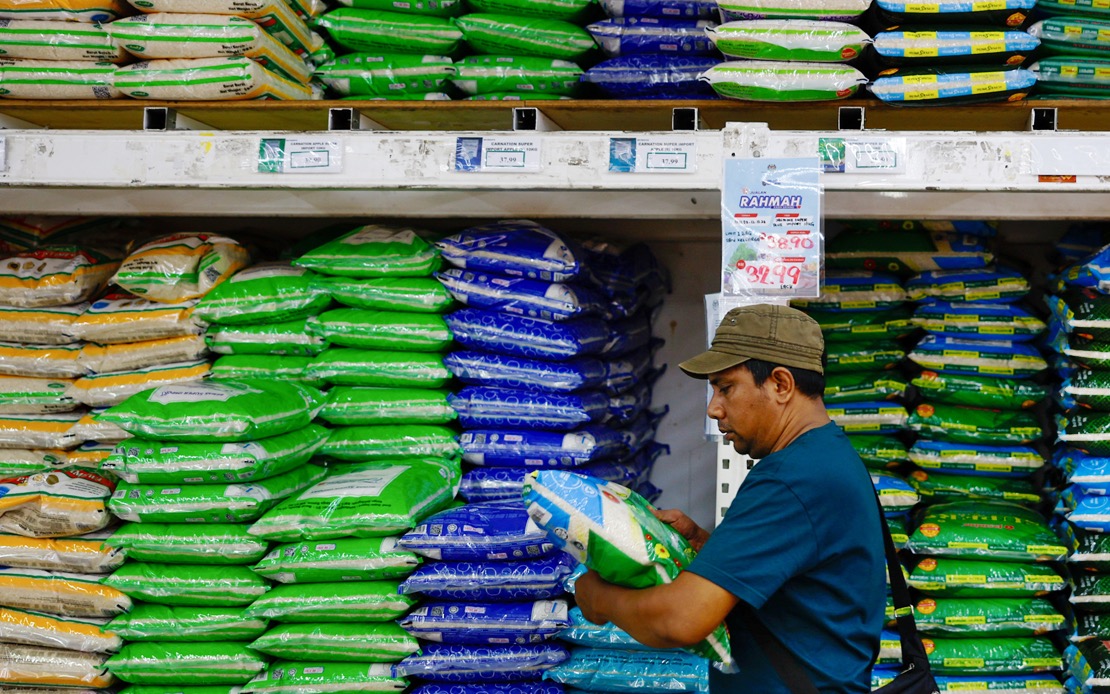
Malaysia's rice supply chain remains well-positioned to weather international instability, with Deputy Agriculture and Food Security Minister Datuk Chan Foong Hin assuring Parliament that current national reserves total 1.237 million tonnes, a buffer sufficient to sustain domestic demand for at least half a year. Speaking during question-and-answer proceedings in the Dewan Negara on August 4, Chan detailed the composition of these strategic reserves: 200,000 tonnes held under the government's physical rice buffer stock administered by Padiberas Nasional Berhad (BERNAS), complemented by 1.037 million tonnes of commercial inventory accumulated across the private sector. This two-pronged stockpiling approach reflects Malaysia's recognition that food security extends beyond emergency reserves to encompass stable supply chains capable of absorbing external shocks.
The announcement arrived amid growing concerns about potential disruptions to global agricultural trade stemming from escalating tensions in West Asia. Senator Datuk Dr Mohd Hatta Md Ramli had specifically raised the question of how Malaysia intended to safeguard its essential food supplies in an era of mounting geopolitical volatility. Chan's response underscored the government's confidence that existing reserves function as a genuine insurance policy, protecting consumers from sudden price spikes or supply interruptions that might emerge from conflict or trade restrictions affecting major food-producing regions. For Malaysian households already contending with inflation in other sectors, rice price stability represents a tangible policy achievement—the domestic staple remains regulated through government subsidy mechanisms that prevent sharp fluctuations regardless of international market gyrations.
Beyond immediate stockpiling, Malaysian agricultural authorities are pursuing a more ambitious long-term vision centred on reducing reliance on imports and building productive self-sufficiency. The Ministry of Agriculture and Food Security (KPKM) has established an 80 per cent self-sufficiency ratio (SSR) target for rice by 2030, a goal that demands substantial increases in domestic cultivation given recent productivity declines. Chan acknowledged that Malaysia faces structural challenges limiting output—declining production trends have eroded the national SSR in recent years, while climate phenomena such as the El Niño phenomenon threaten yields through irregular rainfall patterns and water stress. Rather than accepting these constraints as immutable, the ministry is implementing a portfolio of technological and managerial innovations designed to boost agricultural productivity across the sector.
At the foundation of this strategy lies the introduction of modern padi varieties engineered to tolerate environmental extremes. The ministry is systematically expanding adoption of drought-resistant strains designated MR 380, MR 381, and MR 382, which promise to maintain yields even as climate patterns become increasingly unpredictable. Complementing these genetic improvements, KPKM is promoting sophisticated water management techniques that maximise output from available irrigation resources. The Alternate Wetting and Drying (AWD) methodology and System of Rice Intensification (SRI) represent departures from conventional flooding approaches, allowing farmers to conserve water while maintaining or enhancing grain production—a particularly valuable adaptation in a region experiencing mounting pressure on freshwater supplies.
The geographical focus of these initiatives centres on established agricultural zones capable of supporting expanded cultivation. KPKM has launched a five-season rice cultivation project spanning two years across territories administered by the Muda Agricultural Development Authority (MADA), one of Malaysia's principal rice-producing regions. This intensive planting schedule, supported by concurrent upgrades to irrigation infrastructure, aims to transform MADA into a higher-yielding productive base. The investment in agricultural water systems carries significance beyond immediate rice output—efficient irrigation networks provide resilience against both drought and flooding, two climate-related hazards increasingly affecting Southeast Asian agriculture.
Recognising that productivity gains depend fundamentally on farmer participation and investment, the government has introduced short-term financial measures designed to reduce the cost pressures weighing on cultivation decisions. A temporary exemption from Sales and Service Tax on agricultural fertilisers including rock phosphate and magnesium sulphate will operate from January 1, 2026, through December 31, 2027, directly lowering input expenses during a critical period of yield enhancement efforts. More immediately, the ploughing incentive provided to padi farmers for the 2026 planting season has been nearly doubled, increasing from RM160 to RM300 per hectare. This augmented subsidy, backed by an additional allocation of approximately RM40 million, is projected to benefit nearly 200,000 farming households, translating government support into tangible income support that encourages expanded or intensive cultivation.
These policy instruments collectively reflect an official understanding that food security operates across multiple timeframes and mechanisms. Immediate stockpiling protects against sudden disruptions while government-managed pricing provides consumers with predictable costs. Medium-term productivity enhancements through improved varieties and techniques build the productive foundation necessary for sustained self-sufficiency. Financial incentives for farmers align individual economic interests with national strategic objectives, transforming food security from an abstract policy goal into concrete decisions affecting millions of rural households. For Malaysia, where rice occupies a culturally and nutritionally central role and where supply disruptions could trigger political consequences, this layered approach balances short-term reassurance with long-term structural transformation.
The timing of these commitments carries particular resonance for Southeast Asian regional dynamics. Malaysia's push toward greater rice self-sufficiency occurs within a broader regional context where several neighbouring countries similarly navigate the tension between growing domestic demand, agricultural constraints, and vulnerability to external supply shocks. Thailand and Vietnam, traditionally regional rice exporters, face their own production pressures and increasingly prioritise domestic food security. As major rice-producing regions contemplate restricting exports to protect internal supplies—a pattern observed during previous commodity crises—importing nations including Malaysia must accelerate domestic production capacity. The 80 per cent SSR target by 2030, while ambitious, reflects realistic assessment that complete import independence may prove neither economically rational nor agriculturally feasible, yet substantial improvements in domestic output can meaningfully reduce vulnerability to supply manipulation or price volatility emanating from distant geopolitical conflicts.

