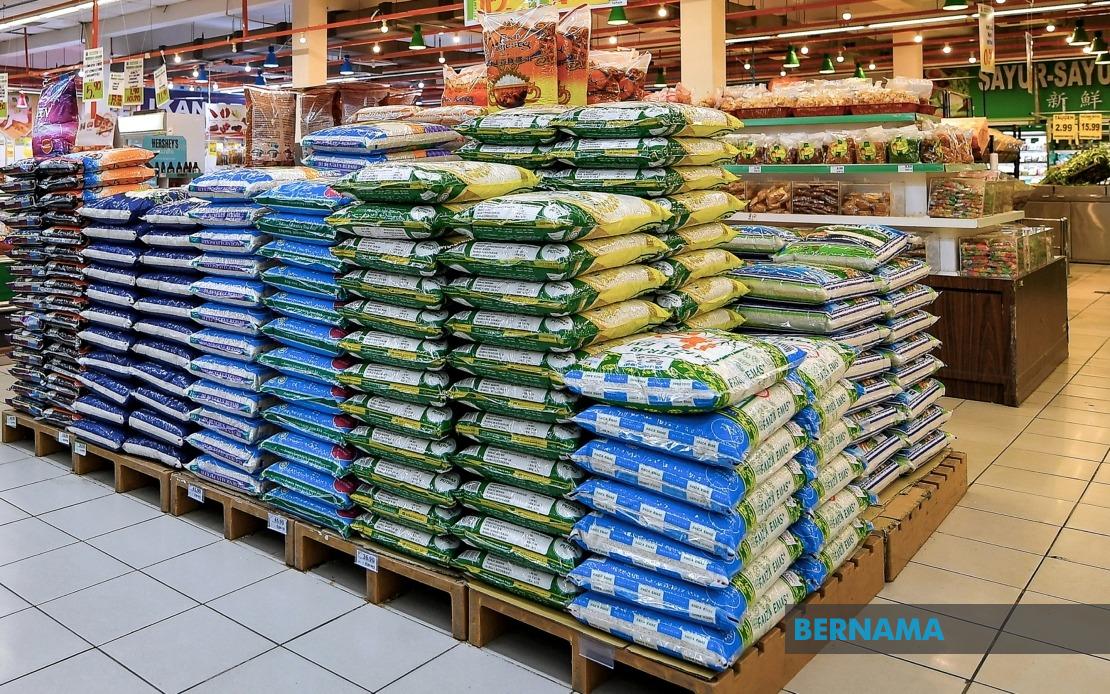
Malaysia's domestic rice reserves remain sufficiently stocked to meet national consumption needs for the next six months, according to Economy Minister Akmal Nasrullah Mohd Nasir, who outlined the government's food security strategy during a briefing on the evolving global supply crisis. The assurance comes amid intensifying international pressures on commodity markets and rising concerns among Southeast Asian nations about their food supply chains.
The minister emphasised that protecting Malaysian households from volatile price movements represents a core economic priority for the administration. Local White Rice, the primary staple consumed across the country, will maintain its current retail price with no scheduled increases, the government confirmed. This commitment reflects an understanding that food price inflation disproportionately impacts lower and middle-income families who spend a substantial portion of their household budgets on basic necessities.
These declarations emerged from discussions at the National Economic Action Council meeting, chaired by Prime Minister Datuk Seri Anwar Ibrahim at Parliament. The council deliberations centred on insulating Malaysia from external economic shocks while maintaining domestic purchasing power and social stability. The six-month buffer stock duration provides a meaningful buffer period, allowing policymakers time to respond to any potential disruptions in regional or global supply chains without imposing sudden rationing or dramatic price adjustments on consumers.
Beyond consumer protection measures, the government has simultaneously moved to support agricultural producers facing mounting operational challenges. Through the Paddy Farmers Plowing Incentive scheme, authorities distributed RM45.98 million to 118,908 paddy farmers across Peninsular Malaysia. This intervention acknowledges the intensifying pressures facing the farming community, where climate variability and escalating input costs have squeezed profit margins and threatened agricultural productivity.
Climate-related disruptions pose particular risks to Malaysia's rice production systems, with changing rainfall patterns and extreme weather events increasingly affecting planting schedules and yields. Rising costs for fertilisers, seeds, and fuel have compounded farmer distress, making direct financial assistance an essential component of maintaining local production capacity. By sustaining farmer incomes through targeted incentives, the government aims to preserve domestic cultivation levels and reduce long-term dependence on imports.
The strategic positioning of adequate rice reserves reflects lessons learned from previous global commodity crises. Malaysia, like many developing economies, remains vulnerable to international price shocks transmitted through import channels. Maintaining substantial domestic stocks provides a stabilisation mechanism that shields the local market from sudden supply disruptions or speculative price spikes occurring elsewhere. This approach has become increasingly important as geopolitical tensions and climate-related disruptions threaten global food systems.
For Malaysian consumers, particularly urban populations relying entirely on market purchases, the government's price stability pledge offers immediate reassurance. Food inflation has emerged as a significant concern throughout Southeast Asia, with several neighbouring countries experiencing double-digit increases in basic commodity prices over recent years. Malaysia's commitment to preventing Local White Rice price escalation contrasts with inflationary pressures affecting other food categories, potentially helping contain overall household cost pressures.
The broader context reflects Malaysia's position within regional and global food systems. While the country produces substantial quantities of rice domestically, demand occasionally exceeds local supply, necessitating imports from Thailand, Vietnam, and other regional suppliers. Securing adequate buffers reduces vulnerability to external market disruptions and provides negotiating leverage in international procurement negotiations. A six-month reserve represents a reasonably prudent stockpiling level, balancing storage costs and logistical considerations against supply security requirements.
For the agricultural sector, the combination of price guarantees and direct farmer support signals longer-term commitment to sustaining paddy cultivation. Malaysian rice farming has faced structural challenges including land fragmentation, generational transitions, and competition from alternative land uses. Government investment in farming incentives and price support mechanisms aims to maintain sufficient local production capacity, though these measures alone may not reverse long-term sectoral trends without complementary investments in mechanisation, irrigation infrastructure, and agricultural extension services.
The government's dual approach, combining consumer price protection with producer support, represents a conventional food security strategy employed across Asia. However, sustainability questions persist regarding the fiscal costs of maintaining price controls and direct subsidies, particularly if global commodity prices remain elevated. Malaysia's relatively strong fiscal position compared to some regional peers provides greater scope for such interventions, though policymakers will need to monitor whether temporary measures become permanent entitlements demanding ever-larger budgetary allocations.
Looking forward, Malaysia's food security framework will likely remain under pressure from climate volatility and global supply chain disruptions. The six-month rice reserve provides a temporary safety cushion rather than a permanent solution to underlying vulnerabilities. Longer-term resilience requires parallel investments in agricultural productivity, supply chain diversification, and climate adaptation measures within farming communities. For now, the government's commitment to maintaining rice affordability and supporting farming communities addresses immediate concerns while indicating acknowledgment of food security's centrality to social stability and political legitimacy across Malaysia.

