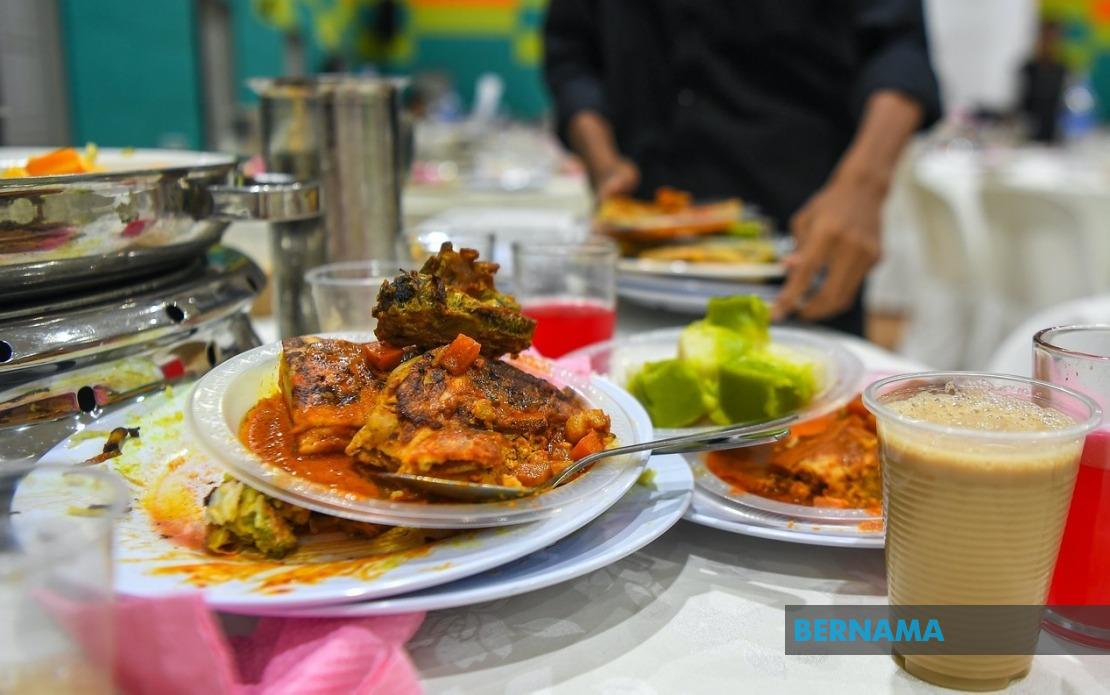
As Malaysia transitions into middle-income lifestyles, household food waste has emerged as an unexpected consequence of prosperity, according to retiring Chief Statistician Datuk Seri Dr Mohd Uzir Mahidin. The connection between rising household incomes and increased food squandering reveals a troubling pattern: as families move beyond subsistence spending, they purchase food in quantities exceeding their actual consumption needs, often driven by promotional offers and convenience rather than careful planning.
Datuk Seri Mohd Uzir, who stepped down today after 36 years in public service and nearly nine years leading the Department of Statistics Malaysia's transformation into the country's strategic data institution, identified affluent urban centres and high-income states as particular hotspots for food wastage. The data paints a picture of consumer behaviour fundamentally disconnected from the value of food itself. Households now frequently leave substantial portions uneaten at mealtimes, accumulate items in refrigerators that spoil before use, and participate in purchasing cycles driven by discounts rather than necessity. This represents a marked departure from household practices in lower-income communities, where scarcity mindsets typically encourage more deliberate consumption.
The chief statistician highlighted a specific phenomenon contributing to household food loss: the disconnect between family members' purchasing decisions. Parents often stockpile groceries during promotions without coordinating with other household members, only to discover that children have independently purchased identical items. When these duplicate purchases remain stored too long, they expire and join the waste stream. This coordination failure within families mirrors broader market inefficiencies, suggesting that food waste results not from malice but from the friction inherent in managing consumption within modern households.
Geographic disparities in food wastage patterns prove particularly revealing. Urban areas consistently record higher per capita food waste than rural regions, though the trend is accelerating in countryside communities as well. The urbanisation of food practices extends beyond household purchases to encompass community gatherings. In rural settings, increasing reliance on external catering services for kenduri celebrations has displaced traditional home-prepared meals, introducing commercial food preparation patterns that inherently generate larger quantities of leftovers. Urban social calendars compound this effect dramatically: weekends frequently feature five or six simultaneous functions often serving nearly identical menus, with guests attending multiple celebrations primarily for social acknowledgement rather than appetite, producing predictable surpluses.
State-level income variations further stratify food waste patterns across Malaysia. Wealthier jurisdictions like Selangor demonstrate substantially higher wastage compared with lower-income states, a difference attributable partly to the density of social functions and celebrations concentrated in prosperous regions. The economics underlying this phenomenon merit careful consideration: when food prices decline through discounting or become exceptionally affordable through abundance, consumers systematically cease valuing it as a scarce resource. This pricing paradox creates perverse incentives where bargain purchases encourage excess buying that ultimately generates waste rather than savings. The same mechanism operates across consumption categories beyond food, notably in online shopping for clothing, where rock-bottom prices stimulate impulsive purchasing that frequently results in unworn items discarded after brief periods.
National household survey data now quantifies the scope of this problem with precision. The National Household Indicators Survey for 2025 estimates annual per capita food waste between 31.9 kilogrammes and 97.3 kilogrammes, an enormous range reflecting the substantial variation across household income levels and geographic contexts. The composition of wasted food reveals additional insights: processed and cooked items account for 94.1 per cent of households' food discarding, compared with 88.7 per cent for raw foods. This pattern suggests that prepared meals, which require only consumption rather than further labour, still encounter higher abandonment rates than raw ingredients requiring preparation and planning.
Within raw food categories, vegetables emerge as the primary waste item at 29.1 per cent of discarded raw food, followed by fruits at 22.4 per cent and fish or seafood at 15 per cent. The prominence of vegetables and fruits, typically more perishable than protein sources, indicates that spoilage during storage represents a substantial component of household losses. For cooked and processed foods, rice leads wastage at 16.7 per cent, with vegetables again significant at 15.8 per cent and purchased meals from external sources at 13.8 per cent. This pattern underscores how both home-prepared and commercially obtained foods contribute meaningfully to total household waste streams.
A critical finding concerns household disposal practices: 79.3 per cent of Malaysian households discard food mixed indiscriminately with general household waste, while only 20.7 per cent separate food waste for distinct disposal. This low adoption of food waste segregation suggests that households have yet to internalise the environmental and resource consequences of food loss, or lack convenient mechanisms for alternative disposal. Separation practices remain marginal despite their importance for composting, animal feed production, and organic waste management infrastructure development. The prevalence of combined disposal indicates that even households aware of food waste problems may lack accessible solutions or sufficient motivation to change established routines.
Datuk Seri Mohd Uzir's observations point to a deeper cultural transformation required within Malaysian society. Advancing beyond acknowledgement of waste as a problem requires cultivating renewed appreciation for food itself, particularly among households that have experienced sustained prosperity long enough to lose the conservation habits of previous generations. Economic theory suggests this reorientation cannot emerge from price signals alone, since discounting paradoxically encourages wastage. Instead, cultural and educational interventions emphasising food's true value, environmental costs, and social dimensions may prove necessary. This challenge becomes increasingly urgent as Malaysia's remaining lower-income households transition upward and potentially replicate higher-income wastage patterns without deliberate countermeasures.
The retirement of Datuk Seri Mohd Uzir concludes a leadership tenure that modernised Malaysia's statistical capabilities while documenting troubling consumption patterns. His insights regarding the linkage between income growth and food waste carry particular relevance for policymakers addressing both food security and environmental sustainability. As Malaysia continues developing economically, the nation faces a choice: either normalise ever-higher food waste alongside rising incomes, or consciously construct alternative consumption cultures that decouple prosperity from waste. The data foundation his office has established now enables more targeted interventions, but translating statistical findings into behavioural change requires sustained commitment across government, civil society, and households themselves.

