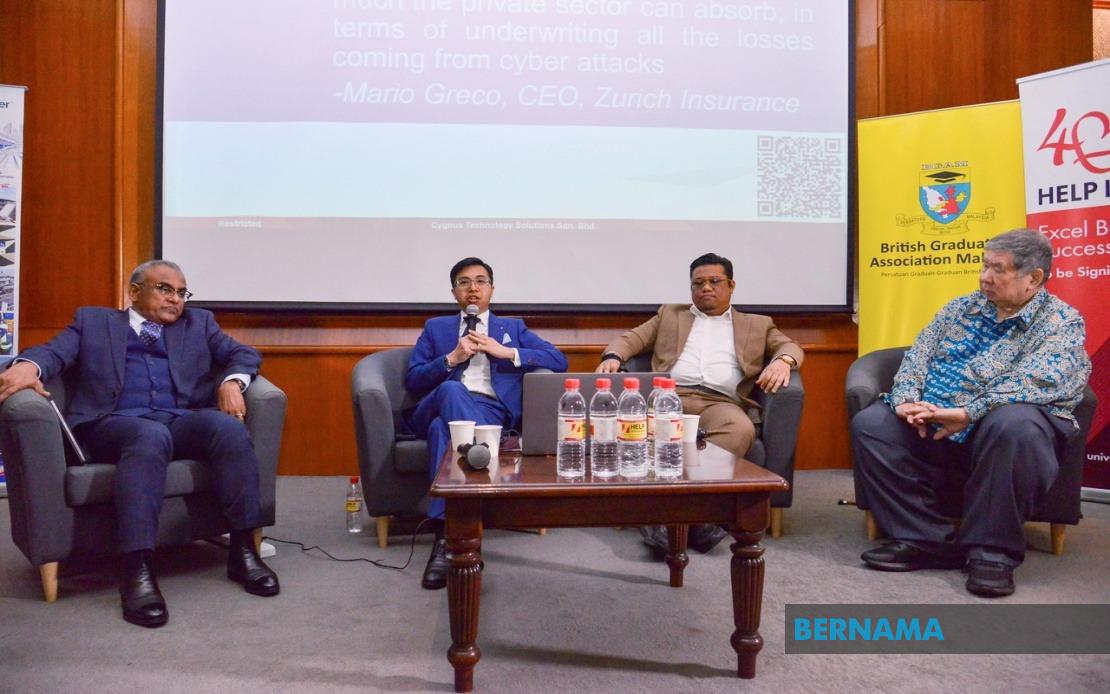
Malaysia faces an unprecedented wave of financial fraud that has transcended traditional crime categories to become a defining security challenge for the nation. Data presented at a major awareness forum in Kuala Lumpur revealed that the country experienced more than 66,000 online scam incidents in the previous year, draining citizens and businesses of approximately RM2.97 billion. These staggering figures underscore how digital crime has evolved from sporadic, isolated events into a systemic threat touching virtually every layer of Malaysian society, from individual wage earners to multinational enterprises.
The sophistication of modern scam operations has reached alarming levels, driven by technological advances that criminals have weaponised with devastating effect. According to Datuk Kamarudin Md Ali, an exco member of the Malaysia Crime Prevention Foundation and president of the British Graduates Association Malaysia, contemporary fraud rings employ artificial intelligence and refined social engineering techniques to compromise their targets. These syndicates operate with industrial-scale efficiency, exploiting the psychological vulnerabilities of potential victims rather than relying solely on crude hacking methods. The transformation reflects a worrying reality: scammers have become adept at manipulating human behaviour, turning trust itself into a liability.
The regional context amplifies concerns about Malaysia's vulnerability. Southeast Asia has become the world's primary hub for organised commercial crime, with Datuk Seri Ramli Mohamed Yoosuf, former director of Bukit Aman's Commercial Crime Investigation Department, warning that the region faces estimated scam losses between USD88 billion and USD114 billion in 2025 alone. Across the region, illegal compounds operating in Myanmar, Cambodia, Laos and the Philippines generate approximately USD40 billion annually through coordinated fraud networks. Malaysia's geographic position and developed digital infrastructure make it a natural target for these transnational operations, which increasingly employ AI-generated deepfakes, cryptocurrency laundering mechanisms and labour trafficking from more than 80 countries to sustain their criminal ecosystems.
Authentic prevention requires a fundamental shift in how society approaches the problem, moving beyond reactive law enforcement toward preventive education. Prof Datuk Seri Dr Akhbar Satar, director of HELP University's Institute of Criminology and Criminal Justice, articulated a crucial insight: scammers exploit psychological weaknesses rather than technological gaps. His observation that integrity forms the foundation of crime prevention—whether addressing corruption or fraud—reflects a deeper truth about human vulnerability. When individuals lack critical thinking skills, media literacy and awareness of manipulation tactics, they become susceptible regardless of their socioeconomic status or education level. Universities and educational institutions therefore occupy central roles in building societal resilience by cultivating ethical decision-making capacities and digital competency among future generations.
Government responses have intensified in recognition of the threat's magnitude. The Cybersecurity Act 2024 represents a legislative effort to establish clearer regulatory frameworks for digital security, while enhanced compliance with Financial Action Task Force standards reflects Malaysia's commitment to international cooperation against financial crime. The establishment of the National Scam Response Centre signals institutional acknowledgment that fragmented, agency-specific responses prove insufficient against networks operating across borders and digital platforms. However, officials themselves acknowledge that regulatory and enforcement mechanisms, while necessary, cannot function as standalone solutions given the speed at which criminal tactics evolve and adapt to countermeasures.
Tan Sri Dr Syed Hamid Albar, Asia e University's chancellor and a former Home Minister who also chaired the Malaysia Crime Prevention Foundation, emphasised that scams now represent more than financial crimes—they erode public confidence in digital systems and undermine social trust. When citizens repeatedly encounter fraud, particularly sophisticated schemes that victimise educated professionals and established businesses, faith in the digital economy deteriorates. This psychological dimension carries implications extending beyond individual losses to affect national economic participation and digital adoption rates. A population made fearful by scam prevalence may withdraw from beneficial digital services, potentially widening gaps between digital adopters and those who retreat to offline transactions.
Addressing the challenge demands what policy experts term a whole-of-society approach, integrating efforts across government agencies, law enforcement, financial institutions, technology companies, educational bodies and community organisations. No single entity possesses sufficient authority, resources or information to combat operations that span multiple jurisdictions and exploit vulnerabilities at numerous points along the victim interaction chain. Financial institutions must detect suspicious transactions while cybersecurity firms develop detection algorithms, educators teach critical evaluation skills, and media platforms reduce scam amplification. Simultaneously, law enforcement requires authority and international cooperation mechanisms to investigate and prosecute perpetrators whose operations frequently cross borders. This coordination remains nascent in many respects, requiring sustained commitment and resource allocation.
The human dimension remains central to understanding both the problem and solutions. Scammers succeed because they understand psychological triggers—desperation, greed, fear, trust in authority figures—that drive decision-making. An individual facing sudden financial hardship may overlook inconsistencies in a loan offer promising immediate relief. Someone seeking romantic connection may rationalise growing requests for money from an online contact. Elderly citizens accustomed to respecting authority figures may comply with urgent directives claiming official origin. Younger Malaysians fluent in technology but less experienced in evaluating financial schemes may fall victim to carefully constructed investment pitches. Understanding these vulnerabilities requires not moral judgment but empathetic recognition of human psychology under stress or uncertainty.
Media literacy and information evaluation skills emerge as critical defences in an environment saturated with manipulated content and false claims. Deepfake technology has advanced to the point where video and audio evidence can be fabricated convincingly, potentially compromising traditional verification methods. Citizens require training in evaluating source credibility, recognising manipulation indicators and understanding cognitive biases that make them susceptible to targeted misinformation. The Malaysia Anti-Scam Community Organisation and similar bodies play roles in documenting emerging scam methodologies and disseminating this intelligence to vulnerable populations, effectively crowdsourcing early warning systems.
The economic implications extend beyond immediate individual losses to affecting Malaysia's broader development trajectory. Investment in digital infrastructure, e-commerce platforms and fintech innovation represents strategic national priorities for economic modernisation. However, rampant scamming erodes consumer confidence in these systems, potentially constraining adoption rates and market development. Businesses operating in digital spaces face additional costs implementing security measures and managing fraud risks. Insurance mechanisms for digital losses remain underdeveloped in many cases, leaving individuals and companies absorbing costs directly. Addressing scams therefore represents not merely a law enforcement priority but an economic development imperative.
International cooperation mechanisms require strengthening given the transnational character of organised scam operations. Extradition treaties, mutual legal assistance arrangements and information-sharing protocols between Southeast Asian nations and beyond remain critical infrastructure for pursuing perpetrators. Technology companies operating across borders must be compelled through regulatory and commercial pressure to cooperate with law enforcement while protecting legitimate user privacy. Cryptocurrency exchanges and banking institutions handling funds derived from scams require robust compliance frameworks and reporting mechanisms. Malaysia's participation in multilateral initiatives addressing cybercrime and financial crime positions it to influence regional standards while accessing intelligence and operational support from international partners.
Building long-term resilience requires sustained investment across multiple domains simultaneously rather than cyclical attention to scam issues following major fraud revelations. Curriculum development at secondary and tertiary education levels should incorporate digital literacy, financial literacy and critical thinking alongside traditional subjects. Public health campaigns using television, radio, social media and community engagement should normalise discussion of scam risks and victimisation without generating shame or stigma that discourages reporting. Law enforcement agencies require adequate funding, training and technological resources to investigate increasingly sophisticated crimes. Technology companies must prioritise security architecture and user protection mechanisms even when these impose costs on business models. These investments represent preventive expenditures with long-term payoffs in reduced fraud losses and enhanced digital ecosystem trust.
The scale and sophistication of Malaysia's scam challenge will likely intensify as artificial intelligence capabilities advance and criminal networks access these technologies. Conversational AI can now generate personalised, culturally adapted fraud communications at scale. Synthetic media can create convincing false evidence of transactions or communications. Automated systems can identify and target vulnerable individuals through behavioural data analysis. Staying ahead of these evolving threats requires continuous innovation in detection mechanisms, regulatory adaptation and public education. Malaysia's success in managing this challenge will depend not on any single intervention but on sustained, coordinated effort across government, private sector, educational institutions and communities, all operating from the recognition that scam prevention represents a shared national responsibility requiring informed, vigilant public participation.

