Malaysia's semiconductor sector is entering a transformative phase, with the nation's capital markets positioned to become a critical enabler of industry growth as the country seeks to capitalise on a global reorganisation of chip manufacturing supply chains. This emerging partnership between financial institutions and government bodies reflects a broader recognition that sustained development in the semiconductor space demands more than manufacturing capacity alone—it requires sustained investment in innovation, human capital, and technological advancement that only sophisticated capital markets can reliably provide.
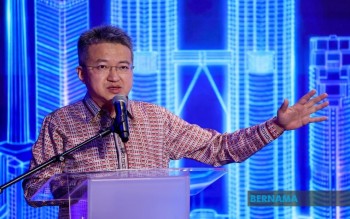
Deputy Finance Minister Liew Chin Tong has outlined an ambitious framework for this transition, emphasising that Malaysia's semiconductor ambitions rest on three interconnected pillars of capital formation. Deep capital refers to the sustained, long-term funding necessary to support companies through extended research and development cycles and infrastructure investments. Smart capital encompasses investments made with technological acumen and sectoral expertise, ensuring that funding flows to companies with genuine competitive advantage. Strategic capital represents deliberate positioning by anchor investors willing to support firms through their maturation stages, nurturing them toward global competitiveness. Together, these three capital types create an ecosystem where promising Malaysian semiconductor firms can invest in cutting-edge innovation, upgrade their technological capabilities, and attract specialised talent without being constrained by short-term financial pressures.
The trajectory of Malaysia's semiconductor sector underscores why this capital market intervention matters. Historically, the country's semiconductor industry concentrated on assembly and testing—the lower-margin segments of the value chain where labour cost advantages matter most. This positioning, while generating employment and export revenue, left Malaysia vulnerable to cost competition from neighbouring economies and automation pressures. Government initiatives, particularly through the Ministry of Science, Technology and Innovation, now target a transition toward advanced chip packaging for applications in artificial intelligence, data centre infrastructure, and high-performance computing. These segments command higher margins, require more sophisticated technical capabilities, and promise greater resilience against cost-based competition.
The ambition is quantified and substantial. Malaysia has set a target of capturing seven percent of the global advanced packaging market by 2035, a goal that requires not merely incremental improvements but transformative investment and capability-building across the sector. The packaging segment represents a logical stepping stone for Malaysia's semiconductor industry—it is less capital-intensive than fab construction yet demands considerable technical sophistication and represents a genuine value creation opportunity in the semiconductor hierarchy. Achieving this target will require sustained capital deployment, technological partnerships with global leaders, and cultivation of specialist engineering talent.
Bursa Malaysia Securities, the primary stock exchange, has already begun laying the groundwork for expanded semiconductor sector financing. Currently, the exchange lists 52 technology companies with a combined market capitalisation approaching RM100 billion as of June 2026. While respectable, this capitalisation base remains modest relative to semiconductor opportunities and requires significant expansion to fund the sector's ambitions. The exchange has introduced several support initiatives designed to facilitate semiconductor company access to capital markets. MY Value Up focuses on enhancing the visibility and valuation of Malaysian technology companies, Bursa RISE+ provides tailored support for mid-stage growth companies, and Invest Malaysia coordinates promotional activities to attract both domestic and international investors into Malaysian technology stocks.
These initiatives address a fundamental challenge facing Malaysia's semiconductor ecosystem: the gap between the capital requirements of transforming companies and the traditional financing sources available. Bank lending, while important, typically remains conservative in approving large-scale capital commitments for unproven technologies or manufacturing processes. Private equity and venture capital exist but operate at limited scale in Malaysia relative to regional hubs like Singapore. Public capital markets, when properly structured and promoted, can mobilise patient capital from institutional investors with long-term horizons, including pension funds, insurance companies, and international asset managers seeking exposure to Asian technology sectors.
The coordination between government agencies, exchange authorities, and investment firms reflected in the Bursa Malaysia-CLSA Semiconductor Sectoral Series demonstrates a maturing approach to industrial policy within Malaysia. Rather than direct government investment or protectionist measures, the strategy leverages existing capital market infrastructure and investor networks to support private sector growth. This approach has particular relevance for Southeast Asian readers and policymakers, as it illustrates how smaller economies can participate meaningfully in high-value semiconductor activity without attempting to compete with the massive fab investments required in developed markets. The model emphasises that strategic positioning in semiconductor value chains depends on identifying niches aligned with existing capabilities—in Malaysia's case, advanced packaging and related services.
CLSA Securities Malaysia, the investment bank collaborating with Bursa Malaysia on these initiatives, brings substantial Asia-Pacific experience in supporting semiconductor companies through capital market transactions. As a platform within CITIC CLSA, established as Hong Kong's premier capital markets group since 1986, the institution carries credibility in advising both Malaysian companies on international expansion and foreign investors on Malaysian semiconductor opportunities. This transactional expertise becomes valuable as Malaysian semiconductor firms contemplate initial public offerings, secondary capital raises, or strategic acquisitions that could accelerate their technological development and market penetration.
The broader context underlying Malaysia's semiconductor ambitions involves structural shifts in global chip supply chain organisation. Geopolitical tensions between the United States and China, combined with concerns about concentration of advanced manufacturing in Taiwan, have motivated diversification efforts by multinational semiconductor firms and their customers. Malaysia, with established manufacturing expertise, skilled workforce, strategic geographic location, and political stability, qualifies as a credible alternative production location. However, capturing opportunities in this reconfigured landscape requires moving beyond low-cost, high-volume assembly toward services and capabilities that generate substantial per-unit value and are less vulnerable to price competition.
For Malaysian investors and technology entrepreneurs, this capital market emphasis signals genuine commitment to building sustainable competitive advantage in semiconductors. The availability of patient capital through listed vehicles, coupled with government support for R&D and talent development, creates conditions where Malaysian firms can make the sustained investments necessary to build technological leadership in their chosen niches. For multinational semiconductor companies evaluating regional footprints, Malaysia's evolving capital market capacity suggests an increasingly mature ecosystem capable of supporting complex manufacturing and design operations beyond simple contract manufacturing.
The semiconductor sectoral series itself—exploring Malaysia's position in the global semiconductor ecosystem, high-value value-chain opportunities, and capital markets' supporting role—represents an important platform for stakeholder alignment. Such forums allow industry participants, investors, government officials, and financial intermediaries to calibrate expectations, identify collaborative opportunities, and communicate market developments that individual actors might otherwise miss. In fast-moving technology sectors like semiconductors, information sharing and institutional learning across value chain participants substantially influence investment patterns and strategic decisions.
Looking forward, the success of Malaysia's semiconductor growth strategy depends substantially on capital markets' willingness and capacity to fund companies pursuing these higher-value activities. Traditional institutional investors in Malaysia may lack familiarity with semiconductor technology risks and opportunities, potentially creating a capital supply constraint. International investor participation becomes critical—both for capital provision and for technology transfer and market exposure that accompany engagement with sophisticated multinational investors. The initiatives announced by Bursa Malaysia and its partners aim at precisely this challenge: broadening investor participation, increasing market visibility for Malaysian semiconductor companies, and integrating Malaysian capabilities into global semiconductor value chains.
This strategic repositioning of Malaysia's semiconductor sector, supported by deliberate capital market development, demonstrates how developing economies can meaningfully participate in advanced technology industries. Rather than competing head-to-head with established semiconductor superpowers in fabrication or design, Malaysia identifies aligned opportunities in advanced packaging and specialised services, mobilises capital and talent accordingly, and positions itself as a preferred partner within global semiconductor networks. The capital market mechanisms supporting this transition represent Malaysia's competitive advantage in an era when geopolitical pressures favour diversified, resilient semiconductor ecosystems.

