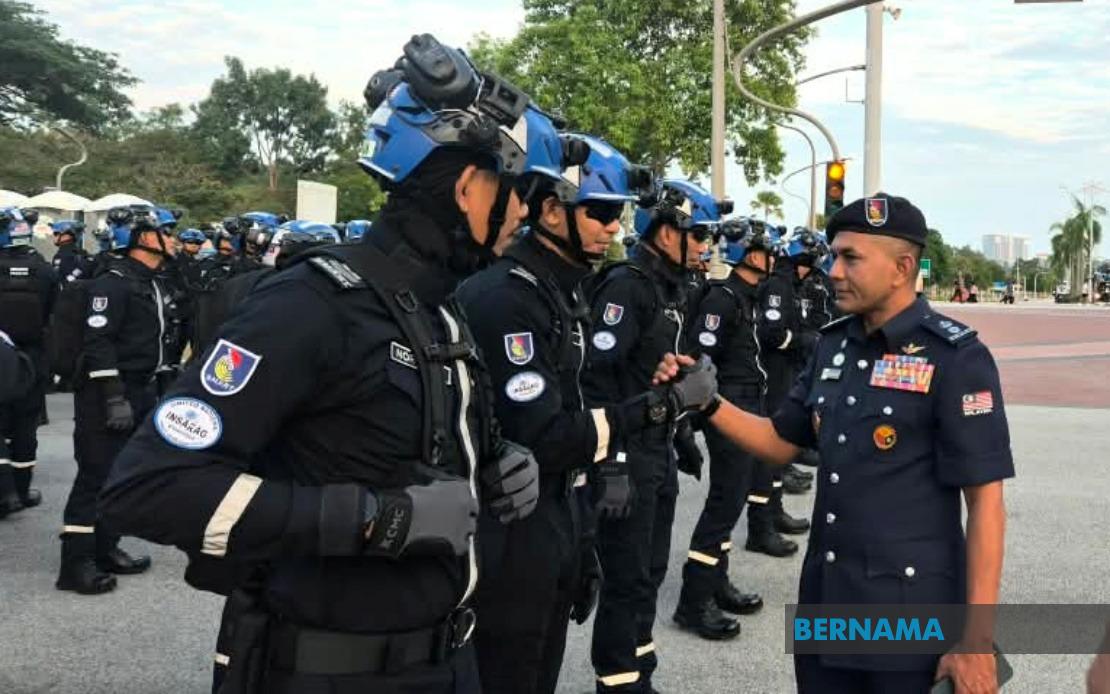
The Special Malaysia Disaster Assistance and Rescue Team (SMART) has completed its preparations for a potential deployment to Nepal following the devastating floods that struck the Himalayan nation last week, but the operation remains contingent on approval from the Nepalese government. Senior Fire and Rescue Officer 1 Abdul Manaf Che Isa confirmed on Saturday during Malaysia's National Day 2026 celebrations at Dataran Putrajaya that while the team stands ready for immediate deployment, officials are still awaiting confirmation from Kathmandu regarding its capacity and willingness to receive Malaysian personnel for search and rescue operations.
The decision to mobilize SMART comes after Prime Minister Datuk Seri Anwar Ibrahim announced that Malaysia would dispatch the specialized team to assist Nepal in its emergency response efforts. The team, comprising 112 personnel under the command of Captain Plaveanus Bernard, has undergone final preparations and is maintained at high readiness. Abdul Manaf stressed that following the Prime Minister's public commitment, all logistical and operational aspects of the mission have been finalized, with equipment and personnel standing by for rapid deployment once diplomatic and governmental clearances are secured.
The coordination effort required for such an international rescue mission is substantial, involving multiple Malaysian government agencies. The deployment process necessitates formal liaison between the Foreign Ministry (KLN), the National Security Council (MKN), and the National Disaster Management Agency (NADMA). This multi-agency approach reflects the complexity of organizing cross-border disaster assistance, where diplomatic protocols, security considerations, and operational logistics must align seamlessly. Such coordination mechanisms have been honed through Malaysia's previous disaster response deployments across the region.
Beyond the primary search and rescue mandate, the SMART deployment carries additional humanitarian objectives if approved. The Malaysian team would be tasked with locating and assisting Malaysian nationals who have been affected by the disaster, of which 55 remain uncontactable according to Wisma Putra's latest update. Furthermore, the team would work closely with the Malaysian Embassy in Nepal to coordinate broader aid distribution efforts and ensure the safety and welfare of Malaysians in the affected areas. This expanded scope reflects Malaysia's commitment to protecting its citizens while contributing to Nepal's overall disaster response capacity.
Malaysia's commitment extends beyond personnel deployment. Prime Minister Anwar Ibrahim announced that the Malaysian government would contribute USD1 million in financial assistance to Nepal, targeted at supporting those directly affected by the disaster and funding post-recovery reconstruction efforts. This financial contribution complements the hands-on rescue expertise that SMART personnel would provide, demonstrating a comprehensive approach to international disaster assistance that addresses both immediate life-saving operations and longer-term recovery needs.
The scale of the humanitarian catastrophe that prompted Malaysia's response is substantial. The devastating flash floods and landslides that struck Nepal's Rasuwa District on August 26 have resulted in a death toll exceeding 804 people across both Nepal and the Chinese Tibet region. The Anadolu Agency reported that nearly 3,300 individuals remain unaccounted for, suggesting that the final casualty figures may yet rise significantly. Such a large-scale disaster strains the capacity of any single nation's emergency services, underscoring why international assistance becomes critical.
Nepal's vulnerability to such natural disasters stems from its geographical and climatic characteristics. Situated in the Himalayas with monsoon exposure, the country faces recurring risks from flash flooding and landslides, particularly in districts like Rasuwa which lies in mountainous terrain. The August 26 disaster represents the type of natural hazard that Nepal faces with regularity, yet the scale of this particular event has nonetheless overwhelmed local and national emergency response capacity. International cooperation through mechanisms like SMART deployment has become increasingly important for the region's disaster management strategies.
For Malaysia, positioning SMART as a regional rapid-response capability serves multiple strategic purposes. Demonstrating readiness to deploy disaster assistance strengthens Malaysia's standing as a responsible regional actor and deepens ties with neighboring nations. The SMART team's expertise in search and rescue operations, developed through various domestic and regional deployments, represents a valuable regional public good. Such deployments also enhance the professional experience and capabilities of Malaysian personnel, contributing to continuous improvement in disaster response competency.
The diplomatic dimension of this assistance should not be overlooked. By moving quickly to offer concrete help following Nepal's disaster, Malaysia reinforces its regional relationships and demonstrates solidarity with a fellow South Asian nation. In an era where geopolitical competition shapes international relations, practical humanitarian cooperation provides a foundation for more stable and cooperative regional dynamics. The willingness to deploy resources and expertise without immediate reciprocal benefit reflects a long-term strategic investment in regional stability and goodwill.
The waiting period for Nepalese government approval, while potentially frustrating from an operational standpoint, reflects standard international protocols governing disaster assistance. Host nations must assess their capacity to absorb international resources, coordinate with incoming teams, and ensure that foreign personnel operate within agreed frameworks. This coordination process, though it may introduce delays, ultimately ensures that rescue efforts proceed in an organized manner that maximizes effectiveness. Once approval is granted, Malaysia's preparations should enable rapid deployment and swift integration into Nepal's ongoing emergency operations.

