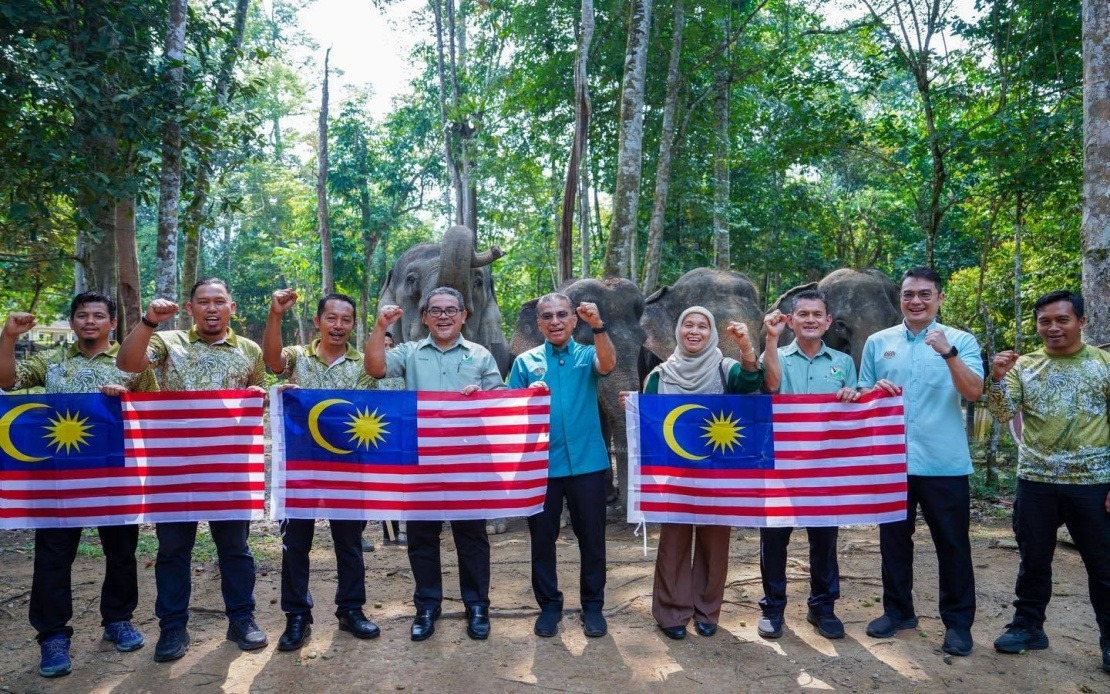
The Ministry of Natural Resources and Environmental Sustainability (NRES) and its Department of Wildlife and National Parks, known locally as Perhilitan, are actively researching and designing fresh strategies to tackle the escalating problem of human-wildlife conflicts across the country. Deputy Minister Syed Ibrahim Syed Noh underscored the gravity of the challenge during an engagement in Tangkak, emphasising that managing these encounters—particularly those involving wild elephants—represents a significant operational and conservation priority for the government.
The increasing frequency of such incidents reflects a fundamental tension gripping Malaysia's landscape: the relentless expansion of human settlements, agricultural land, and development projects is progressively eroding the wilderness spaces traditionally inhabited by elephants and other fauna. Rather than viewing wildlife as obstacles to be removed, Syed Ibrahim articulated the ministry's underlying philosophy that these animals deserve protection within their native ecosystems. However, this conservation principle collides directly with economic development imperatives and the housing and livelihood needs of a growing population, creating a complex governance dilemma that simple enforcement solutions cannot resolve.
One emblematic case illustrating these complexities involves Sulong Chalil, a mature male elephant that garnered national attention after undertaking a gruelling journey of hundreds of kilometres. After being translocated to a forested reserve in Gerik, Perak, the animal departed its new location and traversed challenging terrain back towards its original habitat in Gua Musang, Kelantan—arriving with a visible leg injury sustained during the odyssey. The incident sparked public discussion about relocation programmes and whether such interventions genuinely serve animal welfare or merely displace conflict rather than resolving it. Syed Ibrahim's subsequent remarks clarified that Perhilitan maintains continuous surveillance over such animals rather than abandoning them to chance, acknowledging the unique behavioural characteristics that distinguish elephants from species more adaptable to artificial confinement or novel environments.
The deputy minister's explanation reveals a nuanced understanding of elephant cognition and ethology. These animals possess sophisticated spatial memory, established migratory routes, and social structures intimately linked to specific geographical areas. Forcing compliance through physical barriers or severe restrictions typically triggers stress responses that paradoxically increase the probability of dangerous human encounters, as distressed animals become unpredictable. This biological reality necessitates monitoring strategies that balance protection of wild populations with management of inevitable contact points where human and animal territories overlap.
The escalating nature of these conflicts stems fundamentally from habitat fragmentation and land-use conversion. As Syed Ibrahim acknowledged, development activities—whether residential estates, palm oil plantations, timber operations, or infrastructure projects—progressively compress the available space where elephants and other megafauna can range and forage. This squeeze creates ecological desperation: animals venture into human-dominated areas searching for food sources, water, and passage corridors that would historically have formed continuous natural corridors. Rural communities bearing the brunt of such encounters face destroyed crops, damaged property, and genuine personal safety risks, generating legitimate frustration with conservation efforts perceived as prioritising animal welfare over human welfare.
The ministry's commitment to formulating fresh methodologies suggests recognition that historical approaches—whether focused primarily on animal removal, habitat protection alone, or reactive incident response—have proven insufficient. Effective solutions will likely demand integrated approaches combining enhanced early warning systems, improved livestock husbandry practices in buffer zones, compensation schemes for affected farmers, habitat connectivity projects that allow animals to move without traversing human settlements, and community engagement programmes that foster coexistence rather than antagonism. Singapore's experiences with urban wildlife management and Kenya's community-based conservation models offer instructive international examples, though local adaptation remains essential given Malaysia's specific ecological, demographic, and economic circumstances.
The context of rapid Southeast Asian development amplifies the urgency for Malaysia and neighbouring countries. Regional megafauna populations face unprecedented pressure as economies expand and land conversion accelerates. Thailand, Indonesia, and Myanmar grapple with comparable challenges involving elephants, tigers, and other species. Malaysia's approach to developing evidence-based, community-sensitive solutions carries implications beyond national borders, potentially informing ASEAN-wide conservation strategies. The region's capacity to maintain viable wildlife populations whilst accommodating economic growth will substantially influence global biodiversity outcomes.
Syed Ibrahim's gratitude toward Perhilitan's personnel reflects genuine operational challenges in implementing humane wildlife management at scale. Field officers regularly navigate dangerous situations with limited resources, attempting to balance competing mandates. The emotional labour of managing distressed animals, engaging with displaced communities, and working within constrained budgets takes genuine tolls. Institutional culture and staff morale significantly influence programme effectiveness, yet these dimensions receive comparatively limited public attention and resource allocation.
The ministry's emphasis on continuous monitoring of translocated animals such as Sulong Chalil indicates growing sophistication in tracking technologies and protocols. GPS collars, remote sensing, and data analytics enable real-time understanding of animal movements, health status, and habitat utilisation patterns previously impossible to obtain. This information informs adaptive management: strategies can be adjusted based on demonstrated outcomes rather than perpetuated through inertia. However, implementing such monitoring systems across all relevant wildlife populations requires sustained technical and financial investment that competes with other conservation priorities.
As Malaysia balances its identity as a biodiversity hotspot with aspirations toward developed-nation status, human-wildlife coexistence will increasingly define environmental governance success. The ministry's contemporary commitment to exploring new methodologies suggests recognition that this balance cannot be achieved through confrontation alone. Rather, long-term stability demands acknowledging that humans and wildlife share finite space, and mutual accommodation mechanisms—however complex to design and implement—ultimately serve both communities' interests more effectively than perpetual conflict or forced separation.

