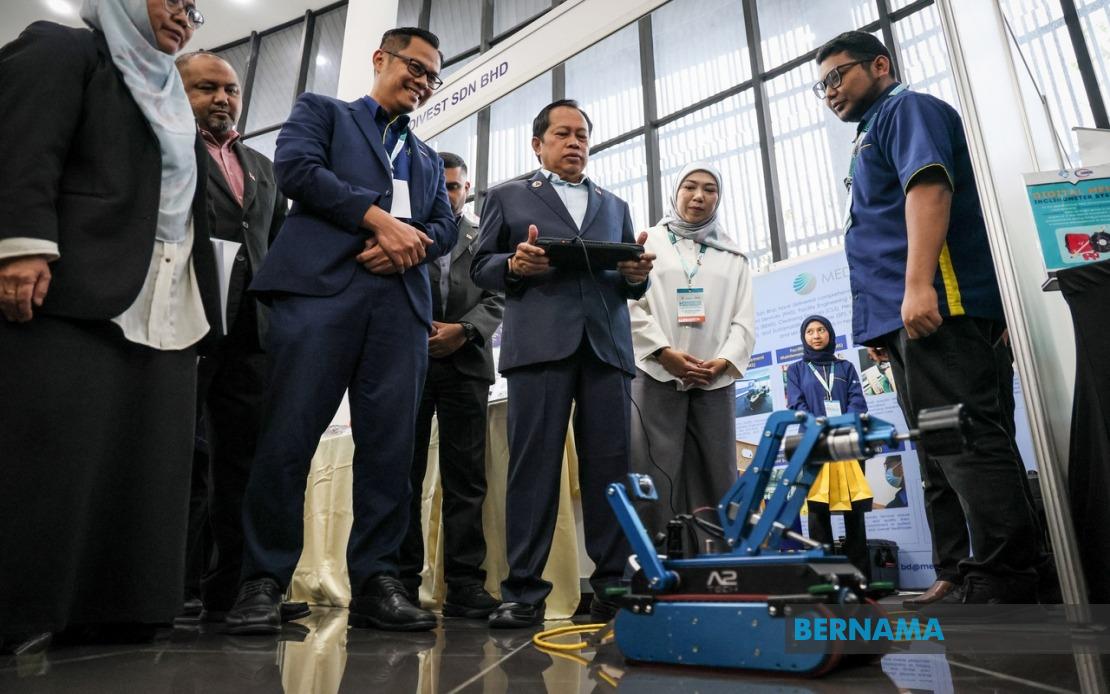
The Malaysian Works Ministry is making a strategic push to attract contractors into the facility management and maintenance sector, unveiling an untapped opportunity worth RM39.59 billion across the three-year period spanning 2023 to 2025. Speaking at the Contractors Convention 2026: NexGen Builders in Butterworth, Deputy Works Minister Datuk Seri Dr Ahmad Maslan highlighted the stark disparity between market size and industry participation, revealing that the Construction Industry Development Board (CIDB) has registered merely 468 FM contractors under the F01 and F02 specialisations despite 1,541 facility management projects being formally declared during this timeframe.
This significant gap between available projects and qualified contractors represents a major business opening for construction firms seeking to diversify beyond traditional building works. The ministry's emphasis reflects a fundamental shift in how Malaysia approaches its infrastructure assets, moving away from a predominantly construction-focused mindset towards viewing facility management as a legitimate and lucrative revenue stream. For Malaysian contractors, particularly small and medium enterprises looking to expand their service offerings, this represents a chance to carve out niches in a market segment that has historically received less attention than greenfield construction projects.
Dr Ahmad underscored the economic logic behind this strategic pivot, noting that the nation's extensive portfolio of buildings, roads, bridges and public infrastructure demands consistent, professional maintenance to preserve their utility and value throughout their operational lifespan. The traditional construction-focused model, where development efforts ceased upon project completion with minimal subsequent investment in upkeep, has proven inefficient and costly. Proper facility management ensures that public assets generate sustained value for communities and taxpayers, extending asset lifecycles and reducing the need for premature or expensive replacements.
The recognition of this market gap comes at a crucial juncture for Malaysia's construction industry, which faces evolving economic pressures and shifting project pipelines. Contractors who establish credibility and systems in facility management position themselves for stable, recurring revenue from asset owners—whether government agencies, private corporations or property developers—seeking reliable maintenance partners. Unlike construction projects that are cyclical and often competitive, FM contracts frequently involve longer-term relationships with more predictable income streams, offering business continuity benefits that the sector desperately needs.
To formalise and standardise practices across this emerging subsector, CIDB has developed CIS 33:2026, a Facility Management Good Practice Guide designed to establish common benchmarks and methodologies. This framework serves as a reference point for asset owners, facilities managers, contractors and other stakeholders seeking to elevate FM standards across Malaysia's built environment. The guide's emphasis on systematic, sustainable and standardised approaches reflects international best practices and positions Malaysian contractors competitively should they seek regional opportunities in countries with more mature FM markets.
The 1,541 projects declared during the 2023 to 2025 period demonstrate substantial aggregate demand, yet the registration of only 468 dedicated FM contractors suggests that many projects may be awarded to generalist construction firms lacking specialised expertise. This situation potentially results in suboptimal service quality, inefficient resource allocation and missed opportunities for contractors to build dedicated FM capabilities. The ministry's outreach is essentially inviting this cohort to formalise their FM operations, pursue appropriate specialisation registrations and position themselves as preferred vendors in this expanding market.
For Malaysian contractors aiming to capture this opportunity, the pathway is becoming clearer. CIDB's F01 and F02 FM specialisations provide the regulatory framework and credibility markers that asset owners increasingly demand. Contractors investing in FM-specific training, systems and quality assurance not only gain compliance advantages but also demonstrate commitment to professional standards that differentiate them from competitors. Regional context matters here—neighbouring countries like Singapore and Australia have mature FM sectors with higher contractor concentrations, providing templates for service models that Malaysian firms could adapt.
The ministry's timing aligns with broader infrastructure maturation across Malaysia. As the nation's built environment ages, maintenance demands will intensify. Schools, hospitals, government offices, public utilities and transport infrastructure all require increasingly sophisticated FM approaches. The next decade presents a golden window for contractors to build expertise, client relationships and operational systems before competition inevitably intensifies. Early entrants who invest seriously in FM capabilities will establish competitive moats difficult for late arrivals to breach.
Dr Ahmad's message reframes FM from a peripheral concern to a core business opportunity, signalling that the government will prioritise and support this sector through regulatory clarity, standardisation frameworks and potentially preferential procurement policies. This endorsement from senior ministry leadership carries significant weight in Malaysia's construction industry, where government infrastructure spending remains substantial. Contractors interpreting this signal and responding strategically position themselves advantageously relative to competitors who continue focusing exclusively on traditional construction.
The economic implications extend beyond individual contractors to sectoral health. A robust, competitive FM industry reduces lifecycle infrastructure costs, improves asset performance and generates more stable employment for skilled workers and technicians. These outcomes align with Malaysia's aspirations for infrastructure excellence and economic productivity. Investment in FM capability development today translates to more resilient, cost-effective infrastructure systems tomorrow—outcomes that benefit businesses, government agencies and the broader public.

