Malaysia's youth possess tremendous capacity to drive meaningful change in society, and they should look to the transformative example of Prophet Muhammad's migration to Madinah as a source of inspiration, according to Datuk Dr Zulkifli Hasan, the Minister in the Prime Minister's Department (Religious Affairs). Speaking in Putrajaya on June 16, Zulkifli emphasised that the spirit of Hijrah—the Prophet's journey from Makkah to Madinah—carries timeless lessons about resilience, renewal, and community building that remain deeply relevant for contemporary Malaysian society.
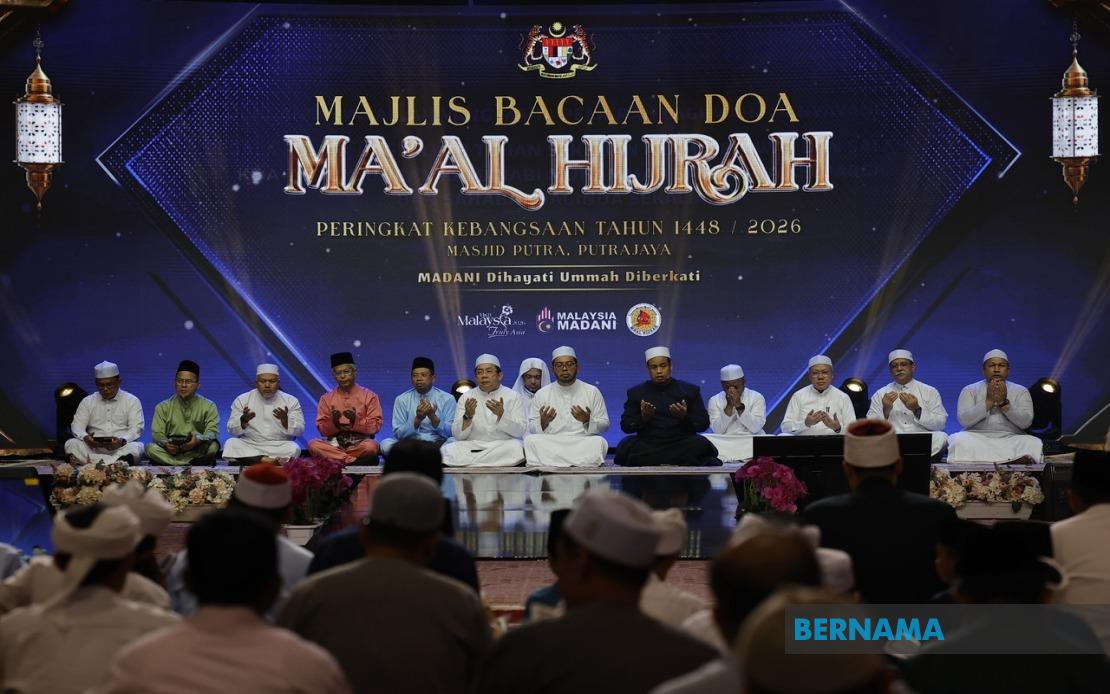
The minister's remarks came as Malaysia prepares to commemorate Maal Hijrah 1448H/2026M, a significant occasion in the Islamic calendar that honours the Prophet's migration and its profound impact on the development of Islamic civilisation. Zulkifli stressed that young Malaysians must go beyond merely acknowledging this historical event; they need to internalise its deeper philosophical and practical dimensions. The migration, he noted, was not simply a physical relocation but represented a fundamental commitment to establishing a community based on principles of justice, mutual support, and spiritual development.
This year's national-level celebrations will adopt a distinctive approach that underscores the spiritual and institutional significance of the Hijrah journey. Rather than holding festivities in conventional venues, organisers have selected Putra Mosque in Putrajaya as the centrepiece location, a symbolic choice that reconnects participants with the foundational role of the mosque in Prophet Muhammad's mission. The mosque, Zulkifli explained, was the first institution established following the Prophet's arrival in Madinah, serving as far more than a place of worship but rather as the epicentre from which civilisation, social cohesion, and community development radiated outward. By anchoring this year's programme at Putra Mosque, organisers hope to reignite collective consciousness about how religious institutions can catalyse positive societal transformation.
The national celebration commences tomorrow at Putra Mosque beginning at 7 am, with the ceremony scheduled to include the presentation of national and international Maal Hijrah Figure awards. The event will be officiated by Sultan Nazrin Shah, the Sultan of Perak, lending the occasion both ceremonial weight and royal endorsement. This formal recognition of distinguished individuals who embody Hijrah principles aims to highlight contemporary examples of how the spirit of migration—understood as meaningful life transitions and purposeful community contribution—manifests in modern contexts.
Authenticity and reflection form the cornerstone of this year's approach. Rather than elaborate festivities, organisers have deliberately scaled back the celebration to modest proportions, responding to contemporary concerns about energy conservation during a period of global supply chain disruption. This measured approach reflects broader Malaysian policy priorities around sustainable resource management and responsible stewardship, demonstrating that religious commemoration can align with practical environmental and economic considerations. The decision to prioritise substance over scale sends a message that the value of Hijrah observance lies not in grand displays but in genuine spiritual engagement and community participation.
Beyond the central mosque ceremony, the celebrations will feature a keynote lecture series at the JAKIM Auditorium on June 18, where prominent national and international Islamic scholars and thought leaders will share insights into the contemporary relevance of Hijrah principles. This gathering, anticipated to draw approximately 1,000 participants, offers Malaysian society an opportunity to engage directly with diverse perspectives on how migration, adaptation, and community building continue to shape Islamic thought and practice worldwide. The platform allows speakers to articulate how traditional wisdom can address modern challenges ranging from social cohesion to personal development.
For Malaysian youth specifically, the Hijrah narrative carries particular resonance. The migration represents a generation's commitment to establishing new foundations rather than accepting inherited limitations—a theme with obvious parallels to young people's aspirations for meaningful careers, social impact, and community contribution. Zulkifli's message invites youth to view their own life transitions—educational pursuits, career changes, relocation, or social activism—through the lens of purposeful transformation rather than mere circumstance. This reframing positions the Hijrah not as a historical curiosity but as an archetypal pattern that young Malaysians can actively emulate in their contemporary circumstances.
The emphasis on institutional development through the mosque as a starting point also carries implications for how Malaysia's religious and civic infrastructure might evolve. By highlighting the mosque's traditional role as a hub for knowledge dissemination, community welfare, and social coordination, the celebrations encourage reflection on how such institutions might better serve contemporary Malaysian communities. In an era of rapid urbanisation and social fragmentation, revitalising the communal functions of religious spaces addresses real gaps in the social fabric.
Moreover, situating Maal Hijrah celebrations within Malaysia's broader national narrative acknowledges the country's own historical migrations and transformations. Malaysia's founding generation undertook their own journeys of state-building, nation-formation, and civilisational establishment. Drawing parallels between Prophet Muhammad's mission and Malaysia's developmental aspirations creates a compelling framework for understanding national progress as fundamentally rooted in spiritual and moral foundations rather than purely material or political metrics.
The international dimension of this year's celebrations—with international Maal Hijrah figures participating in the lecture series—reflects how Islamic principles of migration and community-building resonate across diverse cultural contexts. Southeast Asian Muslim societies have their own complex histories of migration, adaptation, and Islamic institutional development. Malaysian engagement with international perspectives enriches local understanding and positions Malaysia as an active participant in global Islamic discourse rather than a peripheral observer.
For policymakers and civil society organisations, Zulkifli's statement suggests that framing national development challenges through the lens of spiritual principles and historical Islamic precedents may prove more mobilising than purely technocratic approaches. When youth understand societal transformation as connected to deeper spiritual and community values, their engagement and commitment deepen accordingly. This approach acknowledges that sustainable social progress requires not just institutional reform and policy innovation but also hearts and minds genuinely inspired by meaningful principles and aspirational narratives.