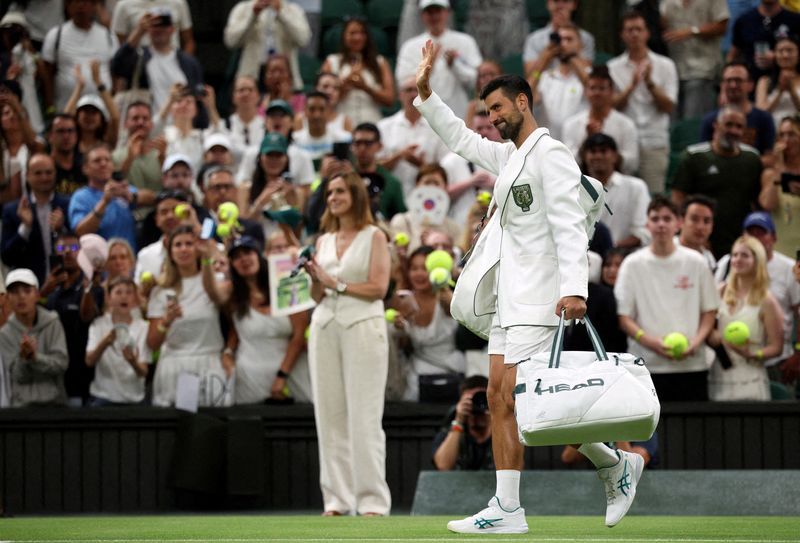
The 2024 Wimbledon Championships have witnessed a notable shift in how male competitors approach the sport's most formal Grand Slam tournament. While Naomi Osaka captured global attention with her eye-catching kimono-inspired entrance reminiscent of a "Kill Bill" scene, her male counterparts have seized the moment to express their own personalities through carefully curated outfits. Novak Djokovic has graced Centre Court in a personalised Lacoste blazer paired with tailored shorts, whilst sixth-seeded Taylor Fritz has made equally striking entrances wearing a white Hugo Boss jacket, flowing trousers, and a silk scarf—all contributing to an emerging trend that fundamentally reshapes how athletes use fashion as a form of identity at tennis's most traditional major.
The evolution reflects a broader transformation in professional sports marketing, where the relationship between athletes and their corporate sponsors has become increasingly collaborative and creative. Joelle Michaeloff, chief creative officer at Wilson sports brand, describes this moment as the first tournament where male players have genuinely stepped up their sartorial game. She works directly with several rising stars, including Australian fifth seed Alex de Minaur and Ukrainian 12th seed Marta Kostyuk, helping them conceptualise outfits that balance artistic expression with performance requirements. The shift is not merely superficial—sponsors like Nike and Hugo Boss are now investing significant resources in crafting narrative-driven campaigns around these walk-on moments, distributing professionally produced imagery and video content across social media platforms before matches even commence.
What makes Wimbledon particularly significant for this fashion revolution is the tournament's stringent all-white dress code, which paradoxically creates both constraint and opportunity. Unlike the Australian Open, French Open, and US Open, where players can experiment with vibrant colours and elaborate designs, Wimbledon competitors must work within a monochromatic palette. This limitation has historically been viewed as restrictive, yet contemporary athletes and designers have begun treating it as a challenge that encourages sophistication and nuance. The all-white requirement forces creativity in texture, silhouette, and proportion rather than colour—a distinction that has produced memorable moments throughout the championship's history, from Ted Tinling's groundbreaking white bodysuit in 1985 to Roger Federer's distinctive jacket in 2007.
Taylor Fritz's experience reveals the delicate balance male players must maintain between ambition and performance pressure. At the outset, he emphasised that wearing a high-profile outfit carries genuine risk. Should a player stumble early in the tournament, the carefully constructed fashion statement becomes a liability—a conspicuous reminder of premature confidence. Fortunately for Fritz, his Hugo Boss collaboration has been vindicated by his strong performance; he has advanced to the third round without losing a set, allowing him to strip away the dramatic trousers (which are connected at the sides for rapid removal) and transition to his match attire without appearing foolish. This correlation between fashion success and competitive performance has become increasingly important to how male players now approach their tournament entries.
Djokovic, the 24-time Grand Slam champion, has leveraged his particular entrance to maximum effect. Following his dominant dismissal of Stefanos Tsitsipas on Wednesday, the Serb generated considerable media coverage by playfully challenging golfer Rory McIlroy to a match while joking that his personalised Lacoste blazer should be pitted against McIlroy's coveted Masters Green Jacket. The exchange—conducted with visible amusement between Centre Court and the Royal Box—transformed a simple walk-on moment into a cross-sport cultural conversation. Such instances demonstrate how veteran players, secure in their ranking and reputation, can leverage fashion choices to generate broader entertainment value and narrative richness around their participation.
The design process itself has evolved significantly, with an increasing number of male competitors demanding meaningful input across multiple dimensions of their entrance outfits. Russian player Karen Khachanov, who has also reached the third round, exemplifies this new engagement model—he reportedly wants to discuss every element, from fabric selection and colour palettes to neckline design and fit specifications. This consultative approach reflects a growing sophistication among athletes who understand that fashion is not merely decorative but functions as an extension of their professional identity. These players recognise that the balance between visual impact and functional wearability can influence how they feel stepping onto grass courts where precision and confidence are paramount.
However, not all fashion ambitions survive Wimbledon's rigorous dress code enforcement. Italy's Matteo Berrettini, formerly ranked as high as sixth globally, discovered that his entrance outfit failed the tournament's whiteness threshold. Officials rejected his design on the grounds that it was insufficiently white, despite it meeting his own artistic intentions. This rejection underscores that whilst Wimbledon has become receptive to creative fashion expression, the All England Lawn Tennis Club maintains strict oversight to preserve the tournament's aesthetic traditions and standards. The tension between innovation and institutional conservatism remains a defining feature of fashion at the championship.
Wilson's Michaeloff contextualises contemporary male fashion statements within deeper historical lineages extending far beyond the current trend cycle. She draws explicit parallels to the sartorial choices of tennis legends Arthur Ashe, whose deliberate fashion decisions during the 1960s and 1970s represented early examples of athletes using clothing to project personality and cultural significance. However, she emphasises that the momentum and reach of these choices have fundamentally transformed through digital media and sponsorship infrastructure. What Arthur Ashe accomplished through physical presence at tournaments, contemporary athletes can now amplify through strategic social media distribution and brand collaboration.
Fritz himself acknowledges that female competitors have historically led this movement, creating far more elaborate and publicised entrance productions than their male counterparts. He speculates that as male players observe the positive reception and marketing value generated by these fashion moments, more athletes will invest in similar strategies. Whether this projection proves accurate will likely depend on how seamlessly fashion expression integrates with competitive performance in upcoming tournaments—the market for fashion-forward tennis will ultimately be constrained by whether players can back their sartorial confidence with results.
Naomi Osaka's contributions to this broader movement extend considerably beyond Wimbledon. The 14th seed has made calculated fashion choices throughout the 2024 Grand Slam calendar, wearing a black Kevin Germanier skirt at the French Open before showcasing a layered yellow-and-gold Nike dress inspired by the Eiffel Tower's nighttime illumination. At the Australian Open, she unveiled a jellyfish-inspired creation that generated substantial media commentary. Her Wimbledon kimono represents the latest evolution in a deliberate strategy of using Grand Slam walk-ons as platforms for artistic expression and narrative development.
Eleanor Thomas, collections lead at the All England Lawn Tennis Club who manages the championship's on-site museum, has carefully curated the sport's most memorable fashion moments. She considers Osaka's 2024 creations worthy of recognition as iconic moments within Wimbledon's broader championship history. This institutional acknowledgment signals that Wimbledon's cultural gatekeepers are increasingly receptive to fashion as a legitimate dimension of the tournament's legacy, not merely as peripheral entertainment. The shift reflects evolving understandings of how sporting spectacle, aesthetic expression, and athlete identity intersect in contemporary professional athletics.
The implications for Southeast Asian tennis and regional sports culture deserve consideration. As players from the region increasingly compete at Grand Slam level, understanding how fashion choice functions as a communication tool—and how sponsors leverage such moments—becomes strategically important. The model emerging at Wimbledon suggests that sponsorship value increasingly extends beyond performance metrics to encompass personality projection and off-court cultural influence. For Malaysian and regional athletes seeking international sponsorships, the willingness and capability to engage creatively with fashion moments may represent a competitive advantage. The tournament demonstrates that contemporary professional sports success increasingly depends on athletes' capacity to contribute meaningfully to the broader narrative ecosystems their sponsors construct.

