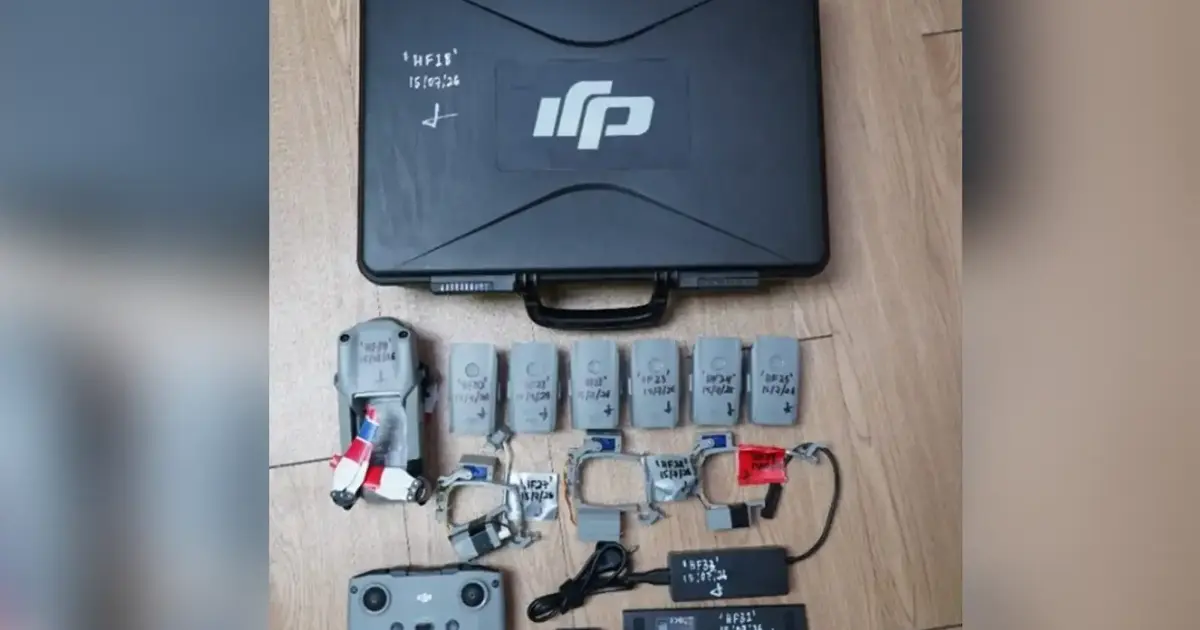
Police in Melaka have arrested a couple suspected of orchestrating an ambitious but ultimately unsuccessful scheme to deliver contraband tobacco into the state prison using unmanned aerial technology, marking another chapter in the ongoing cat-and-mouse game between authorities and those seeking to supply illicit goods to incarcerated individuals.
The operation, which authorities believe was planned in cooperation with at least one prisoner held within the facility, represents a significant security concern for correctional institutions across Malaysia that increasingly face sophisticated smuggling attempts. The Melaka police chief indicated that the coordination between the external operatives and the inmate demonstrates a level of organisation that goes beyond opportunistic contraband attempts.
Drone-based smuggling operations have emerged as a growing problem for prison systems worldwide, offering smugglers a relatively discreet method to bypass traditional security checkpoints and perimeter controls. The technology's accessibility, combined with the difficulty of detecting small aerial devices, has made drones an attractive tool for those seeking to supply everything from drugs and weapons to communication devices and tobacco products to prisoners.
Tobacco, while less hazardous than narcotics or weapons, remains a valuable commodity within prison economies where such items command premium prices among inmates unable to access them through legitimate channels. The attempted smuggling suggests that someone inside the prison had sufficient resources or influence to arrange the operation from within secure confines, indicating potential security vulnerabilities in communication protocols or inmate supervision systems.
Malaysian correctional facilities have been grappling with security challenges for years, with periodic discoveries of contraband highlighting the determination of networks operating outside prison walls to supply detainees. The use of drones represents an evolution in smuggling tactics that prison authorities must now actively counter through enhanced surveillance, signal jamming technology, or modified facility designs that limit drone access to sensitive areas.
The arrest of the external operatives reflects Melaka police's commitment to dismantling smuggling networks at the source rather than merely intercepting contraband at prison gates. By pursuing those coordinating from outside, law enforcement aims to disrupt the supply chains that fuel the underground prison economy and undermine institutional security.
This incident also raises broader questions about prison security modernisation in Malaysia. While facilities may have robust physical perimeters and internal controls, the three-dimensional threat posed by aerial delivery systems requires investment in new detection and interdiction capabilities. Regional counterparts in Singapore and other developed nations have already begun implementing such technologies to protect correctional institutions.
The investigation into the arrested couple will likely reveal the extent of their involvement in similar operations and whether other prisons have been targeted by comparable schemes. Authorities typically examine communication records, financial transactions, and prior smuggling histories to understand the broader criminal network's scope and identify other potential participants still active in the field.
For prison administrators, the case underscores the necessity of vigilance regarding inmate communications and relationships with external contacts. Restricting phone access, monitoring mail, and maintaining strict visiting protocols remain essential safeguards, though increasingly sophisticated smuggling attempts suggest that comprehensive security frameworks must evolve in tandem with criminal innovation.
The timing of this arrest coincides with broader regional efforts to enhance prison security standards. As contraband smuggling becomes more technologically sophisticated, Malaysian correctional authorities face mounting pressure to adopt advanced countermeasures while maintaining rehabilitation programmes and humane treatment standards that form the philosophical foundation of modern correctional practice.
The case will proceed through the courts, with authorities investigating potential charges related to smuggling, conspiracy, and possibly custodial misconduct if prison employees are implicated. Such prosecutions send important deterrent messages to potential smugglers while reinforcing institutional resolve to maintain secure and orderly correctional environments.
Beyond the immediate criminal prosecution, this incident provides valuable intelligence for security reviews across Malaysia's prison system. Lessons learned from this attempted operation can inform enhanced protocols, staff training, and technological investments designed to prevent similar incidents at other facilities and protect the integrity of the correctional system.

