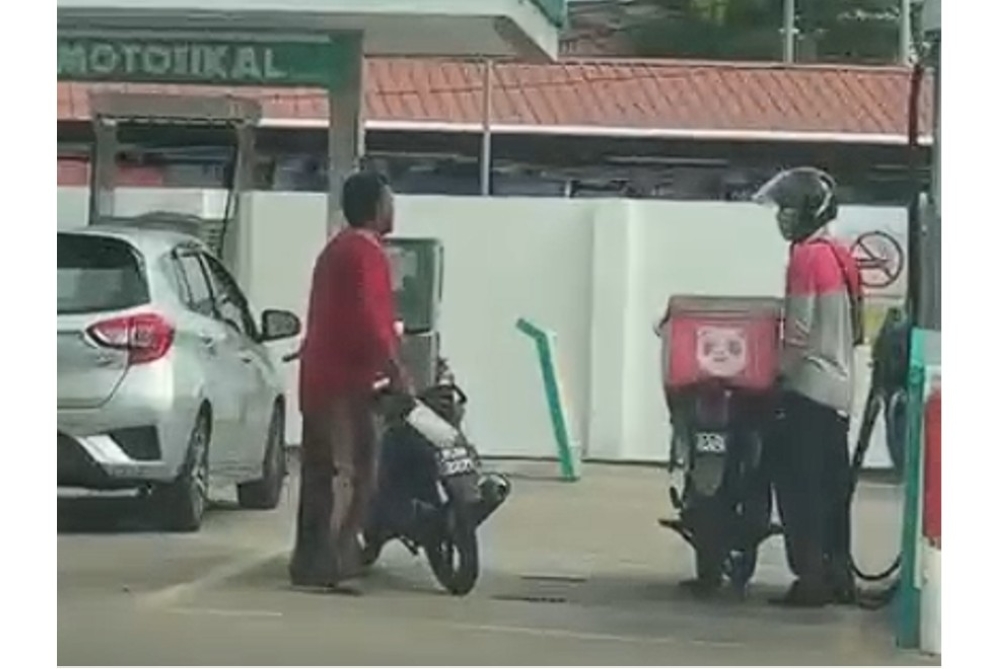
A man was arrested in Kuala Terengganu after allegedly brandishing a meat cleaver and acting aggressively towards a delivery rider at a petrol station, marking another incident of public confrontation involving weapons that has drawn scrutiny to workplace safety and customer disputes in Malaysia.
The incident, which occurred at a petrol station in the state capital, has rekindled concerns about the vulnerability of gig economy workers and service staff who increasingly find themselves in tense situations with members of the public. The arrest underscores an emerging pattern of minor disagreements escalating into dangerous confrontations, particularly when frustration with service delivery intersects with easy access to weapons.
According to police statements, the arrested individual allegedly became agitated during an interaction at the petrol station and displayed the cleaver in a threatening manner towards the delivery worker. Witnesses present at the location reported the confrontation to authorities, enabling a swift response from law enforcement personnel who secured the scene and apprehended the suspect.
Investigations revealed that the man's actions appear to have been triggered by impatience regarding service duration. This motivation reflects a troubling trend where minor delays—whether genuine or perceived—are met with disproportionate and dangerous reactions. The phrase "taking too long" has become an increasingly common precursor to violent incidents, suggesting that public patience and conflict de-escalation skills have reached concerning lows in various community settings.
Terengganu police have launched a comprehensive investigation into the matter, examining the circumstances leading to the confrontation and the suspect's background. Authorities are treating the incident seriously given the weapon involved and the potential for the situation to have resulted in serious harm. The delivery rider, while shaken by the experience, was reported to be unharmed physically, though the psychological impact of such threats remains a significant concern for workers in similar positions.
This arrest comes amid broader discussions about personal safety in Malaysia's gig economy sector, where delivery personnel and service workers operate with minimal protective measures or support systems. The food delivery industry, which has expanded substantially across Southeast Asia in recent years, has become a flashpoint for such incidents, with workers frequently reporting verbal abuse, threats, and occasionally physical violence from customers dissatisfied with service quality or delivery times.
The role of petrol station management in de-escalating such situations also warrants examination. These locations, operating around the clock and serving diverse clientele, are increasingly flashpoints for public disorder. Staff training in conflict management and the availability of security measures could prove instrumental in preventing weapons from being brandished in such spaces.
Malaysian workplace safety advocates have pointed out that incidents like this highlight the need for stronger protections for service workers across various sectors. Unlike traditional employees in regulated workplaces with established safety protocols, gig workers often lack institutional support when confrontations occur. This vulnerability is compounded by the transient nature of gig work, where workers may be unfamiliar with specific locations and unable to quickly access assistance.
The incident also raises questions about weapon accessibility and control in Malaysia. The relative ease with which individuals can carry items like meat cleavers into public spaces, even if nominally for legitimate purposes, creates an environment where minor disputes can escalate catastrophically. Regional comparisons show that stricter regulations around carrying such items in public areas have reduced the severity of spontaneous violence in some Southeast Asian jurisdictions.
For delivery platforms and food service companies operating in Malaysia, this arrest represents another reminder of their responsibility to support worker safety. Several major platforms in the region have begun implementing safety features in their applications, emergency contact systems, and customer rating mechanisms designed to discourage abusive behaviour. However, critics argue these measures remain insufficient to address the systematic nature of worker vulnerability.
The Terengganu incident reflects broader societal challenges related to civility and patience in an increasingly fast-paced, service-oriented economy. As consumer expectations continue to rise and service delivery windows narrow, workers find themselves caught between impossible demands and customer anger. The psychological toll of such confrontations extends beyond the immediate incident, affecting worker morale and retention across the delivery industry.
Looking forward, this case will likely feature in ongoing policy discussions about worker protection, weapon control, and public safety in Malaysia. Local authorities in Terengganu may consider recommendations from this incident when reviewing petrol station safety protocols and public order enforcement in commercial establishments. The arrest serves as a cautionary tale about how quickly everyday frustrations can transform into criminal acts when weapons are present and self-control is absent.

