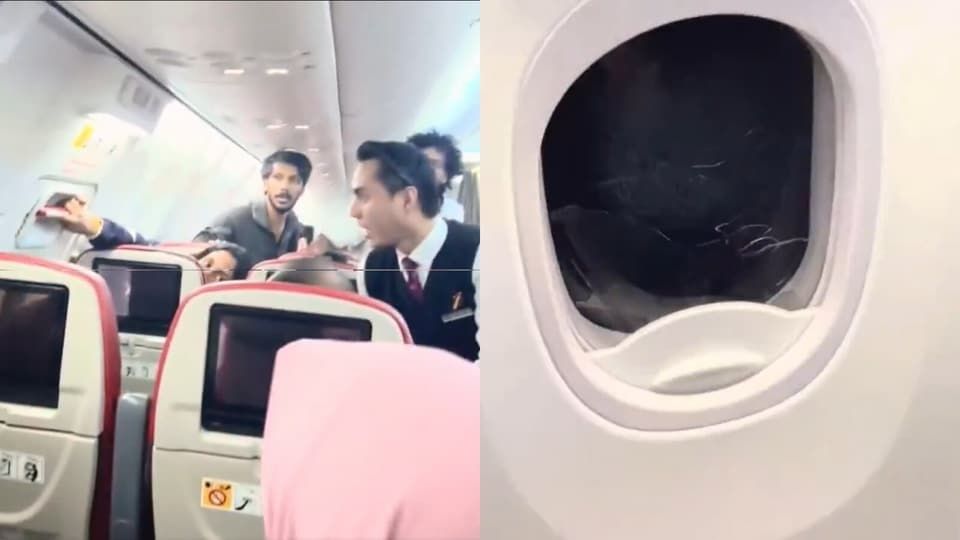
A potentially catastrophic incident was narrowly averted when a passenger attempted to breach the emergency exit of a Batik Air flight operating from Kuala Lumpur to Kochi on Wednesday night. The 36-year-old man, identified as Jamsheer Athanikkal from Palakkad and currently residing in Sreemoolanagaram, was taken into custody by Kerala Police upon the Boeing 737's arrival in Kochi early on Thursday morning. The incident, which unfolded between 9.30pm and 11.05pm while the aircraft was airborne, triggered immediate intervention from fellow passengers and cabin crew who managed to restrain the man before the situation could deteriorate further.
According to the first information report filed by Batik Air's security official at Kochi, Jamsheer used his foot to damage the emergency exit's inner window panel and attempted to force the door open while simultaneously threatening other passengers and crew members. The presence of mind shown by those around him—together with the aircraft's inherent safety design and cabin pressure dynamics—meant the door remained firmly secured despite the assault. A passenger named Matty Mathew, who witnessed the distressing episode firsthand, later shared details on social media describing how most travellers were sleeping when a sudden rush of air through the cabin awoke them to the unfolding chaos.
The structural integrity of modern aircraft, combined with the physics of pressurised cabins, prevented what could have been a catastrophic outcome. At cruising altitude, the differential air pressure between the cabin interior and the external environment creates a force that effectively locks emergency exits in place—a fundamental safety feature that protected all 137 passengers and crew aboard the flight. Mathew's account emphasised that the quick thinking of both passengers and Batik Air personnel proved instrumental in subduing the disruptive passenger before escalation became possible. In his social media post accompanying video footage, he expressed gratitude for the safe resolution of the frightening ordeal.
Police have registered a comprehensive case against Jamsheer under multiple provisions reflecting the severity of the incident. He faces charges under Section 351(3) of the Bharatiya Nyaya Sanhita for criminal intimidation, Section 11A of the Aircraft Act for flouting critical safety and security protocols, and Section 118(e) of the Kerala Police Act for conduct endangering public safety. These legal provisions underline the seriousness with which Indian authorities treat threats to aviation security and the wellbeing of those aboard commercial aircraft. The investigation remains ongoing with authorities gathering additional evidence and passenger statements.
This troubling incident arrives merely two days after another alarming occurrence involving an Indian carrier operating in Southeast Asia, highlighting growing concerns about aviation safety and passenger conduct across the region. Air India flight AI2379, which was returning from Phuket in Thailand bound for Delhi, experienced an unexpected and significant loss of altitude during cruise on Tuesday, forcing the aircraft to make a precautionary landing. The Airbus carrying 137 passengers and eight crew members touched down safely at Delhi, but the incident's aftermath revealed the physical toll on those aboard.
Following the Air India incident, 13 passengers and four crew members required hospital admission for medical evaluation and treatment related to the sudden altitude change. The airline promptly dispatched support teams to the hospitals and maintained continuous contact with affected individuals and their families, providing comprehensive assistance throughout their recovery. Such incidents underscore the unpredictable nature of commercial aviation challenges and the importance of robust safety protocols and emergency response procedures.
The Air India aircraft involved in Tuesday's incident was a seven-year-old Airbus, according to data from flight-tracking service Flightradar24, suggesting that age alone does not necessarily indicate maintenance or safety deficiencies. Air India initiated formal notification procedures with relevant aviation regulators and commenced full cooperation with investigation teams examining the technical circumstances surrounding the sudden altitude loss. The airline additionally informed the aircraft manufacturer, Airbus, ensuring that if any design-related factors emerged, they could be identified and addressed across similar aircraft in the fleet.
These two incidents within a 48-hour window across Indian and Malaysian carriers serving Southeast Asian routes have reignited focus on passenger behaviour protocols and aircraft safety systems. The Batik Air situation represents a rare but documented threat category—deliberate interference with critical aircraft systems by passengers—while the Air India occurrence points to potential technical or operational factors affecting modern aviation equipment. Both developments carry implications for carriers, passengers, and regulators across Southeast Asia and India navigating an increasingly complex aviation landscape.
For Malaysian travellers, the Batik Air incident serves as a sobering reminder of the importance of cooperation with cabin crew instructions and the severity with which aviation authorities treat security breaches. The involvement of quick-thinking passengers in restraining a threatening individual demonstrates that collective passenger awareness contributes meaningfully to flight safety outcomes. Meanwhile, Air India's commitment to supporting affected passengers and cooperating fully with investigators sets a standard expectation for how carriers should respond when safety concerns materialise.
The aviation industry across the region now faces renewed scrutiny regarding passenger screening procedures, in-flight behaviour management, and crew training protocols. While commercial aviation remains statistically among the safest forms of transportation, incidents such as these highlight the importance of maintaining vigilance at every operational level. Regulators in Malaysia, India, and throughout Southeast Asia will likely review current safety procedures to ensure that both deliberate interference and unexplained technical anomalies can be identified and mitigated before they threaten passenger and crew safety.

