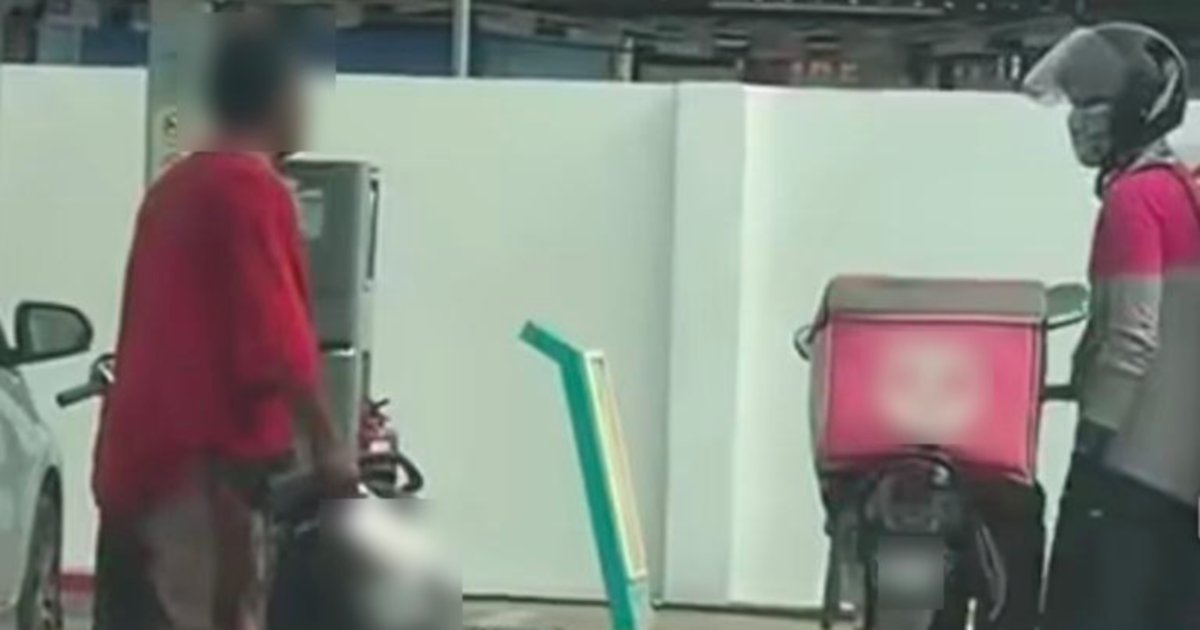
Police in Kuala Terengganu have arrested a man following an alarming incident at a petrol station on Jalan Pasir Panjang, where he allegedly brandished a meat cleaver and behaved threateningly towards a ride-hailing service worker. The confrontation took place during afternoon hours yesterday, prompting swift police intervention at the location.
The incident underscores growing concerns about safety at petrol stations and other public-facing service locations across Malaysia, where workers increasingly find themselves vulnerable to sudden violence and intimidation. Petrol station attendants and ride-hailing personnel, already operating in demanding customer-service roles, face heightened occupational risks that extend beyond standard workplace hazards.
Such aggressive behaviour involving weapons at commercial establishments remains a serious criminal concern for law enforcement agencies throughout the country. The deployment of a meat cleaver—a tool commonly found in domestic and food-service settings—represents a deliberate escalation of any confrontation and signals premeditation on the suspect's part. Authorities treat such incidents with particular gravity given the potential for severe injury or fatality when bladed weapons are involved.
The Kuala Terengganu Police response demonstrates the importance of maintaining visible enforcement presence at high-traffic commercial zones. Petrol stations typically operate long hours and attract diverse clientele, making them frequent flashpoints for public disorder. The rapid apprehension of this suspect reflects procedural protocols established to protect both workers and general public safety.
The victim, employed in the burgeoning ride-hailing sector, represents a growing workforce that operates with minimal physical protection in unpredictable environments. Ride-hailing workers frequently encounter passengers and bystanders in unfamiliar settings, often working irregular shifts that limit access to immediate assistance. This particular incident highlights how service workers can face danger even during off-duty activities when encountered by aggressive individuals in public spaces.
Weapon-related offences at commercial premises remain a persistent challenge for Malaysian law enforcement. Police departments nationwide record regular incidents involving sharp implements used to threaten or assault service staff, with outcomes ranging from minor injuries to tragic fatalities. The willingness of individuals to produce and wield weapons during minor disputes suggests broader societal issues around conflict resolution and impulse control.
Investigations into such cases typically examine circumstances preceding the confrontation, the suspect's mental state, and potential provocation factors. Authorities must determine whether the incident arose from a customer dispute, personal grievance, or other motivating factor. Evidence collection and witness statements prove crucial in building prosecutorial cases and establishing clear records of aggressive behaviour.
The location on Jalan Pasir Panjang, a commercial corridor in Kuala Terengganu, represents the type of established public thoroughfare where such incidents can rapidly escalate tensions and disrupt normal business operations. Petrol stations along major routes serve as essential service nodes where thousands of motorists and service providers interact daily, making them natural focal points for community safety initiatives.
This arrest contributes to ongoing dialogue about workplace violence in Malaysia's expanding service economy. Ride-hailing platforms, food delivery services, and petrol station operations have created millions of jobs, yet protection mechanisms for these workers remain inconsistent and sometimes inadequate. Industry stakeholders and government agencies continue developing safety protocols, though implementation varies significantly across operators and regions.
The broader implications extend to questions about how Malaysian society addresses interpersonal conflicts and manages impulse control. Access to weapons, conflict de-escalation training, and mental health support all factor into preventing such incidents. Community safety ultimately depends on both institutional responses through law enforcement and individual commitment to peaceful conduct in shared public spaces.
Police investigations will determine appropriate charges and prosecution strategies in this case. Brandishing weapons represents a serious offence under Malaysian law, with potential consequences including imprisonment and financial penalties. The suspect's arrest sends an important signal that authorities maintain zero tolerance for threatening behaviour targeting service workers and the general public.
For petrol station operators and ride-hailing platforms operating throughout Terengganu and beyond, incidents such as this reinforce the importance of security measures, staff training, and reporting protocols. Many establishments have implemented CCTV systems, emergency communication devices, and conflict-management training to mitigate risks. However, the persistent occurrence of violent incidents suggests that preventive strategies require continuous refinement and greater resource allocation.
Moving forward, this case may inform broader safety reviews within the petrol retail sector and ride-hailing industry. Public awareness campaigns encouraging reporting of aggressive behaviour, combined with consistent law enforcement response, help establish expectations that violent conduct carries real consequences. The arrest in Kuala Terengganu demonstrates that authorities take such threats seriously and remain committed to protecting workers who serve the public.

