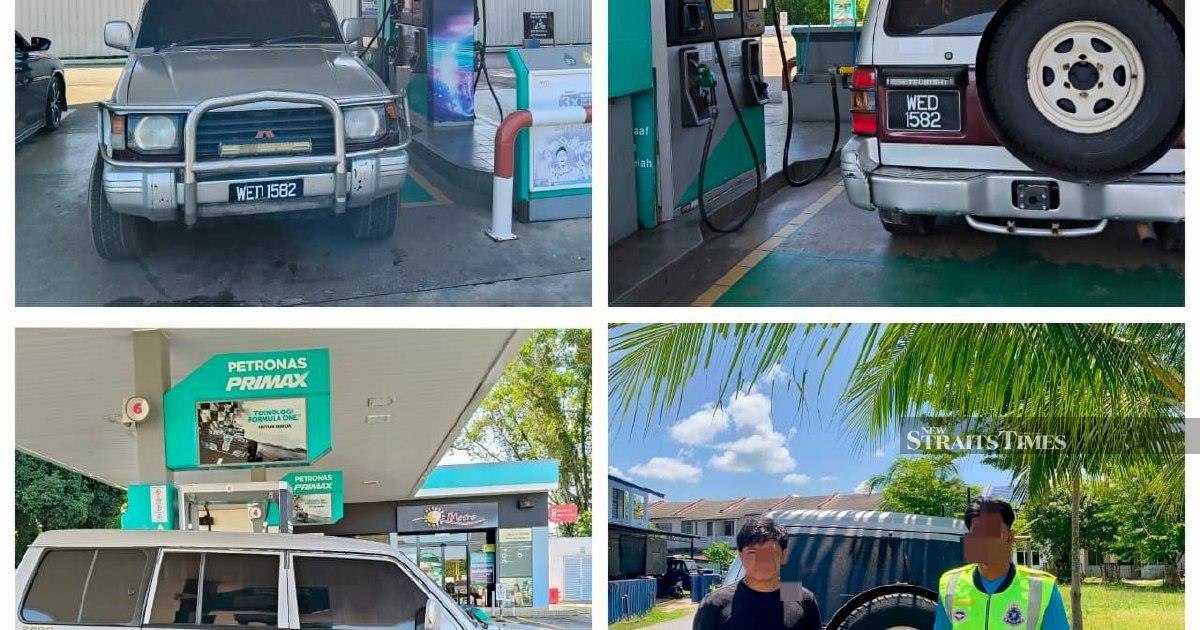
A 36-year-old male resident was taken into custody at a petrol station in Rantau Panjang, Kelantan, yesterday following an investigation into suspected fuel smuggling activities destined for Thailand. The arrest marks the latest intervention by law enforcement in ongoing operations to combat the illicit cross-border trade in petroleum products, a persistent challenge along Malaysia's northern frontier.
According to law enforcement officials, the suspect had been identified through surveillance operations as repeatedly purchasing petrol in unusually large quantities at the retail pump. The pattern of his visits to the petrol station attracted the attention of authorities, who escalated their monitoring after observing behaviour consistent with coordinated smuggling activities. Officers intercepted the individual during what appeared to be another transaction, leading to his detention for questioning and further investigation.
Rantau Panjang, situated along the Kelantan-Thailand border, has long served as a focal point for cross-border commercial activities. The town's strategic location and high volume of legitimate trade have historically made it an attractive entry and exit point for both legal and illegal commerce. Petrol smuggling in particular flourishes in border communities where price differentials between Malaysian and Thai fuel create significant financial incentives for illicit traders seeking to exploit regulatory gaps and tariff disparities.
The phenomenon of fuel smuggling across Southeast Asian borders remains economically significant. Malaysia's relatively subsidised or controlled fuel pricing compared to regional neighbours has made domestic petrol stocks attractive targets for smugglers intent on profiting from price arbitrage. When individuals execute multiple small purchases rather than attempting one large transaction, they typically seek to evade detection thresholds and surveillance mechanisms designed to flag suspicious bulk acquisitions. This methodical approach suggests a level of coordination and planning within the suspected smuggling network.
Enforcement agencies have intensified their attention on petrol station activities in border regions, recognising that retail outlets serve as critical chokepoints where smuggling operations frequently interface with the legitimate economy. By monitoring transaction patterns and establishing surveillance protocols at high-risk locations, authorities aim to disrupt supply chains before contraband crosses international boundaries. The arrest at Rantau Panjang reflects this strategic shift towards preventive intelligence gathering rather than reactive enforcement downstream.
Thailand has emerged as both a source and destination market for Malaysian petroleum products. The Thai market's different price structure and fuel specifications create demand for imported petrol, whilst simultaneously making the Thai border an attractive staging ground for goods entering Malaysia. Smugglers capitalise on loose coordination between national customs agencies and the sheer volume of daily border crossings, which can number in the tens of thousands at major checkpoints like Rantau Panjang.
The economic motivation underpinning fuel smuggling extends beyond individual profit margins. Well-organised smuggling networks often operate as sophisticated enterprises with layered supply chains, financial intermediaries, and distribution networks. A single individual arrested at a petrol pump may represent merely the retail-facing component of a more extensive operation. Investigations typically seek to establish connections between field operatives and command structures directing the movement of contraband, particularly concerning given the substantial capital requirements involved in systematic fuel trafficking.
For Malaysian readers, fuel smuggling carries broader policy implications. Repeated losses of petroleum products through illicit cross-border channels represent foregone government revenue and distortions to legitimate fuel markets. The Petroliam Nasional Berhad (Petronas) supply chain experiences chronic leakage at border regions, with estimates suggesting significant annual volumes escape official accounting. These losses ultimately affect fuel pricing mechanisms and government budgeting for energy subsidies and infrastructure investment across Peninsula Malaysia and East Malaysia.
The case also illustrates the operational challenges facing law enforcement in managing porous land borders across Asean territory. Malaysia shares extensive frontier regions with four countries—Thailand, Singapore, Brunei, and Indonesia—each presenting distinct smuggling environments and enforcement complexities. Border communities necessarily depend on balanced approaches reconciling legitimate cross-border commerce with security imperatives, a tension acutely evident in petrol trading zones where retail operations simultaneously serve smugglers and ordinary consumers.
Authorities have indicated that investigations into the Rantau Panjang arrest continue. Investigators are reportedly seeking to establish the network's structure, identify intended recipients in Thailand, determine the scale of prior smuggling operations, and locate any storage facilities or transshipment points used by the suspected organisation. Such investigations typically reveal connections to other criminal enterprises, including money laundering networks and corruption within border agencies themselves.
Regional cooperation between Malaysia and Thailand on border security has strengthened in recent years through formal mechanisms including the Malaysia-Thailand Border Committee. However, the persistence of fuel smuggling demonstrates that diplomatic cooperation and formal agreements require substantial resources, consistent implementation, and coordination between civilian and military agencies on both sides of the frontier. The arrest at Rantau Panjang, whilst operationally significant, represents merely one intervention within an ongoing enforcement challenge requiring sustained commitment and evolving tactical approaches as smuggling networks adapt to detection mechanisms.

