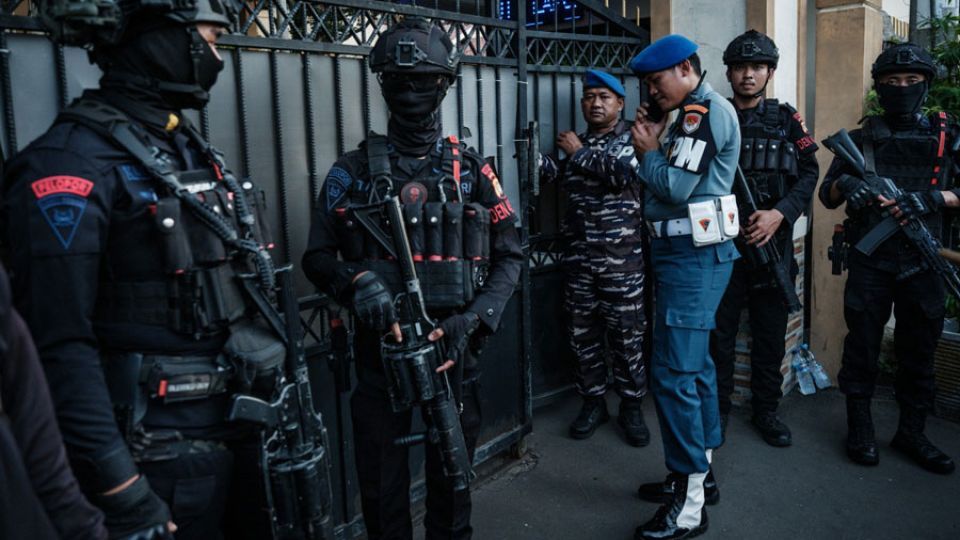
A 34-year-old man has been taken into custody by Greater Jakarta Police following a bomb threat that upended the first day of the academic year at SD Srengseng Sawah 15 Pagi state elementary school in Jagakarsa, South Jakarta. The suspect, identified only by initials MY, was apprehended near the school shortly after authorities received reports of a WhatsApp message claiming explosives had been planted at eleven separate locations throughout the campus.
The threatening communication was directed at school teachers and administrative personnel during a flag-raising ceremony on Monday morning while students were gathered for the traditional school opening event. Once recipients became aware of the message following the ceremony, they immediately reported it to authorities, triggering a swift response from multiple law enforcement agencies. The notification led to the urgent evacuation of students and staff from the premises as a precautionary measure.
Responding to the apparent crisis, police deployed personnel from the Gegana bomb disposal unit—the specialized division responsible for handling explosive devices—alongside operatives from Densus 88, Indonesia's elite counterterrorism task force. These units conducted a comprehensive sweep of the entire school complex, methodically examining the eleven locations mentioned in the threat. The thorough search, which would have consumed several hours, ultimately found no explosives or any evidence of bomb-making materials anywhere on the school grounds.
Greater Jakarta Police spokesperson Sr. Comr. Budi Hermanto confirmed that investigators had secured the suspect and begun questioning him at the South Jakarta Police headquarters. According to Budi's statement, MY is a resident living in the vicinity of the school, though authorities have not disclosed further details about his background, occupation, or prior history. The spokesman noted that investigators are actively pursuing lines of inquiry into the suspect's motivations and the reasoning behind his alleged actions.
Jagarkarsa Police chief Comr. Nurma Dewi provided additional operational details about how the threat unfolded. The WhatsApp message had been transmitted to multiple recipients among the school's teaching and administrative staff during the morning assembly, creating confusion and concern at what should have been a routine start to the academic calendar. The timing of the message—delivered while students were engaged in the flag-raising ceremony—suggests deliberation in the choice of when to maximize disruption.
The incident reflects growing concerns across Indonesia about hoax bomb threats targeting schools and public institutions, a phenomenon that has become increasingly common in recent years despite severe legal consequences. Such threats impose substantial costs on affected communities, requiring mobilization of emergency services, causing trauma to students and families, and disrupting educational schedules. The involvement of Densus 88—typically reserved for genuine terrorism investigations—underscores the seriousness with which authorities respond to such claims, even when later determined to be false.
For Malaysian observers, the Jakarta incident provides a cautionary reminder about the vulnerability of educational institutions to such disruptions. While Malaysia has not experienced the same frequency of school-based bomb threats as Indonesia, the interconnected nature of Southeast Asian societies means that security trends in one country often foreshadow developments elsewhere. Schools across the region have increasingly implemented protocols for handling threats, though the balance between security responsiveness and maintaining a conducive learning environment remains challenging.
The location in Jagakarsa, a densely populated residential area in South Jakarta, highlights how such incidents affect ordinary neighborhoods and families. For parents in the area, the opening day disruption represents both immediate anxiety and longer-term concern about their children's safety at school. The fact that no explosives were ultimately discovered offers reassurance, yet the psychological impact of the threat and evacuation remains real for all involved.
Investigators are examining whether MY acted alone or whether the threat was coordinated with others, information not yet disclosed by police. Understanding the suspect's motivation—whether personal grievance, mental health crisis, attention-seeking, or something more serious—will be crucial for authorities to assess the genuine level of risk and to inform how similar future threats should be handled. The distinction between genuine terrorism, hoax threats, and cries for help significantly affects both the investigation approach and potential legal consequences.
As the case proceeds through Indonesia's criminal justice system, prosecutors will need to establish whether MY sent the WhatsApp message himself or obtained it from another source. If charged, he could face serious penalties under laws against spreading false information intended to cause public fear, a category of offense that carries substantial prison sentences. The case will likely set a precedent for how Indonesian courts handle school-based threat incidents, potentially influencing how similar cases are prosecuted nationwide.

