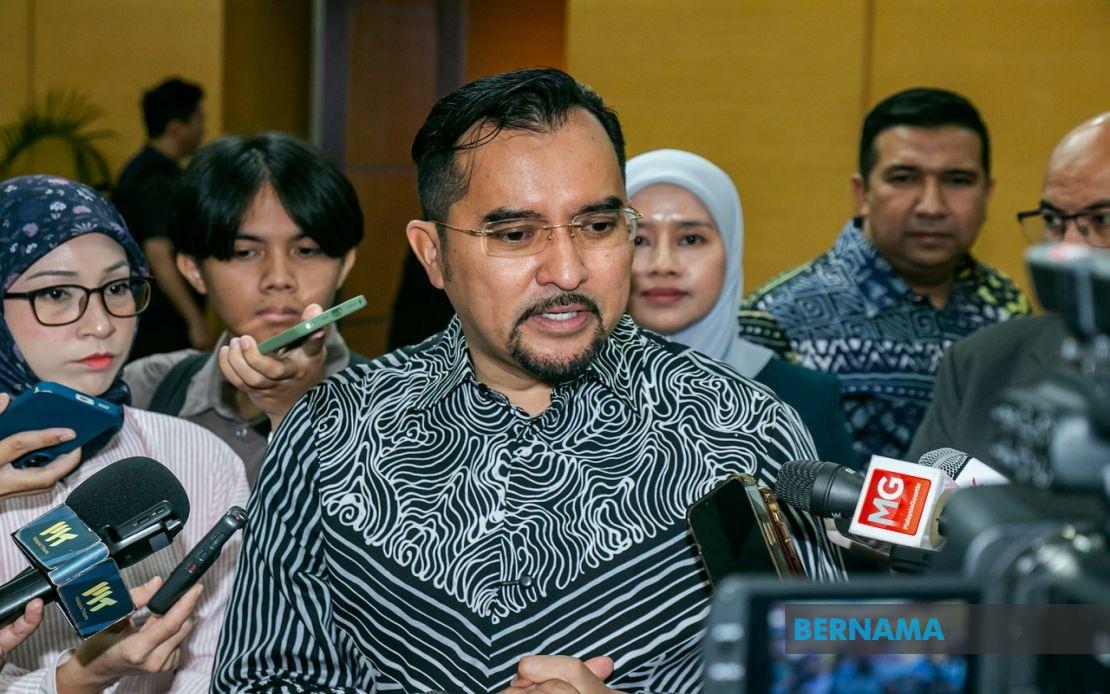
The governance transformation of Majlis Amanah Rakyat has reached a critical juncture, with the proposed MARA Bill 2026 advancing toward parliamentary submission this November. The initiative represents a significant institutional recalibration at the agency responsible for advancing Malay and Bumiputera interests across Malaysia's economic landscape. MARA chairman Datuk Asyraf Wajdi Dusuki outlined the legislative framework during remarks at a sponsored pre-departure programme in Kuala Lumpur, confirming that the Bill has cleared Cabinet policy approval and now awaits formal tabling before lawmakers.
The centrepiece of this legislative modernisation focuses on substantially redefining the chairman's role within MARA's organisational hierarchy. Rather than operating as an executive administrator with broad discretionary authority, the reformed position emphasises checks and balances through narrowed responsibilities concentrated on Board chairing and policy determination. This represents a marked departure from the MARA Act 1966, the foundational legislation that has governed the institution for nearly six decades. The recalibration acknowledges that institutional strength depends fundamentally on structural separation between oversight and operational control, principles now recognised globally as essential components of sound corporate administration.
Datuk Asyraf Wajdi characterised the Bill as a deliberate institutional investment rather than a personal political initiative. His framing of the effort as legacy work emphasises continuity of institutional purpose beyond any individual tenure. The chairman articulated a vision wherein MARA emerges as an organisation capable of withstanding governance failures through built-in safeguards, transparent operational boundaries, and reduced scope for discretionary decision-making that historically created vulnerabilities to misuse. This philosophical underpinning distinguishes the Bill from purely technical legislative updates, positioning it instead as a principled response to documented institutional vulnerabilities.
Corruption prevention mechanisms feature prominently throughout the Bill's architecture, addressing what officials identify as persistent challenges requiring structural solutions rather than periodic enforcement actions. The legislative framework aims to eliminate circumstances permitting abuse of power, governance weaknesses, misappropriation of resources, operational irregularities, financial leakages, and systemic inefficiencies that have periodically damaged institutional credibility. By embedding these safeguards within statutory provisions rather than relying on administrative directives or chairman discretion, the framework seeks permanent corrective embedding within MARA's foundational legal structure.
The emphasis on international standards and contemporary corporate practices reflects Malaysia's broader integration into global governance expectations. Approximately eighty percent of the Bill's substantive provisions focus explicitly on good governance architecture aligned with internationally recognised benchmarks. This approach signals that MARA's reform trajectory follows global institutional development patterns rather than representing isolated national experimentation. For Malaysian readers familiar with corporate governance discussions in commercial contexts, the principles now being embedded in MARA legislation will appear conceptually familiar, though their application to government-linked entities managing Bumiputera advancement represents a notable institutional evolution.
Datuk Asyraf Wajdi's insistence that the legislative initiative concerns institutional perpetuation rather than individual preference carries practical significance for implementation prospects. When agency leadership frames governance reforms as self-limiting measures reducing their own authority, parliamentary consideration becomes less encumbered by perceptions of partisan motivation or leadership self-interest. This rhetorical positioning may facilitate smoother legislative passage, particularly among lawmakers concerned that governance reforms sometimes mask efforts to consolidate rather than distribute organisational authority.
The temporal context of legislative drafting merits examination, as the Bill's development has spanned periods of broader Malaysian institutional accountability discussions. The parallel emergence of governance enhancement across multiple government entities suggests coordinated institutional modernisation rather than isolated agency initiative. For observers tracking Malaysian institutional development, MARA's Bill 2026 represents one data point within broader patterns of governance rationalisation affecting Bumiputera-focused agencies and government-linked entities navigating contemporary accountability expectations.
Datuk Asyraf Wajdi's commentary regarding legislative evolution across decades provides contextual framing for why 1966-era statutory provisions require fundamental revision. The argument that institutional governance arrangements necessarily adapt as operational environments transform reflects sound legislative theory, though practical implementation often encounters resistance from stakeholders benefiting from existing arrangements. His acknowledgment that provisions deemed appropriate in 2026 may require future updating demonstrates intellectual humility regarding legislative permanence while justifying current reform intervention as responsive to contemporary governance requirements.
The November tabling timeline suggests parliamentary calendars now accommodate substantive consideration of the Bill before year-end legislative sessions conclude. This scheduling allows sufficient time for cross-party engagement, committee review, and potential amendments before formal passage. For MARA stakeholders including beneficiaries, staff members, and monitoring agencies, the November introduction marks a transition point wherein the Bill moves from administrative preparation into public legislative scrutiny where broader Malaysian stakeholders engage substantive governance provisions.
Implementation implications extend across MARA's operational landscape once parliamentary passage occurs. Board composition, decision-making procedures, financial oversight arrangements, and appointment processes will reflect the legislative framework's requirements. Institutional personnel accustomed to existing authority distributions may experience adjustment periods as new governance provisions take operational effect. The transition represents a significant institutional recalibration affecting not merely formal structures but practical daily operations across MARA's programmes serving Malay and Bumiputera constituencies.
Regional observers tracking governance developments across Southeast Asian government-linked entities may view the MARA Bill 2026 as illustrative of Malaysian institutional adaptation patterns. As Bumiputera-focused agencies increasingly operate within global scrutiny contexts and integrate with international development frameworks, governance modernisation becomes strategically significant for maintaining institutional legitimacy and operational effectiveness. The Bill therefore carries implications beyond MARA's immediate constituencies, potentially influencing how comparable institutions across the region approach governance enhancement and leadership authority realignment.

