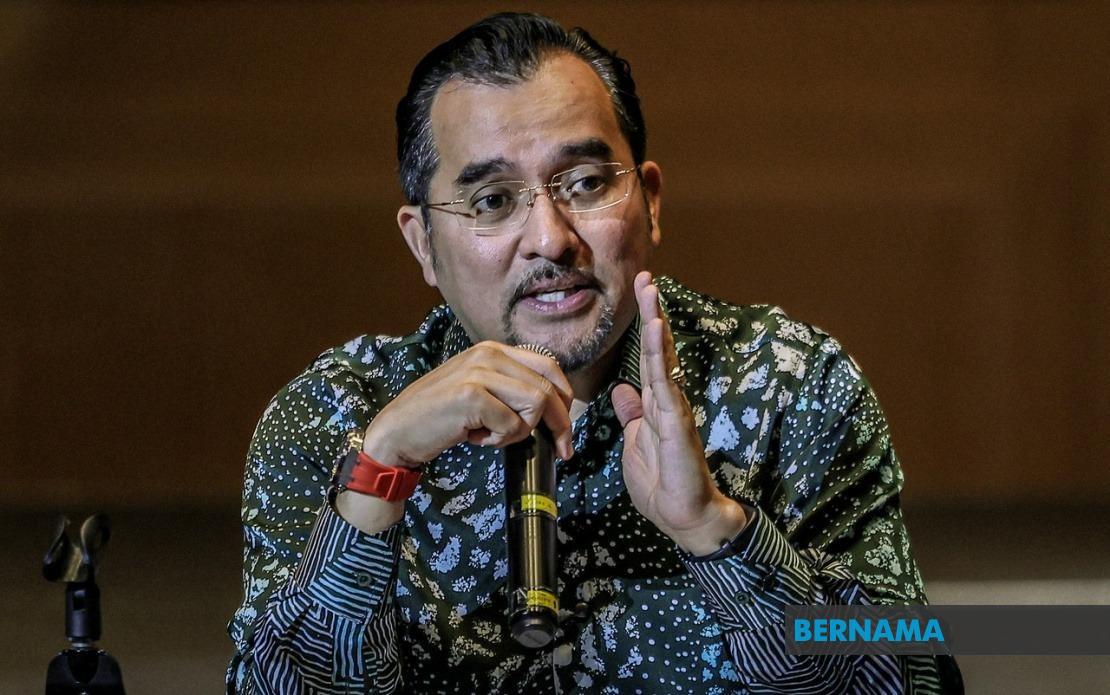
Malaysia's Majlis Amanah Rakyat is preparing sweeping legislative reforms aimed at strengthening institutional controls and preventing governance failures that have plagued the body in recent years. The proposed MARA Bill 2026, which has received Cabinet approval in principle and is scheduled for Parliament before the end of 2024, represents a fundamental restructuring of how the organisation operates. According to MARA chairman Datuk Dr Asyraf Wajdi Dusuki, approximately four-fifths of the new legislation concentrates specifically on corporate governance architecture, reflecting a deliberate shift toward institutional accountability and transparency at Southeast Asia's largest Bumiputera development agency.
The motivation behind these reforms stems from a troubling pattern of institutional weakness. MARA has encountered repeated incidents involving misuse of authority, structural deficiencies in management oversight, improper use of funds, operational irregularities, resource leakages, and financial waste. These failures have exposed the organisation to considerable reputational and financial risk at precisely the moment when it should be strengthening its capacity to champion Malay and Bumiputera economic advancement. The new legislation aims directly to halt such recurrences by establishing clearer lines of accountability and decision-making authority throughout the institution's hierarchy.
Among the Bill's most significant structural changes is a fundamental rebalancing of executive power. Currently, the MARA chairman holds sweeping authority across both strategic direction and day-to-day operational decisions. Under the revised framework, the chairman's role becomes more narrowly defined, concentrating on Board leadership and high-level policy determination while surrendering operational control to management structures. This distinction mirrors international best practice in corporate governance, where board chairpersons provide oversight and strategic guidance rather than wielding executive authority. For Malaysian readers familiar with corporate governance debates domestically, this represents a deliberate adoption of separation-of-powers principles long advocated by institutional investors and regulatory authorities.
The Bill introduces mandatory competency standards for Board members through formal "fit and proper" criteria, a mechanism long used in Malaysia's financial sector but novel for MARA's governance framework. Coupled with term limits for directors, these provisions prevent indefinite tenure and accumulated personal influence within the organisation. Such measures create natural rotation cycles that refresh Board composition and reduce the accumulation of institutional knowledge concentrated among entrenched figures—a recognised vulnerability in many Malaysian public institutions. The imposition of fixed terms also creates psychological incentives for directors to demonstrate measurable achievement within defined timeframes rather than pursuing indefinite entrenchment.
Financial oversight receives particular emphasis throughout the proposed legislation. The Bill tightens financial governance protocols and procurement methodologies to align with both national standards and internationally recognised best practices. This dual-standard approach reflects Malaysia's integration into global investment networks, where foreign partners and institutional investors increasingly condition engagement on international-grade compliance frameworks. For Malaysian companies and investors dealing with MARA subsidiaries or partnership structures, these enhanced standards provide greater confidence in financial reporting reliability and transactional transparency.
The Bill establishes a formal architecture of mandatory Board committees addressing distinct governance domains. The proposed Audit Committee will oversee financial reporting integrity and internal control effectiveness. A separate Investment Committee will guide capital allocation and portfolio strategy. Finance and Governance committees will coordinate budgetary discipline and compliance frameworks. Additionally, a Risk Committee will systematically identify, evaluate, and mitigate operational hazards across MARA's diverse portfolio. This compartmentalised committee structure allows focused expertise while preventing any single group from dominating institutional decision-making—a structural safeguard against governance concentration.
For the first time, MARA's governance framework will incorporate explicit religious oversight through a dedicated Syariah Committee. This innovation acknowledges that as a Bumiputera-focused institution, MARA operates within Malaysia's Islamic framework and should ensure all operations comply with Syariah principles. The committee's establishment represents an institutional recognition of values alignment—ensuring that governance practices and business decisions reflect the cultural and religious identity foundational to MARA's social mandate. This approach offers a model potentially relevant to other Malaysian statutory bodies seeking to integrate faith-based governance frameworks with modern institutional practice.
These reforms represent the culmination of systemic restructuring undertaken since Asyraf Wajdi assumed the MARA chairmanship on March 10, 2023. His administration established a dedicated task force chaired by former Bank Negara Malaysia governor Tan Sri Muhammad Ibrahim, whose central banking expertise proved invaluable in designing institutional frameworks meeting international financial standards. The task force's work extended across multiple domains: tightening financial discipline throughout MARA's operations, commissioning forensic audits of subsidiary companies to expose hidden vulnerabilities, consolidating internal audit functions across MARA and MARA Corp to eliminate oversight gaps, and restructuring the procurement division to prevent irregular purchasing practices.
Management reporting systems have been substantially upgraded to track financial performance against international benchmarks. Monthly financial performance reports now flow to the MARA Council, ensuring decision-makers possess timely information on institutional financial health. This real-time visibility contrasts sharply with historical practices where financial information often reached senior leadership tardily or incompletely—a common vulnerability in Malaysian public institutions lacking systematic reporting disciplines. The adoption of such frameworks represents a deliberate modernisation toward practices standard in sophisticated corporations but sometimes absent in statutory bodies.
Broader context for these reforms emerged in June when Asyraf Wajdi articulated the legislative amendment's ultimate rationale: ensuring MARA's statutory framework remains relevant and sufficiently robust to advance the Bumiputera development agenda effectively. Rather than treating governance reform as peripheral housekeeping, this framing positions institutional strengthening as directly enabling MARA's core economic development mission. Stronger governance, in this logic, translates into more reliable capital deployment, reduced resource waste, enhanced credibility with private sector partners, and ultimately greater capacity to generate Bumiputera economic advancement.
For Malaysian observers, these reforms signal growing recognition that public institutional effectiveness depends fundamentally on governance architecture and accountability mechanisms. The MARA Bill 2026 represents not merely technical legislative adjustment but a philosophical shift toward treating institutional structure as integral to institutional purpose. The measures reflect international best practice integration while remaining calibrated to Malaysian constitutional and cultural contexts. As Parliament considers this legislation later in 2024, the Bill will likely receive close scrutiny regarding implementation feasibility and whether the proposed mechanisms actually prevent recurrence of the governance failures that necessitated this comprehensive restructuring.

