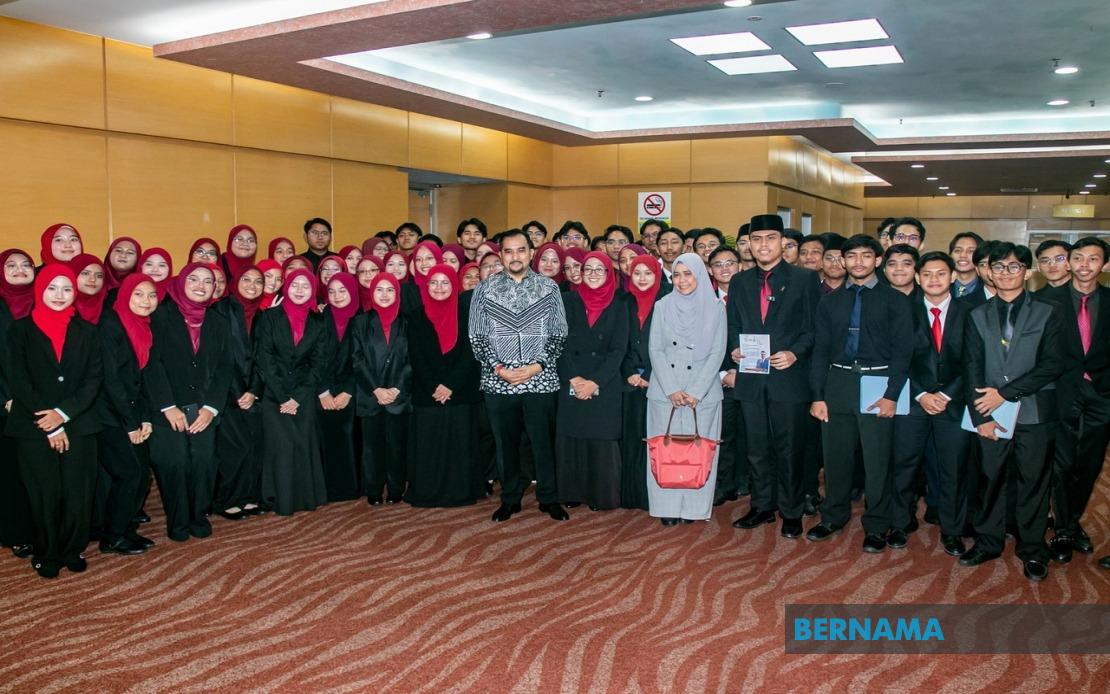
The Majlis Amanah Rakyat has taken a significant step to expand educational opportunities for disadvantaged Malaysians by reinstating its medical sponsorship scheme at Al-Azhar University in Cairo, reversing a decision made in 2019 that had left the programme dormant for seven years. The inaugural cohort of 78 medical students will begin their five-year courses this academic year, representing a renewed commitment to providing affordable pathways into one of the world's oldest and most respected Islamic universities.
The resurrection of this programme followed formal approval from Malaysia's Cabinet, signalling government backing for the initiative to broaden access to medical training beyond domestic institutions. MARA chairman Datuk Dr Asyraf Wajdi Dusuki disclosed that the financial model underpinning the scheme makes it economically compelling for both the agency and participating students. Each candidate will require approximately RM350,000 to cover tuition and residential expenses across the entire course duration, a figure that reflects a substantial 50 per cent reduction negotiated directly with the Egyptian university.
The cost advantage becomes even more apparent when compared against pursuing medicine within Malaysia's private sector. Domestic medical education can stretch between RM700,000 and RM800,000 per student, meaning the Al-Azhar pathway offers savings of up to 50 per cent while providing access to an institution with centuries of medical tradition. This differential makes the Egyptian option particularly attractive for MARA, which operates with a mandate to serve bumiputera and lower-income communities who might otherwise struggle to afford professional medical training.
Beyond the resumption of the Al-Azhar medical initiative, MARA is orchestrating a broader wave of overseas placements involving 600 students who have completed their preparatory studies at the agency's residential colleges. These scholars hail from three major MARA institutions: Kolej MARA Seremban in Negeri Sembilan, Kolej MARA Banting in Selangor, and Kolej MARA Kuala Nerang in Kedah, establishing a nationwide distribution reflecting MARA's presence across Malaysian states. The cohort will disperse progressively beginning the following week to pursue undergraduate and postgraduate degrees across a diverse array of countries and academic systems.
The geographical spread of placements underscores the cosmopolitan ambitions embedded within MARA's current strategy. Students will pursue opportunities in New Zealand, Canada, Australia, South Korea, the United Kingdom, and Egypt, exposing Malaysian scholars to multiple educational philosophies and professional cultures. This international distribution helps build networks across diverse knowledge economies while reducing concentration risk in any single country's immigration or labour policies—a prudent consideration given the global competition for talent.
Within this cohort of 600 sponsored students, MARA has achieved notable success in securing placements at elite institutions that command significant competitive advantage in the global marketplace. Eleven students have earned entry to Imperial College London, one of the world's most selective engineering and science universities, an outcome that reflects both the calibre of preparation at MARA colleges and the international reputation these institutions have developed. The broader picture reveals even stronger penetration into the world's academic elite: MARA reports that 40 students across its sponsored cohort have gained admission to universities ranked within the global top 10, whilst 107 have been accepted to institutions in the top 20.
These placements in world-leading universities carry significant implications for Malaysia's human capital development and soft power projection. Graduates of such institutions typically populate international organisations, multinational corporations, and research bodies, positioning Malaysia within global knowledge networks. When these scholars eventually return or maintain professional ties to Malaysia, they bring expertise, international standards, and collaborative relationships that strengthen the nation's competitive positioning in innovation and professional services.
The decision to resurrect the Al-Azhar medical programme also reflects broader policy recalibration regarding international education partnerships. The seven-year hiatus suggests previous cost or quality considerations, but the return to this arrangement indicates a reassessment of Al-Azhar's value proposition within Malaysia's educational ecosystem. The university's standing as a premier Islamic institution with extensive medical facilities and faculty expertise makes it particularly relevant for bumiputera students seeking to combine professional excellence with Islamic scholarly tradition.
For MARA itself, the expansion of overseas placements addresses a critical institutional objective: demonstrating to government and the public that its role in developing Malaysia's professional class remains vital and cost-effective. By securing top-tier placements while managing per-student expenditure through international partnerships, MARA justifies continued public investment in its operations. The agency's ability to negotiate price reductions from prestigious universities also reveals institutional sophistication in managing international relationships and procurement strategies.
The timing of these announcements, which saw Prime Minister Datuk Seri Anwar Ibrahim's personal approval highlighted, suggests political recognition of educational investment's electoral and developmental significance. Bumiputera access to overseas education remains a sensitive policy domain, and MARA's expansion addresses constituencies expecting opportunities in professional fields. The coordination across multiple MARA colleges also demonstrates systematic capacity to process, prepare, and place large student cohorts effectively.
For Malaysian families eligible for MARA sponsorship, these developments represent tangible opportunities to access world-class medical and professional education at costs significantly below market rates. Students from less affluent backgrounds now have realistic pathways to institutions that would otherwise remain inaccessible, potentially transforming professional trajectories and lifetime earning potential. The Al-Azhar medical programme particularly attracts those seeking Islamic-compatible learning environments whilst pursuing internationally recognised qualifications.
The broader context involves competition among Southeast Asian nations for educational partnerships and overseas placement opportunities. Thailand, Indonesia, and the Philippines similarly sponsor students internationally, making Malaysia's ability to secure top-tier university places a matter of regional competitive positioning. MARA's success in placing students at Imperial College and other elite institutions demonstrates Malaysian educational quality and institutional relationships that peers may lack.
Looking forward, the sustainability of these programmes depends on continued government funding, university partner stability, and graduates' successful career outcomes that justify the investment. Monitoring employment patterns and professional contributions of MARA-sponsored scholars will be essential for evaluating programme effectiveness and informing future resource allocation decisions. The relaunch of Al-Azhar medical training also opens possibilities for programme expansion if initial cohorts perform successfully, potentially establishing this as a permanent pathway for Malaysian medical aspirants.

