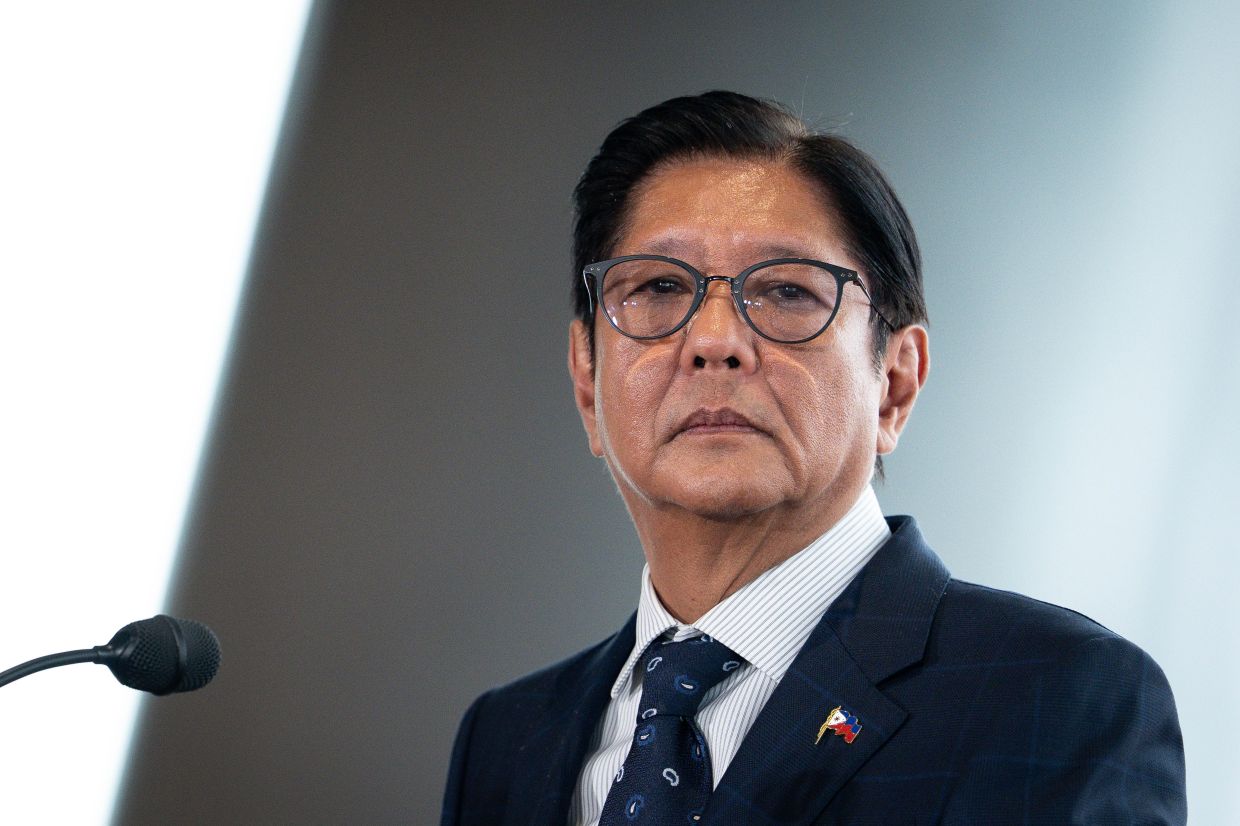
Philippine President Ferdinand Marcos Jr stands at a critical juncture in his presidency as he prepares to address Congress on Monday, tasked with reversing an economic decline and rebuilding public confidence that has been severely damaged by a massive corruption scandal. A year prior, when Marcos delivered his annual State of the Nation address, he stunned the nation by exposing billions of dollars siphoned through fraudulent flood-control projects. Rather than bolstering his image as a corruption fighter—a central theme of his campaign—the disclosure triggered widespread pessimism that rippled through the economy, causing consumers and businesses to retrench and infrastructure initiatives to stall.
The irony surrounding Marcos is stark and politically consequential. His late father, former dictator Ferdinand Marcos Sr, built a reputation for accumulating ill-gotten wealth during two decades of authoritarian rule. The younger Marcos campaigned as a reformer committed to transparency and accountability, yet his own administration's revelation of systemic graft has undercut that narrative. Public sentiment has shifted from skepticism to outright frustration, with citizens questioning whether meaningful action will follow the exposure of malfeasance. Political analysts note that absent concrete steps toward prosecution and remedial infrastructure work, Marcos risks cementing a perception that his administration tolerates or enables the very corruption it purports to combat.
The economic consequences of the scandal have been substantial and visible in hard data. Growth forecasts for 2026 have been slashed dramatically to between 3.5 and 4.5 percent, down from expectations approaching 6 percent before geopolitical tensions in the Middle East compounded domestic headwinds. In the first quarter of 2026, gross domestic product expanded at merely 2.8 percent, a sharp deceleration from the 5.5 percent pace recorded in the quarter following last year's address. This performance now trails that of regional peers including Malaysia and Singapore, a concerning signal for a nation seeking to position itself as a growth engine within Southeast Asia. The benchmark Philippine stock index has fallen 1.5 percent since Marcos's previous address, while the peso has depreciated nearly 8 percent against the US dollar, reflecting investor anxiety about both governance and macroeconomic fundamentals.
At just two years remaining in his six-year term, Marcos faces a compressed timeframe to demonstrate effectiveness. His political position has been further weakened by an intensifying rivalry with Vice President Sara Duterte, who faces Senate trial on graft allegations and accusations of threatening the president's life. Should Duterte secure acquittal, she emerges as a formidable contender for the 2028 presidential election, potentially fragmenting the ruling coalition further. Adding to Marcos's challenges, his own sister, Senator Imee Marcos, has repeatedly distanced herself from his policies, signaling fractures within his political base that threaten legislative cooperation and executive authority.
Domestic vulnerabilities compound the administration's difficulties. A broken dike in Calumpit, located 50 kilometres from Manila, remains unfixed, while a sheet pile project intended to mitigate flooding has barely commenced. Local officials express bitter frustration over the slow pace of remediation work, particularly among communities most vulnerable to typhoons and flooding. This tangible reminder of governance failure extends beyond mere symbolism; it represents broken promises to citizens whose lives and livelihoods depend on functioning infrastructure. The perception that corruption investigations and political infighting have displaced urgent public works from the government's priority list resonates powerfully among Filipinos grappling with typhoon risk.
Inflation and cost-of-living pressures compound public discontent with the administration. The Management Association of the Philippines has publicly urged the government to pursue decisive action against corruption without allowing anti-corruption efforts to become an impediment to economic growth. This measured but pointed statement reflects business sector anxiety that protracted political turmoil and uncertainty could further dampen investment and expansion. Investors increasingly signal that governance clarity and project execution capability matter as much as macro policies in determining capital allocation decisions within the region.
The Philippines' reliance on Middle Eastern crude oil amplifies economic vulnerability in ways directly relevant to Malaysian observers, who understand regional energy interdependencies. The nation sources more than 90 percent of its oil requirements from the Middle East, meaning that elevated global oil prices directly translate into elevated domestic energy costs, constraining both household budgets and industrial competitiveness. April Lynn Tan, chief equity strategist at COL Financial Group, has identified three areas where investors seek clarity: the administration's approach to mitigating high oil price impacts, mechanisms for controlling inflation on a sustainable basis, and concrete measures to attract increased foreign investment. These priorities align with a broader regional imperative to strengthen macroeconomic fundamentals amid external shocks.
Investor sentiment towards the Philippines has deteriorated markedly, with foreign direct investment flows to the nation representing less than 5 percent of total FDI entering Southeast Asia in the preceding year. Senior economist Radhika Rao from DBS Bank has emphasized that the Philippines requires accelerated industrialisation coupled with deeper integration into regional and global supply chains. Addressing domestic governance and infrastructure project execution capabilities would materially improve the investment climate, she argues. Investors are particularly sensitive to how the administration deploys fiscal stimulus measures and whether such measures translate into tangible employment generation and productivity gains.
Monday's address occurs against a backdrop of significant public unrest and security concerns. The Iglesia ni Cristo, a major religious organisation whose recent anti-Marcos protests have disrupted Manila, is observing its founding anniversary with an anticipated gathering of hundreds of thousands of members near Congress. The church's headquarters lie only kilometres from where Marcos will deliver his address, requiring deployment of more than 21,000 police personnel to manage potential security risks. Beyond religious demonstrations, left-leaning activist groups including Sanlakas, which advocates for marginalised communities, plan to stage concurrent protests outside Congress.
These demonstrations reflect deeper societal frustration beyond elite political circles. According to Aaron Pedrosa, secretary-general of Sanlakas, grassroots sectors including workers, farmers, and marginalised communities perceive deteriorating economic conditions despite official narratives of stability. The disconnect between government messaging and lived experience among lower-income Filipinos represents a significant political vulnerability, particularly if Monday's address fails to articulate concrete, achievable remedies. The accumulation of pressures—political fragmentation, corruption fallout, inflation, infrastructure delays, investment hesitation—creates an environment where Marcos must deliver a speech of unusual persuasive force.
Marcos has promised to demonstrate that administration policies have proven effective despite the challenging external environment. Yet the credibility gap between such assertions and observable economic indicators remains substantial. A speech focused merely on restating past measures or defending against criticism risks deepening public cynicism. Instead, analysts suggest the president must offer specific, time-bound commitments regarding corruption prosecutions, infrastructure acceleration, inflation control mechanisms, and investment promotion. The outcome of Monday's address will likely shape market sentiment, investor behaviour, and political momentum for the remainder of his truncated presidency, with implications extending across Southeast Asia's investment and trade networks.

